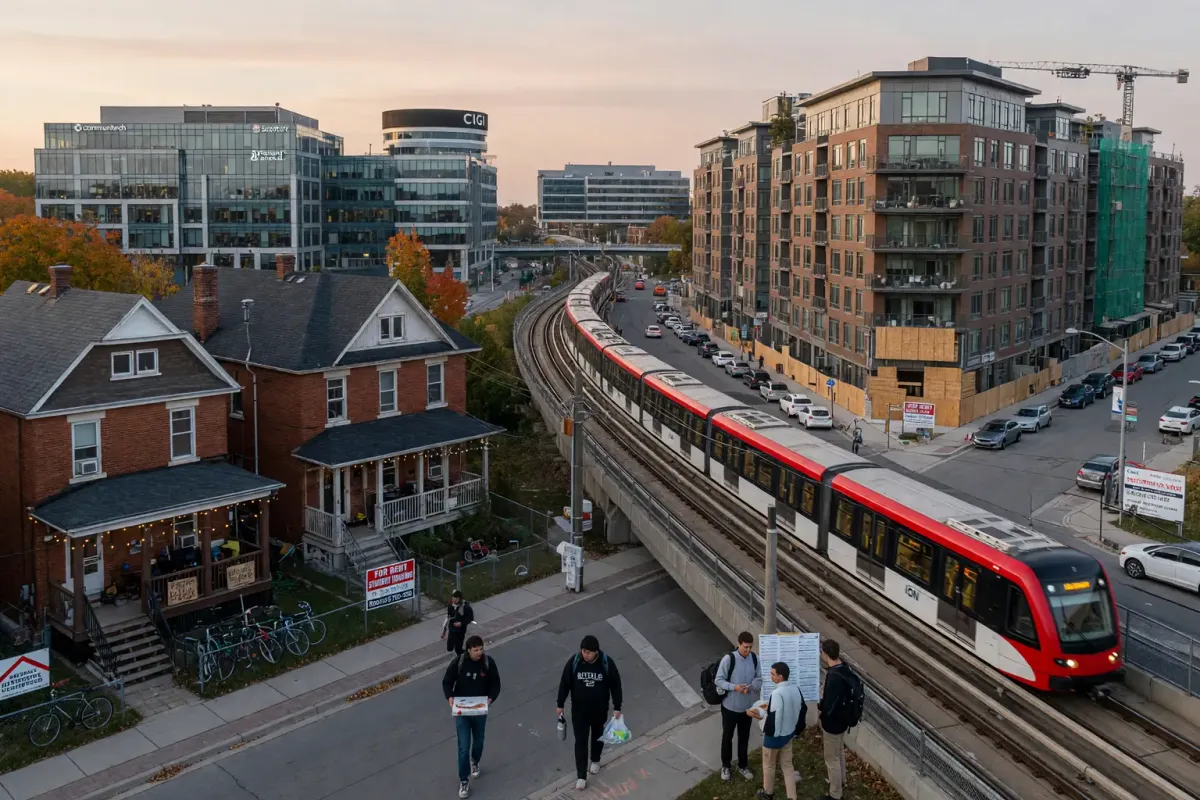
Kitchener offers exceptional real estate investment opportunities in southwestern Ontario’s largest city and the heart of the Tri-Cities technology corridor. Located approximately one hour from Toronto, Kitchener combines manufacturing heritage with thriving tech industry growth, creating diverse investment potential without Toronto’s intense competition. For investors comparing southwestern Ontario markets, London offers a student-focused opportunity while Kitchener provides tech-driven growth.
Understanding Kitchener’s Market Position
The city anchors one of Ontario’s largest and fastest-growing metropolitan areas. The Kitchener-Cambridge-Waterloo region has experienced substantial population and economic growth, driven by technology expansion and major educational institutions.
| Market Factor | Kitchener Characteristic | Investment Implication |
|---|---|---|
| Population | ~580,000 (metro), ~262,000 (city) | Major market depth |
| Economy | Tech, manufacturing, services | Diversified strength |
| Benchmark | ~$770,000 (KW region, Mar 2026) | Buyer opportunity |
| Growth | Modest 2026 | Stabilizing market |
| Integration | Tri-Cities connected | Regional opportunity |
Geographic and Connectivity Advantages
Kitchener’s strategic positioning provides significant advantages:
- Toronto Access: GO Transit and Highway 401 connect to Canada’s largest metro
- Regional Integration: Combined KWC tri-city area creates larger market pool
- Airport Access: Region of Waterloo International Airport serves business travelers
- Technology Corridor: Part of Toronto-Waterloo innovation corridor attracting tech investment
The city’s integration with Waterloo and Cambridge creates a combined economic base exceeding individual boundaries, supporting diverse housing demand.
Economic Foundation
Technology Industry Leadership
Kitchener-Waterloo has developed into one of Canada’s most significant technology clusters. Major tech companies, startups, and established firms create employment for engineers, developers, and professionals. Technology workers often seek quality rental housing, creating premium tenant pools willing to pay strong rents.
Manufacturing Heritage
Advanced manufacturing remains a significant employer. Modern manufacturing operations provide well-paying jobs supporting housing demand across property types. Aerospace and automotive sectors attract skilled workers requiring quality housing.
Educational Institutions
The University of Waterloo and Wilfrid Laurier University create substantial student populations and academic employment. Student rental demand provides reliable tenant pools regardless of economic cycles, while institutional stability supports long-term fundamentals.
Service Industries
Retail, hospitality, healthcare, and professional services grow alongside population expansion. Food processing provides stable employment across skill levels, contributing to rental demand at various price points.
Short-term rental properties can generate strong cash flow, but lenders look at them differently — book a free strategy call with LendCity to understand your financing options for STR investments.
If this approach is on your radar, our PadSplit mortgage financing guide walks through how LendCity structures these deals.
Rental Market Dynamics
Dual Demand Sources
Universities create significant student housing demand, while workers throughout the region need rental housing at various price points. This dual demand provides market depth beyond either segment alone, reducing dependence on any single tenant demographic.
Technology workers, students, young professionals, and families all contribute to rental demand. High employment and immigration create continuous tenant pool renewal as new workers relocate to the region for career opportunities.
The combination of student and professional demand creates year-round rental activity. While student rentals experience seasonal turnover patterns tied to academic calendars, professional housing maintains consistent demand regardless of semester schedules.
Rental Rates and Trends
Rental rates have appreciated steadily as demand has grown faster than supply in many neighbourhoods. Monthly rents in Kitchener typically range:
- Student housing: $700-$1,000 per bedroom in shared houses near universities
- One-bedroom apartments: $1,700-$2,100 in urban core locations
- Two-bedroom units: $2,100-$2,700 depending on quality and location
- Three-bedroom houses: $2,600-$3,400 for family-oriented properties
- Luxury units: $3,200+ for premium locations or new construction
The region generally offers more affordable rents than Toronto—typically 15-25% lower for comparable properties—attracting tenants seeking value while still commanding strong returns for investors given lower property acquisition costs.
Transit-accessible properties near ION stations often command 10-15% premiums over comparable non-transit locations as car-free commuting becomes increasingly attractive to technology workers.
Vacancy Considerations
Healthy rental demand has historically supported relatively low vacancy rates, typically in the 2-3% range for well-maintained properties in desirable locations. However, market conditions vary by neighbourhood and property type.
Student housing near universities experiences the tightest vacancy conditions, often achieving 100% occupancy with waiting lists for quality properties. Professional housing in downtown Kitchener and along the ION corridor maintains strong occupancy supported by employment growth.
Monitoring current vacancy levels remains important for accurate cash flow projections, as oversupply in specific neighbourhoods or property types can temporarily affect rental dynamics.
Festival and Tourism Economy
Oktoberfest
Kitchener-Waterloo Oktoberfest draws approximately 700,000 visitors over nine days, creating substantial tourism activity. Hotels, restaurants, and short-term rentals benefit from this major visitor influx.
Year-Round Events
Beyond Oktoberfest, events including Tri-Pride, Kultrun World Music Festival, KOI Music Festival, and Kitchener Blues Festival bring visitors throughout the year. Multiple arenas host sporting events, concerts, and performances supporting resident quality of life.
Short-Term Rental Opportunity
Properties positioned for short-term rental during festivals can generate significant seasonal income supplementing regular returns.
Financing a vacation rental requires a strategy that accounts for seasonal income — schedule a free strategy session with us and we’ll help you find the right program.
Neighbourhood Investment Analysis
Understanding specific Kitchener neighbourhoods helps target appropriate investment opportunities.
Downtown Kitchener
Downtown has experienced significant revitalization with technology company offices, restaurants, entertainment venues, and residential development transforming the urban core. Properties in downtown Kitchener serve young professionals and students seeking walkable urban lifestyles.
The ION corridor through downtown creates transit-oriented development opportunities. Properties within walking distance of stations attract tenants commuting to Waterloo employers without requiring vehicle ownership.
Investment considerations include evaluating specific block-level conditions, as downtown Kitchener varies significantly in character and quality within short distances.
Huron Park and Deer Ridge
Established family neighbourhoods in southwest Kitchener offer properties serving long-term family tenants. These areas feature single-family homes, townhouses, and low-rise apartments attracting families seeking schools, parks, and community amenities.
Properties here typically generate steady cash flow with minimal vacancy and lower tenant turnover than student or professional housing.
University District (near Wilfrid Laurier)
The area surrounding Wilfrid Laurier University creates concentrated student housing demand. Properties on streets near campus feature student-oriented housing with shared bedrooms, group living arrangements, and academic calendar lease patterns.
Premium per-bedroom rates compensate for higher turnover and management intensity. Success requires systems for efficient tenant placement and property maintenance.
Forest Heights and Stanley Park
Mid-market neighbourhoods offering properties at various price points serve diverse tenant demographics. These areas combine accessibility to employment centers with residential character.
Investment opportunities include properties serving both young professionals and families depending on specific features and locations.
ION Corridor Properties
Properties along the light rail corridor benefit from transit access premium. Stations at Grand River Hospital, downtown Kitchener, King Street, and Victoria Street create transit-oriented opportunities.
Technology workers commuting to Waterloo employers particularly value ION accessibility, supporting demand for appropriately located properties.
LRT and Transit Impact
ION light rail connecting Kitchener to Waterloo fundamentally affects property dynamics throughout the corridor. Transit-accessible properties command 10-15% premiums over comparable non-transit locations, and this premium has grown as ridership patterns have established.
Properties near ION stations benefit from:
- Reduced parking requirements: Tenants using transit need fewer parking spaces
- Commuter attraction: Waterloo technology workers value car-free commuting
- Development catalyst: Transit stations drive surrounding neighbourhood improvement
- Tenant retention: Transit access improves tenant satisfaction and lease renewals
These transit-driven benefits also shape investment potential in neighbouring Tri-Cities communities linked to the same regional tech economy. Investors comparing options often review Cambridge as an affordable Tri-Cities investment entry point alongside Kitchener holdings.
Properties within a 5-10 minute walk of stations capture maximum transit premium. Understanding which stations serve which employment centers helps evaluate location value.
Investment Strategies
Transit-Oriented Investment
Properties near LRT stations benefit from transit demand. Workers commuting to Waterloo technology employers value access, supporting demand for appropriately located properties.
Professional Housing
Young professionals working in technology and service sectors seek quality housing. Properties attracting this demographic benefit from strong income and payment capacity.
Student Housing
University-adjacent properties attract student tenants providing consistent demand tied to academic calendars rather than economic cycles. Premium per-bedroom pricing can enhance returns.
Family Housing
Kitchener’s larger housing stock includes family-oriented options at prices below Waterloo alternatives. Properties serving families may provide stable, long-term tenancies.
New Construction
Active development with over $1.2 billion in building permits and 2,000+ new apartments indicates market confidence and opportunity for development-capable investors.
Natural and Recreational Assets
The Grand River provides kayaking, rafting, canoeing, and scenic trails. Nature enthusiasts find recreation without leaving the metropolitan area. Kitchener maintains parks and trails throughout, providing outdoor amenities that enhance resident quality of life.
Average summer temperatures around 24°C and winter temperatures around 1°C provide four-season climate suitable for various outdoor activities.
Related reading: London Ontario Real Estate Investing Guide for 2026 covers the practical angles we see on similar files.
Financing Considerations for Kitchener Properties
Understanding financing options specific to the Kitchener-Waterloo market helps structure competitive offers and maximize returns.
Residential Financing
Properties with four units or fewer qualify for residential rental financing with 20% down payments for investment properties. Kitchener’s pricing—typically $550,000-$800,000 for investment-grade properties—requires substantial but achievable down payments for serious investors.
Lenders familiar with the KWC market understand local property types, typical rental income, and neighbourhood characteristics. This knowledge improves approval outcomes and prevents valuation complications.
Portfolio Growth Strategies
Investors scaling beyond initial Kitchener properties eventually encounter conventional lending restrictions. Understanding portfolio lending approaches becomes critical for continued growth.
Canadian DSCR loan options evaluates properties based on rental income rather than personal income, enabling portfolio expansion beyond conventional limits. Planning for these transitions before reaching lending constraints prevents growth interruptions.
Technology Sector Income Verification
Many Kitchener-Waterloo technology workers receive compensation including stock options, bonuses, and equity participation. Lenders experienced with technology sector compensation understand how to evaluate these income structures for mortgage qualification.
Working with mortgage professionals familiar with technology industry compensation prevents approval complications and maximizes borrowing capacity.
Practical Considerations
Regional Perspective Required
Understanding Kitchener requires regional perspective—how it relates to Waterloo and Cambridge, employment patterns, and transit connections. The Tri-Cities function as an integrated economy sharing employment opportunities and housing markets.
Properties in Kitchener serve tenants working throughout the region. Waterloo technology employment drives demand for Kitchener housing, while Cambridge industrial jobs support rental markets across all three cities.
Successful investors evaluate Kitchener properties within this regional context rather than treating the city in isolation.
Competition for Properties
Strong fundamentals have attracted significant investor attention from both local and Greater Toronto Area investors. Competition for desirable properties—particularly student housing near universities and properties along the ION corridor—requires preparation and decisive action.
Building relationships with local professionals provides advantages through off-market opportunity access and priority consideration when desirable listings emerge. Pre-approved financing and demonstrated closing capability help win competitive situations.
Property Management Considerations
Professional property management becomes particularly valuable in Kitchener given the diverse property types and tenant demographics. Student housing requires specialized management different from professional housing or family rentals.
Management fees typically range from 8-12% of collected rents depending on property type and services included. Student rental management commands higher fees reflecting increased operational complexity.
Quality property managers provide tenant placement, maintenance coordination, rent collection, and regulatory compliance support. For out-of-town investors or those with multiple properties, professional management proves essential.
Kitchener vs Waterloo
Kitchener typically offers lower prices for comparable properties while benefiting from regional integration. A three-bedroom townhouse in Kitchener might cost $580,000 while a similar Waterloo property commands $680,000.
Waterloo may offer stronger appreciation potential due to closer proximity to major technology employers and universities. Kitchener may deliver better current rental yields given lower acquisition costs.
Both cities benefit from regional employment and economic growth. The choice depends on whether investors prioritize current cash flow or future appreciation potential.
Kitchener vs Toronto
Kitchener offers significantly lower entry prices than Toronto while providing strong rental demand and appreciation potential driven by technology sector growth. A property requiring $320,000 down payment in Kitchener might need $550,000+ in Toronto for comparable cash flow.
Rental yields may be comparable or higher given lower property costs, while Kitchener properties offer exposure to Canada’s second-largest technology cluster without Toronto’s competition and pricing.
The one-hour drive enables Toronto-based investors to visit properties periodically while benefiting from Kitchener’s more favorable investment economics.
Interested in Kitchener’s tech corridor opportunities? Book a free strategy call with LendCity and we’ll help you evaluate whether Kitchener’s Tri-Cities market fits your investment goals.
Key Takeaways:
- Understanding Kitchener’s Market Position
- Economic Foundation
- Rental Market Dynamics
- Festival and Tourism Economy
- Neighbourhood Investment Analysis
Frequently Asked Questions
Is Kitchener a good market for real estate investors?
What types of properties work best in Kitchener?
Can Toronto investors succeed in Kitchener?
What returns can I expect?
How important is LRT access?
How does the Kitchener-Waterloo Oktoberfest affect short-term rental opportunities?
What makes Kitchener different from Waterloo for real estate investors?
Why LendCity Clients Invest in Kitchener
Our clients choose Kitchener for specific strategic reasons:
Technology Economy Exposure: Investors seeking exposure to Canada’s growing technology sector without Toronto pricing find Kitchener’s tech corridor compelling. Properties benefit from high-income tenant pools working in technology and related industries.
ION Corridor Positioning: Forward-thinking investors position properties along the light rail corridor, anticipating continued transit-oriented development and tenant premium for car-free commuting.
Student Housing Specialization: Investors building student housing portfolios target properties near University of Waterloo and Wilfrid Laurier, leveraging consistent academic demand and premium per-bedroom pricing.
Toronto Proximity with Better Economics: Toronto-based investors expand into Kitchener, maintaining proximity for periodic property visits while accessing superior cash flow and entry pricing compared to GTA alternatives.
Regional Diversification: Investors with concentrated Toronto or Ottawa holdings diversify into Kitchener, reducing single-market exposure while maintaining Ontario focus and familiar regulatory environment.
Building Your Kitchener Investment Strategy
Kitchener presents compelling opportunities in Ontario’s technology corridor, combining tech sector growth with traditional manufacturing foundations. Strong population growth, university demand, festival tourism, and light rail infrastructure create diverse fundamentals supporting multiple investment strategies.
Begin by researching specific neighbourhoods and understanding regional Tri-Cities dynamics. The integration with Waterloo and Cambridge requires broader perspective while making property-specific selections. Downtown Kitchener offers different characteristics than university-adjacent areas or suburban family neighbourhoods—align property selection with your target tenant demographic.
Build relationships with local professionals who understand the KWC market specifically. Agent, lender, and property management relationships provide ongoing support beyond initial property acquisition. Toronto-focused professionals often lack the regional knowledge necessary for optimal Kitchener investment outcomes.
Consider how Kitchener investments fit within your broader portfolio strategy. The market can complement Toronto investments, provide technology sector exposure, or serve as an accessible entry point for Ontario investing without requiring massive capital.
Evaluate your management capabilities and preferences. Student housing, professional rentals, and family properties each require different management approaches. Choose property types matching your operational capabilities or budget for professional management handling complexity.
For investors seeking technology economy exposure with strong growth fundamentals and accessible entry compared to Toronto, Kitchener warrants serious consideration as part of diversified investment strategies. The region’s continued development, employment growth, and infrastructure investment support long-term investment fundamentals.
Free download
MLI Select document checklist
Appraisals, rent rolls, environmental reports, and the CMHC package lenders expect before they underwrite.
By submitting, you agree to receive occasional emails from LendCity. You can unsubscribe at any time.
4.8/5 (116 Google reviews)
Disclaimer: LendCity Mortgages is a licensed mortgage brokerage. Content on this page is for educational purposes only and does not constitute legal, tax, investment, securities, or financial-planning advice. Rates, premiums, program terms, and regulations referenced are as of the page's last updated date and are subject to change. Any investment returns, rental yields, tax savings, or case-study figures shown are illustrative only — they are not guaranteed, not typical, and individual results will vary. Consult a licensed lawyer, Chartered Professional Accountant, or registered dealer before acting on any information above. Editorial standards.

Written by
Scott Dillingham
Published
February 15, 2026
· Updated June 29, 2026Reading time
12 min read
Appreciation
The increase in a property's value over time, which builds [equity](/glossary/equity/) and wealth for the owner through market growth or [forced improvements](/glossary/forced-appreciation/).
Single Family
A detached home designed for one household, the most common property type for beginner real estate investors.
Vacancy Rate
The percentage of rental units that are unoccupied over a given period. A critical factor in [cash flow](/glossary/cash-flow/) analysis, typically estimated at 4-8% for conservative projections. Vacancy directly reduces [NOI](/glossary/noi/).
Property Management
The operation, control, and oversight of real estate by a third party. Property managers handle tenant screening, rent collection, maintenance, and day-to-day operations.
Comparable Properties
Similar properties in the same market area used to establish fair market value or rental rates through comparison of features, location, condition, and recent sale or rental prices. Analyzing comps is essential when determining offer prices and setting competitive rents.
Short-Term Rental
A furnished property rented for periods shorter than 30 days through platforms like Airbnb or VRBO. Short-term rentals generate higher gross revenue but carry higher operating costs and stricter municipal regulations.
Student Rental
A rental property near a college or university leased to students, typically on a per-room basis. Student rentals generate higher cash flow than traditional single-family rentals because rent is collected per bedroom rather than per unit, with risk mitigated through parental guarantors.
Foundation
The structural base of a building that transfers loads to the ground. Foundation issues such as cracks, settling, or water intrusion are among the most expensive repairs in real estate and can significantly impact property value and financing eligibility.
Hover over terms to see definitions. View the full glossary for all terms.