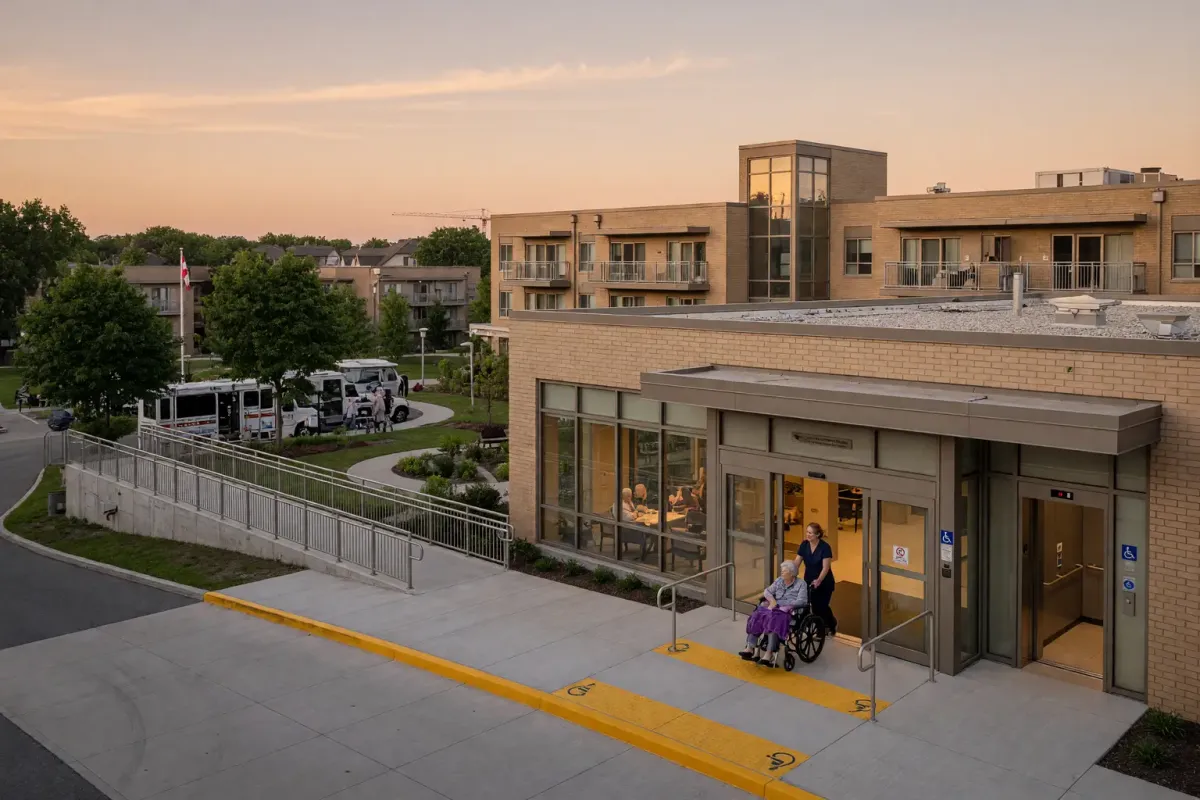
Canada faces a demographic tsunami. The population aged 65+ is doubling by 2040—from 6.6 million to 11 million seniors. That’s not a market trend. It’s a historic wealth creation opportunity.
Seniors housing and assisted living facilities represent one of the most underutilized niches in Canadian real estate investing. Most developers focus on standard multi-family residential. But seniors housing operates in a fundamentally different economics model: higher per-unit revenue, specialized operating costs, and—critically—exceptional eligibility for CMHC MLI Select financing.
This guide walks investors through seniors housing fundamentals, CMHC qualification mechanics, and how to structure deals for maximum financing benefits.
The Demographic Opportunity
Why seniors housing matters now.
Canada’s Aging Population
The scale of demographic change.
Canada’s population is aging faster than most developed nations:
- 2024: 7.1 million Canadians aged 65+ (18.9% of population)
- 2040: Projected 11+ million Canadians aged 65+ (28% of population)
- Baby Boomer Effect: 10,000 Canadians turning 65 every single day
- Lifespan Extension: Average life expectancy exceeds 82 years
- Immigration: Older immigrants increasing senior population further
This isn’t gradual. This is structural. By 2040, one in four Canadians will be 65 or older. Many of these seniors are also sitting on significant home equity, which is why products like reverse mortgages available to Canadian homeowners aged 55 and over are growing in demand alongside purpose-built seniors housing.
Housing Shortage for Seniors
Demand far exceeds supply.
Current senior housing inventory is critically inadequate:
- Licensed assisted living beds: Severe shortage in most provinces—waiting lists exceed 2-5 years in major cities
- Independent living: Limited availability, particularly affordable options
- Accessibility barriers: 90% of existing housing stock is inaccessible to seniors with mobility challenges
- Aging in place challenge: Most seniors prefer to age in community with support services, but housing designed for this is scarce
- Institutional bias: Government funding historically prioritized long-term care facilities over independent/assisted living alternatives
Result: Seniors and their families are desperate for quality housing options.
Investment Economics Advantage
Why this market outperforms.
Seniors housing generates fundamentally better economics than standard residential:
- Higher per-unit revenue: Memory care facilities command $6,000–$9,000/month per unit; assisted living $4,000–$6,500/month vs. $2,000–$3,500 for standard rentals
- Lower vacancy rates: Licensed facilities operate at 92–98% occupancy vs. 85–90% for residential rentals
- Amenity bundling: Services (meals, cleaning, activities, transportation) increase revenue per unit
- Market inelasticity: Seniors prioritize safety and support services—less price-sensitive than younger renters
- Exit flexibility: Strong acquisition demand from operators and strategic buyers creates exit opportunities
The per-unit revenue advantage alone can justify project economics that wouldn’t work in conventional rental.
Types of Seniors Housing (and CMHC Financing Eligibility)
Which facility types qualify for MLI Select.
Independent Living
Self-contained housing with optional services.
What it is:
Fully independent residential units (1–2 bedrooms) with self-contained bathrooms, kitchens, and entrances. Residents manage their own daily living but access optional services: dining, housekeeping, activities, transportation.
CMHC Eligibility:
Fully qualified for MLI Select. Units are self-contained rental housing with no medical/care services embedded. Accessibility points easily achievable (elevator buildings, barrier-free design, grab bars in bathrooms).
Economics:
- Monthly rent: $2,500–$4,500 per unit
- Occupancy: 95%+ (strong demand)
- Service revenue: Meals, activities, transportation = additional $500–$1,200/month per unit
- Operating costs: Moderate—mainly dining service and facility maintenance
Financing Example:
20-unit independent living facility in Calgary:
- Project cost: $8.2M (modest finishes, efficient operations)
- CMHC MLI Select with accessibility/energy points (100+ pts): 95% LTV, 50-year amortization
- Financing: $7.79M at ~5.0% (rates vary with bond yields; July 14, 2025 risk-based pricing applies)
- Monthly mortgage: ~$41,800
- Monthly rental income (@ $3,500 avg + $800 services): $86,000
- Simple DSCR: 2.06 (excellent)
Assisted Living
Professional care and support services.
What it is:
Residential units with embedded personal care services. Staff provide activities of daily living support (medication, bathing, dressing, meal prep). Some units may be studio/bachelor format; others full 1-bedroom. Common areas emphasize community engagement.
CMHC Eligibility:
This is the critical distinction. If the facility is licensed as “residential support services” (support without medical treatment), it qualifies as multi-family housing for CMHC. If licensed as a “facility providing medical/nursing care,” it typically does NOT qualify as conventional mortgage collateral.
Key rule: CMHC distinguishes on licensing, not on services provided. Know your provincial licensing before assuming qualification.
- Alberta, BC, Saskatchewan, Manitoba: Most assisted living falls under “Seniors Housing” or “Lodging House” licensing = qualifies for CMHC MLI Select
- Ontario, Quebec: Stricter distinction between “residential services” (qualifies) and “medical facilities” (may not qualify)
Work with a CMHC-experienced lender before designing an assisted living project to confirm provincial eligibility.
Economics:
- Monthly resident fee: $4,500–$7,500 per unit (includes meals, care staff)
- Occupancy: 94–97%
- Service component: ~65% of monthly fee covers staffing, food, activities
- Operating costs: High (care staff, dietitian, activities coordinator, medical supplies)
Financing Considerations:
Assisted living projects typically have lower debt service coverage ratios than independent living (same revenue but higher operating expenses). CMHC underwriting scrutinizes operating projections heavily—you need detailed care staffing assumptions.
Memory Care (Dementia)
Specialized assisted living for cognitive decline.
What it is:
Secure residential environment (secured exits, monitoring) with specialized care for Alzheimer’s and dementia residents. Higher care ratios than standard assisted living (1 staff per 3–4 residents vs. 1 per 6–8).
CMHC Eligibility:
Depends on provincial licensing. If licensed as “assisted living” (even if specialized for dementia), typically qualifies. If licensed as “nursing home” or “medical facility,” typically does NOT qualify.
Again: consult provincial regulations and your lender early.
Economics:
- Monthly resident fee: $6,500–$9,500 (highest per-unit revenue of all seniors housing types)
- Occupancy: 96%+ (families desperate for specialized care)
- Care demands: Very high—require specialized staff, activity programming, medical coordination
- Operating costs: 70–75% of revenue (staff-heavy)
Market Reality:
Memory care facilities command premium pricing and strong occupancy. Financing is typically NOT challenged on revenue achievement—the challenge is operational credibility. CMHC wants to see:
- Experienced care management team with memory care background
- Detailed care protocols and staff training plans
- Partnerships with local healthcare providers
- Insurance coverage for liability and professional care
Long-Term Care / Nursing Homes
Medical-heavy facilities.
What it is:
Licensed nursing facilities with licensed nurses, medical oversight, and treatment provision. Residents often have complex medical needs requiring daily nursing care.
CMHC Eligibility:
Typically NO. These are classified as medical/healthcare facilities, not residential housing. CMHC mortgage insurance does not cover primary collateral based on long-term care licensing in most provinces.
Financing Options:
- Provincial/federal healthcare grants (non-mortgage based)
- Specialized healthcare facility lenders (different underwriting)
- Private equity/operators with existing facilities
- Hybrid financing combining long-term care beds + independent/assisted living units (latter qualifies)
If you’re considering a mixed-use facility (e.g., 40% independent living + 60% long-term care), you can finance the independent living portion through CMHC MLI Select and the long-term care portion through alternative lenders.
Mortgage rules change frequently, so what worked last year might not apply today — book a free strategy call with LendCity to get current, personalized guidance.
If this approach is on your radar, our multi-family mortgage financing guide walks through how LendCity structures these deals.
Why Seniors Housing Excels at MLI Select Points
How facility design naturally earns maximum points.
Accessibility: The Hidden Advantage
Seniors housing is accessibility-first by definition.
Recall that CMHC MLI Select awards points for accessibility features:
- Barrier-free design (zero-step entries, wide doorways 36”+)
- Accessible bathrooms (grab bars, roll-in showers or accessible tubs)
- Accessible parking and common areas
- Elevator access (multi-story buildings)
Seniors housing incorporates these as baseline requirements, not as premium add-ons.
Real comparison:
A standard multi-family building (20 units) might achieve:
- 5 barrier-free units (25%)
- 8 adaptable units (40%)
- Total accessibility points: 20–25
A seniors housing facility (same 20 units) achieves:
- 20 barrier-free units (100%)—all residents benefit from accessibility by design
- Common areas all accessible (dining, activities, lounges)
- Staff areas meet commercial accessibility standards
- Total accessibility points: 50–60+
Seniors housing properties naturally earn 2–3x the accessibility points of comparable residential buildings.
Affordability: Natural Positioning
Many seniors housing facilities naturally serve lower-income populations.
Old Age Security (OAS) provides roughly $1,200/month to eligible seniors. Guaranteed Income Supplement (GIS) adds another $800–$1,200 for low-income seniors. Total: $2,000–$2,400/month income floor.
Many independent living facilities price competitively in the $2,800–$3,500 range—just above OAS+GIS, accessible to a significant senior population. This natural affordability positioning can earn CMHC affordability points:
- Committing 40–50% of units to “affordable” rents (defined at 80% of CMHC Median Market Rent)
- 10–15-year affordability commitments (binding to maintain rents below threshold)
- Result: 20–35 affordability points
Energy Efficiency: Modern Standards
New seniors housing construction easily achieves energy efficiency targets.
Modern seniors housing incorporates:
- Heat pump systems (essential for seniors comfort management)
- Triple-pane windows (winter cold protection important for seniors)
- Superior insulation (R-30+ walls, R-50+ attic)
- Energy-efficient lighting and HVAC
- Heat recovery ventilation (ERV/HRV)
- Smart thermostats and energy monitoring
These features reduce utility costs for both operators and residents—a direct economic benefit. They also easily exceed National Energy Code for Buildings by 15–20%, earning CMHC energy efficiency points.
Example point summary for a 20-unit assisted living facility:
| Category | Points |
|---|---|
| Accessibility (100% barrier-free) | 55 |
| Affordability (50% units at affordable rent) | 30 |
| Energy Efficiency (18% above NECB) | 25 |
| Total | 110 |
This project qualifies for maximum MLI Select benefits:
- 95% loan-to-cost financing
- 50-year amortization
- Limited recourse
- Premium discounts up to 30%
Revenue & Operating Model Differences
How seniors housing economics differ from standard rental.
Revenue Streams
Seniors housing creates multiple revenue channels.
Accommodation (base):
Monthly rent for housing unit, base service (utilities, housekeeping, grounds).
- Independent living: $2,500–$4,500
- Assisted living: $4,500–$7,500
- Memory care: $6,500–$9,500
Services (recurring):
Optional or included service fees generate substantial additional revenue:
- Meals (dining service): $800–$1,500/month
- Personal care assistance: $1,000–$2,000/month (tiered by care level)
- Medication management: $200–$500/month
- Transportation: $200–$400/month
- Activities and recreation programming: $100–$300/month
- Housekeeping (beyond standard): $200–$400/month
Ancillary:
- Guest meals: $10–$20 per meal
- Visiting services (hairdresser, foot care, etc.): Revenue split with provider
- Retail (convenience store, pharmacy): Small margin operations
- Therapy services (physical, occupational): Contract arrangements
Financing Implications:
CMHC mortgage underwriting focuses on “base accommodation” revenue for debt service calculations. Services revenue is secondary (lenders are conservative about service uptake assumptions). But in practice, quality facilities achieve 60–80% of residents purchasing optional services—generating 30–50% additional revenue beyond base rent.
This creates strong cash flow upside beyond CMHC debt service calculations. Understanding how lenders evaluate debt service coverage ratio is essential for structuring your seniors housing project.
Operating Costs (Higher than Standard Rental)
Seniors housing requires significant staffing and specialized services.
Standard 20-unit residential building operating expense ratio: 35–45% of revenue
Typical line items:
- Property management: 5–8%
- Maintenance & repairs: 8–12%
- Utilities: 6–10%
- Insurance: 2–4%
- Reserves: 5–10%
20-unit independent living facility operating expense ratio: 45–55% of revenue
Additional costs:
- Dining service (chef, kitchen staff, food, equipment): 12–18% of revenue
- Activities coordinator and programming: 2–3%
- Guest services (front desk, concierge): 3–5%
- Higher housekeeping/grounds (cleanliness standards): 4–6%
- Maintenance (more complex systems, common areas): 10–12%
20-unit assisted living facility operating expense ratio: 55–70% of revenue
Significant additional costs:
- Care staff (PSWs, nurses): 25–35% of revenue
- Food/dietary services: 8–12%
- Activities and engagement programming: 3–5%
- Medical supply/equipment: 2–4%
- Staff training and continuing education: 1–2%
- Additional insurance (liability, professional): 2–3%
Memory care facility operating expense ratio: 65–75% of revenue
Very high care component:
- Specialized care staff: 35–45% of revenue
- Activities (specialized for dementia): 3–5%
- Food/dietary services: 8–10%
- Medical oversight and coordination: 3–5%
- Enhanced security/safety systems: 2–3%
- Training and specialized protocols: 2–3%
What this means for debt service:
A 20-unit independent living facility (@ $3,500 avg accommodation + $800 services):
- Gross monthly revenue: $86,000
- Operating expenses (50%): $43,000
- NOI available for debt service: $43,000
Compare to standard 20-unit residential (@$3,000 base rent):
- Gross monthly revenue: $60,000
- Operating expenses (40%): $24,000
- NOI available for debt service: $36,000
Despite lower occupancy risk, seniors housing’s higher operating costs mean DSCR is tighter than expected. CMHC underwriting is rigorous on operating cost assumptions for assisted living and memory care.
Choosing the wrong lender or term can quietly erode your returns — schedule a free strategy session with us and we’ll walk you through the numbers.
Property Management Considerations
Operational realities for seniors housing operators.
Staffing Requirements
Seniors housing demands professional management and specialized staffing.
Independent Living (20 units):
- General Manager/Executive Director: 1 FTE ($50–$70K)
- Assistant Manager: 1 FTE ($35–$45K)
- Front Desk/Concierge: 1.5 FTE ($25–$32K each)
- Housekeeping: 1.5–2 FTE ($22–$28K each)
- Maintenance/Grounds: 1 FTE ($32–$45K)
- Dietary/Catering: 1–1.5 FTE ($28–$38K each)
- Activities Coordinator: 0.5 FTE ($25–$35K)
Total annual payroll: ~$520K–$680K for a 20-unit facility.
Assisted Living (20 units):
Same as independent living, plus:
- Licensed Nurse or Health Services Coordinator: 1 FTE ($55–$70K)
- Personal Care Aides/PSWs: 2–3 FTE ($28–$38K each)
- Additional housekeeping: 0.5 FTE
Total annual payroll: ~$780K–$1,000K
Memory Care (20 units):
Same as assisted living, plus:
- Dementia Care Specialist/additional RN: 1 FTE ($60–$75K)
- Additional PSWs/care staff: 1–2 FTE
- Activity specialist (dementia-trained): 1 FTE ($30–$40K)
Total annual payroll: ~$1,100K–$1,400K
Quality of Care vs. Cost Pressures
The fundamental tension in seniors housing.
High-quality care requires adequate staffing. Under-staffing creates:
- Neglect complaints and regulatory violations
- Resident falls and medical incidents
- Poor reputation and marketing challenges
- Turnover (residents and staff)
- Regulatory fines and license restrictions
But payroll is 60–70% of operating costs in assisted living/memory care. Higher payroll directly reduces profit margins.
Investment Implication:
Successful seniors housing requires operators committed to quality care as the primary objective, not cost minimization. Projects led by operators with healthcare background, strong reputation, and documented quality outcomes attract residents and command premium pricing.
Conversely, projects operated by real estate developers with no healthcare expertise often struggle operationally, resulting in poor occupancy and resident churn.
When financing seniors housing, CMHC (and sophisticated lenders) carefully evaluate operator experience. This is not a typical commercial real estate deal where the property itself generates returns independent of management quality. Operator quality is the deal.
Regulatory Compliance
Seniors housing is regulated property, which differs from standard multifamily mortgage financing in important ways.
Different regulations apply by province and facility type:
Alberta:
- Health Act regulates lodging houses (independent + assisted living)
- Guidelines for staffing ratios, safety standards, food service, activities
- Annual licensing inspections
- Complaints mechanism (residents and families)
BC:
- Residential Care Regulations specify facility requirements
- Different requirements for community care facilities vs. independent living
- Annual inspections by Ministry of Health
Ontario:
- Retirement Homes Regulatory Authority (RHRA) oversees private retirement homes
- Stringent complaints and dispute resolution system
- Inspections and follow-up on violations
Quebec:
- Différent regulatory framework based on civil law
- Requirements for “resource intermediaries” or private seniors facilities vary
Financing Impact:
Regulatory violations, complaints, or license restrictions can trigger CMHC mortgage review and, in severe cases, acceleration of debt. Operators must maintain zero-tolerance for regulatory violations.
CMHC MLI Select vs. Conventional Financing
When to use government-backed programs.
CMHC MLI Select (100+ points)
Best for: New construction or major value-add seniors housing projects
Advantages:
- 95% LTC financing (only 5% equity required)
- 50-year amortization (dramatically improves cash flow on high-leverage deals)
- Limited recourse (personal liability capped)
- Premiums rolled into loan (no out-of-pocket fees)
- Lower rates for government-backed programs
Requirements:
- 100+ points (easy to achieve with accessibility + energy)
- 4–6 month approval timeline
- Design for points from inception
- CMHC-approved lender and specialized broker
Learn more about the MLI Select points system and how to score maximum points and dive deeper into CMHC MLI Select for multifamily investing.
Example: 20-unit independent living project
- Project cost: $8.2M
- MLI Select financing: $7.79M (95% LTC, 50-year amort @ ~5.0% — pricing tied to bond yields, July 14, 2025 risk-based premium schedule applies, with 1.25% surcharge for 50-yr amortization extension)
- Monthly payment: ~$41,800
- Simple DSCR: 2.06 (with modest services revenue)
Use our CMHC MLI Max Loan Calculator to estimate your maximum loan amount and monthly payments under different CMHC scenarios.
Conventional Multi-Family Financing
Best for: Existing facilities or smaller projects
Advantages:
- Faster approval (3–4 weeks)
- Simpler qualification (no points system)
- Flexible terms
- Available from multiple lenders
Requirements:
- 15–25% equity down
- 30–40 year amortization (typical)
- Full recourse
- Proven NOI/cash flow
Example: Same 20-unit project
- Project cost: $8.2M
- Conventional financing: $6.5M (80% LTV, 35-year amort @ ~6.0%)
- Equity required: $1.7M (21% of cost)
- Monthly payment: ~$38,000
- Simple DSCR: 2.26
Comparison:
| Feature | MLI Select | Conventional |
|---|---|---|
| LTV/LTC | 95% | 80% |
| Amortization | 50 years | 35 years |
| Monthly payment | ~$41,800 | ~$38,000 |
| Equity required | $410K (5%) | $1.7M (21%) |
| Approval time | 4–6 months | 3–4 weeks |
| Recourse | Limited | Full |
| Rate premium | Lower (CMHC-insured) | Higher |
For developers/investors with substantial equity and fast timelines, conventional financing may be appropriate. For capital-constrained investors or those prioritizing maximum leverage, MLI Select is superior despite longer approval timeline.
Specialized Seniors Housing Lenders
Alternative financing sources.
Beyond CMHC MLI Select and conventional mortgages, specialized seniors housing lenders offer tailored financing:
Specialized Lenders (Canada):
- Desjardins: Specifically targets seniors housing and retirement communities
- RBC Healthcare Finance: Commercial healthcare facility financing
- TD Commercial: Has seniors housing specialists
- Scotia Bank Commercial: Active in seniors housing market
These lenders understand seniors housing operations and underwrite differently than standard commercial lenders:
- Recognize services revenue and operating models
- May accept lower DSCR (e.g., 1.25x) than conventional lenders (1.40x+)
- Understand occupancy patterns and regulations
- Have relationships with operators and operators’ networks
Terms typically:
- 75–85% LTV financing
- 20–30 year amortization
- Full or limited recourse
- Rates competitive with or slightly lower than conventional multi-family
When to use:
- Existing facility refinancing (see our guide on how to refinance multifamily properties)
- Smaller projects (5–15 units)
- Value-add acquisitions
- Operators with strong track records but perhaps insufficient equity for CMHC
Step-by-Step: Financing a Seniors Housing Project
Process overview.
Phase 1: Concept and Feasibility (Months 1–3)
Determine facility type and target market:
- Independent living vs. assisted living vs. memory care?
- Geographic market (urban, suburban, regional)?
- Target resident profile and income level?
- Competitive landscape analysis?
Preliminary financial model:
- Estimate per-unit costs (construction, equipment, furnishings)
- Project gross revenue (base rent + services)
- Estimate operating costs based on staffing, food, services
- Calculate preliminary NOI and returns
Identify operator:
- Do you have operational capability or need to recruit/partner?
- Is operator experienced in seniors housing or transitioning from residential?
- What is operator’s track record, reputation, references?
Phase 2: Site Acquisition and Feasibility (Months 3–6)
Secure site or building:
- Option agreement or purchase pending financing
- Confirm zoning allows seniors housing use (critical—some jurisdictions restrict)
- Verify utilities, servicing, environmental conditions
Design and licensing consultation:
- Engage architect experienced in seniors housing design
- Confirm facility type aligns with provincial licensing requirements
- Determine accessibility and energy efficiency features
- Preliminary point calculation (target 100+)
Lender pre-qualification:
- Approach CMHC-approved lender with preliminary project information
- Confirm project is fundable and lender will support MLI Select application
- Receive pre-qualification letter
- Discuss timeline and documentation requirements
Phase 3: Detailed Design and Application (Months 6–12)
Finalize design:
- Complete architectural drawings
- Coordinate with mechanical/electrical engineers
- Confirm energy efficiency targets (run EnerGuide modeling)
- Verify all accessibility requirements met
- Finalize points calculation
Business plan and operating model:
- Detailed care protocols and staffing plans (if assisted living/memory care)
- Resident census and occupancy assumptions
- Detailed rent roll and revenue projections
- Comprehensive operating expense budget
- 5-year pro forma financials
Formal CMHC application:
- Complete all CMHC forms and documentation
- Submit architectural drawings and engineering reports
- Provide energy efficiency reports and EnerGuide projections
- Confirm points calculation
- Submit financial statements and operator experience documentation
CMHC review and approval (6–12 weeks):
- CMHC reviews application
- May request clarifications or design modifications
- Issues Commitment Letter specifying:
- Maximum loan amount
- Points confirmed
- Affordability commitment period
- Any conditions
Phase 4: Construction and Lease-Up (Months 12–36)
Construction:
- Maintain alignment with approved designs
- Any material changes require CMHC approval
- CMHC may require progress photos/inspections
- Operator begins marketing and recruitment (typically 6–12 months before completion)
Lease-up:
- Sign residents and establish affordability rent compliance
- Achieve occupancy targets
- Generate documented lease revenue
Phase 5: Completion and Permanent Financing (Month 36+)
Final documentation:
- Certificate of occupancy
- Lease agreements documenting occupancy
- Final operating expense reports
Permanent financing closure:
- CMHC issues permanent mortgage commitment
- Funds loan and pays off interim financing
- Project becomes stabilized operation
Total timeline: 3–4 years from concept to permanent financing.
Frequently Asked Questions
Does CMHC MLI Select cover all seniors housing types?
What if the project is in a province I'm not familiar with?
How much equity do I need for a seniors housing project?
What operating cost percentage should I assume for my project?
Can I convert an existing multi-family building to seniors housing?
What is the vacancy rate in seniors housing vs. standard rental?
Can I charge higher rents if the facility has excellent amenities?
What are the biggest risks in seniors housing development?
How do I attract quality operators for my project?
What is the exit strategy for a stabilized seniors housing facility?
Do I need experience in seniors housing or healthcare to develop a project?
Key Takeaways:
- The Demographic Opportunity
- Types of Seniors Housing (and CMHC Financing Eligibility)
- Why Seniors Housing Excels at MLI Select Points
- Revenue & Operating Model Differences
- Property Management Considerations
Conclusion
Canada’s demographic reality presents a historic real estate investment opportunity. Seniors housing addresses a massive, growing demand: 65+ population doubling by 2040, acute shortage of quality facilities, higher per-unit revenue than standard rental, and government-backed financing programs specifically designed for these projects.
CMHC MLI Select is tailor-made for seniors housing. Facilities naturally accumulate 100+ points through accessibility, affordability, and energy efficiency, unlocking 95% financing and 50-year amortizations that transform project economics. Compared to standard multifamily financing options, the economics of seniors housing projects are uniquely favorable.
However, seniors housing requires different expertise than standard multi-family residential. Quality of operations, regulatory compliance, and operator strength are deal-makers or deal-breakers. Successful investors partner with experienced operators, maintain focus on resident quality over margin optimization, and understand provincial licensing requirements.
The demographic wave is coming. Developers and investors who build quality seniors housing now will benefit from a 15–20 year runway of strong demand, limited competition, and stable, cash-flowing operations.
Free download
MLI Select document checklist
Appraisals, rent rolls, environmental reports, and the CMHC package lenders expect before they underwrite.
By submitting, you agree to receive occasional emails from LendCity. You can unsubscribe at any time.
4.8/5 (116 Google reviews)
Disclaimer: LendCity Mortgages is a licensed mortgage brokerage. Content on this page is for educational purposes only and does not constitute legal, tax, investment, securities, or financial-planning advice. Rates, premiums, program terms, and regulations referenced are as of the page's last updated date and are subject to change. Any investment returns, rental yields, tax savings, or case-study figures shown are illustrative only — they are not guaranteed, not typical, and individual results will vary. Consult a licensed lawyer, Chartered Professional Accountant, or registered dealer before acting on any information above. Editorial standards.

Written by
Scott Dillingham
Published
February 26, 2026
· Updated June 9, 2026Reading time
19 min read
CMHC MLI Select
A CMHC program offering reduced mortgage insurance premiums and extended amortization (up to 50 years) for multifamily properties with 5+ units that meet energy efficiency or accessibility standards. Popular among investors scaling into larger apartment buildings.
Multifamily
Properties with multiple dwelling units, from duplexes to large apartment buildings. Often offer better cash flow and economies of scale.
Cash Flow
The money left over after collecting rent and paying all expenses including mortgage, taxes, insurance, maintenance, and property management. Positive cash flow is the primary goal of buy-and-hold investors. See also [NOI](/glossary/noi/), [Cash-on-Cash Return](/glossary/cash-on-cash-return/), and [Vacancy Rate](/glossary/vacancy-rate/).
DSCR
Debt Service Coverage Ratio — a metric that compares a property's [net operating income](/glossary/noi/) to its mortgage payments. A DSCR of 1.25 means the property generates 25% more income than needed to cover the debt. Lenders typically require a minimum DSCR of 1.0 to 1.25 for investment property loans (including [DSCR loans](/glossary/dscr-loan/)). See also [Cap Rate](/glossary/cap-rate/) and [Cash Flow](/glossary/cash-flow/).
Purpose-Built Rental
A residential property constructed or substantially renovated specifically to be held as rental units rather than owned-occupied or condominium units. Purpose-built rentals (PBRs) receive preferential financing terms and CMHC programs like ACLP, making them attractive investments for multifamily portfolios. PBRs address rental housing shortages across Canadian markets.
Hover over terms to see definitions. View the full glossary for all terms.