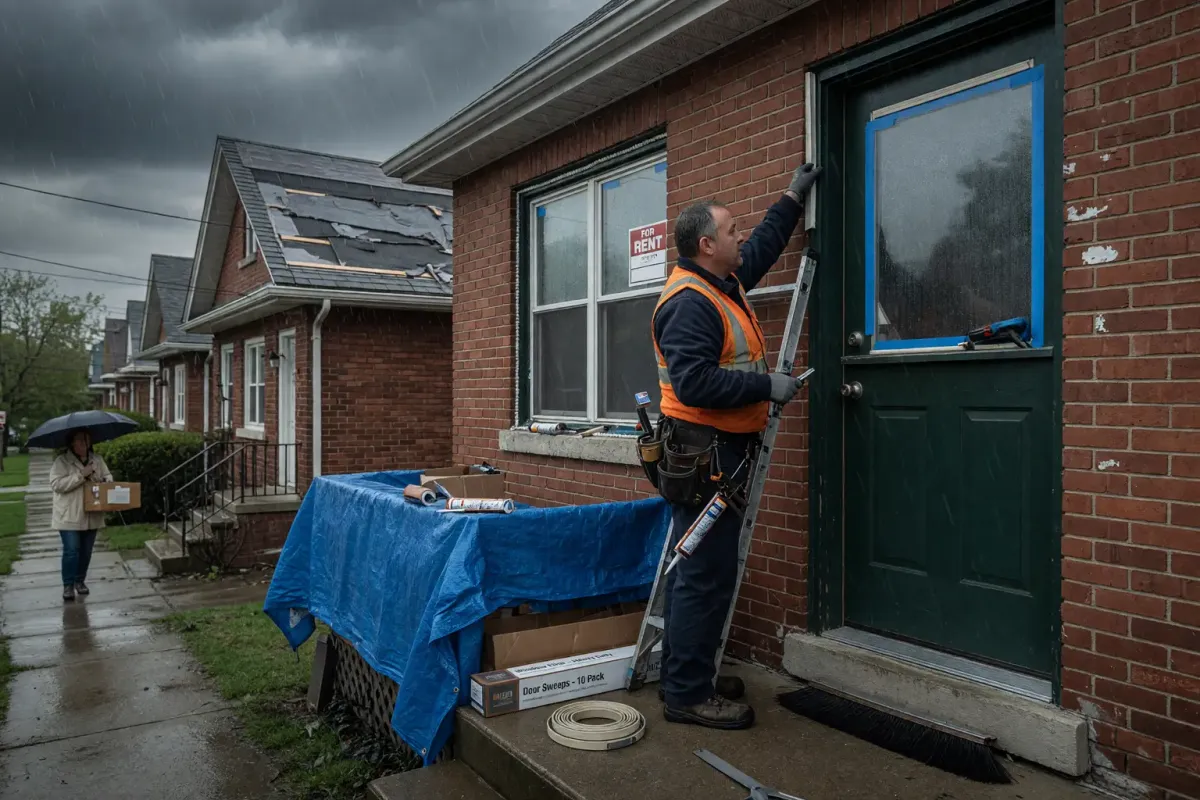
Weatherproofing investment properties protects asset value, reduces energy costs, and maintains tenant comfort. Proper weatherproofing prevents moisture damage, reduces heating and cooling expenses, and extends building component lifespans. Understanding key weatherproofing areas helps investors prioritize improvements with maximum return.
Understanding Weatherproofing Importance
Why weatherproofing matters for investors.
Protection Benefits
Preventing damage and deterioration.
Weatherproofing prevents exterior conditions from damaging interior spaces. Moisture intrusion causes mold, rot, and structural damage; air infiltration increases energy costs and reduces comfort. Proper weatherproofing eliminates these problems.
Prevention costs less than repair—weatherproofing investment pays ongoing dividends.
| Weatherproofing Area | Problem Prevented | Benefit Achieved |
|---|---|---|
| Doors and windows | Air infiltration | Energy savings |
| Roof integrity | Water intrusion | Structure protection |
| Attic and crawlspace | Thermal loss | Comfort improvement |
| Exterior sealing | Moisture damage | Longevity extension |
Energy Cost Reduction
Lower utility expenses.
Weatherproofing reduces heating and cooling energy requirements. Air sealing prevents conditioned air escape; insulation reduces thermal transfer. These improvements lower utility costs for owner-paid utilities or make properties more attractive to tenants paying their own utilities.
Energy efficiency improvements often pay for themselves through ongoing savings.
Tenant Satisfaction
Comfortable properties retain tenants.
Properly weatherproofed properties maintain comfortable interior conditions regardless of exterior weather. This comfort improves tenant satisfaction, reduces complaints, and supports tenant retention.
Happy tenants stay longer, reducing turnover costs.
Door and Window Weatherproofing
Primary air infiltration points.
Door Assessment
Checking for air leaks.
Doors allow significant air infiltration through gaps between door and frame. Assess current conditions:
Check door-to-frame fit when closed, Examine weatherstripping condition, Inspect threshold sealing, and Feel for drafts around perimeter.
Worn weatherstripping and poor seals allow substantial air exchange.
Door Improvements
Sealing air gaps.
Address door infiltration through:
Weatherstripping replacement: Replace worn strips around door perimeter, door sweeps: install sweeps blocking gaps at bottom, threshold adjustment: ensure proper threshold-to-door contact, and door replacement: replace doors that can’t be adequately sealed.
These improvements range from inexpensive (weatherstripping) to substantial (door replacement).
Window Assessment
Evaluating window sealing.
Windows present multiple potential leak points:
- Sash sealing: Where moving parts meet when closed
- Frame sealing: Between window frame and wall
- Glass sealing: Where glass meets frame
Older windows may leak at all points; newer windows may have worn components.
Window Improvements
Addressing identified issues.
Improve window weatherproofing through:
Weatherstripping replacement: Replace worn sash weatherstripping, caulking: seal exterior frame-to-wall joints, film application: apply shrink film over windows in severe climates, and window replacement: replace windows that can’t be adequately sealed.
Balance improvement cost against expected benefit and window remaining lifespan.
Roof Weatherproofing
Protecting from above.
Roof Inspection
Identifying vulnerabilities.
Regular roof inspection identifies problems before they cause interior damage:
Shingle condition and completeness, Flashing integrity around penetrations, Gutter attachment and flow, and Soffit and fascia condition.
For a deeper look at the financing angle behind this topic, see our guide to Invest in Real Estate Canada.
Professional inspection may identify issues invisible to untrained eyes.
Common Roof Issues
What causes roof failures.
Roofs fail through:
Shingle deterioration: Age, weather, and sun degrade roofing materials, flashing failure: sealant around vents, chimneys, and skylights degrades, gutter problems: clogged or damaged gutters cause water backup, and ice dams: poor attic insulation causes ice damming in cold climates.
Address issues promptly before water intrusion causes interior damage.
Roof Maintenance
Preventive protection.
Regular maintenance extends roof life and prevents failures:
Annual professional inspection, Gutter cleaning each fall, Prompt repair of identified issues, and Tree trimming to prevent damage.
Prevention costs far less than emergency repair and water damage remediation.
Attic and Crawlspace Sealing
Hidden energy loss areas.
Attic Assessment
Evaluating thermal boundary.
Attics represent major potential thermal loss areas. Assess:
Insulation adequacy and condition, Air sealing around penetrations, Ventilation functionality, and Vapor barrier presence.
Inadequate attic weatherproofing causes significant energy loss.
Attic Improvements
Addressing deficiencies.
Improve attic performance through:
- Insulation addition: Increase insulation to recommended levels
- Air sealing: Seal penetrations where air moves between living space and attic
- Ventilation improvement: Ensure adequate ventilation preventing moisture buildup
Attic improvements often offer excellent energy return on investment.
Crawlspace Considerations
Below-floor thermal boundaries.
Crawlspaces affect floor comfort and energy efficiency:
- Insulation between floor joists or at crawlspace walls
- Vapor barrier preventing ground moisture
- Ventilation or encapsulation depending on climate and conditions
Address crawlspace issues for complete building weatherproofing.
Tenant Notification Requirements
Legal and practical considerations.
Notice Requirements
Respecting tenant rights.
Before entering occupied units for weatherproofing work, provide proper notice as required by lease terms and local landlord-tenant law. Most jurisdictions require 24-48 hours notice for non-emergency entry.
Scheduling Consideration
Minimizing tenant disruption.
Schedule work minimizing tenant disruption—working while tenants are at work, completing quickly, and cleaning thoroughly. Respect for tenant convenience supports positive relationships.
Contractor Management
Ensuring professional conduct.
When using contractors, ensure they understand and respect tenant rights and property. Proper contractor management protects both tenant relationships and property condition.
Prioritizing Improvements
Maximizing return on investment.
Assess Current Conditions
Ready to explore your financing options? Book a free strategy call with LendCity and let our team help you find the right path forward.
Identify biggest problems first.
Before investing in improvements, assess current conditions to identify most significant issues. Addressing major problems yields better returns than perfecting already-adequate areas.
Cost-Benefit Analysis
Compare improvement options.
Evaluate each improvement’s cost against expected benefit. Simple, inexpensive improvements (weatherstripping) may yield better returns than expensive upgrades (window replacement).
Professional Assessment
Expert evaluation.
Energy auditors can identify and prioritize improvements using specialized tools and expertise. Professional assessment guides investment toward highest-return opportunities.
Frequently Asked Questions
When should I weatherproof properties?
How much should I spend on weatherproofing?
Can I do weatherproofing myself?
How do weatherproofing improvements affect property value?
Should tenants help with weatherproofing?
Are there government rebates or incentives for energy efficiency improvements?
How do I prioritize which weatherproofing improvements to tackle first?
Conclusion
Weatherproofing investment properties protects asset value, reduces operating costs, and improves tenant satisfaction. Focus on primary infiltration points—doors, windows, roofs, and attic/crawlspace boundaries—for maximum impact.
Systematic assessment identifies priority improvements; cost-benefit analysis guides investment decisions. Professional evaluation may reveal opportunities invisible to untrained assessment.
For investors seeking to protect and enhance property value while reducing operating expenses, weatherproofing improvements offer compelling returns through damage prevention and energy savings.
Free tool
Build a property proforma
Fill in income and expenses, then export a Year-1 operating statement (NOI, cap rate, cash flow, DSCR).
Disclaimer: LendCity Mortgages is a licensed mortgage brokerage. Content on this page is for educational purposes only and does not constitute legal, tax, investment, securities, or financial-planning advice. Rates, premiums, program terms, and regulations referenced are as of the page's last updated date and are subject to change. Any investment returns, rental yields, tax savings, or case-study figures shown are illustrative only — they are not guaranteed, not typical, and individual results will vary. Consult a licensed lawyer, Chartered Professional Accountant, or registered dealer before acting on any information above. Editorial standards.

Written by
Scott Dillingham
Published
March 20, 2026
· Updated June 29, 2026Reading time
6 min read
Contractor
A licensed professional hired to perform construction, renovation, or repair work on investment properties. Using licensed and insured contractors is essential for permitted work, as unlicensed contractors can result in voided insurance, property liens, and liability for injuries.
Energy Efficiency
The effectiveness with which a property uses energy for heating, cooling, lighting, and other functions. Energy-efficient upgrades to rental properties reduce operating costs, increase NOI, and can add significant property value while qualifying for government rebates.
Insulation
Material installed in walls, attics, and floors to resist heat flow, measured by R-value. Upgrading insulation in older properties reduces heating and cooling costs, improves tenant comfort, and can qualify for government energy rebates.
Operating Expenses
The ongoing costs of running a rental property, including property taxes, insurance, maintenance, property management fees, utilities, and repairs. Subtracting operating expenses from gross rental income yields the net operating income.
Porting
Transferring your existing mortgage to a new property without penalty, keeping your current rate and terms. Useful when moving before your term ends.
STR
Short-Term Rental - a furnished property rented for periods of less than 30 days, typically through platforms like Airbnb or VRBO. STRs can generate 2-3x the income of long-term rentals but require more active management, higher operating costs, and compliance with local short-term rental regulations.
Turnover
The process and cost of preparing a rental unit for a new tenant after the previous tenant moves out, including cleaning, repairs, marketing, and vacancy time. High turnover rates significantly reduce profitability through lost rent and preparation expenses.
Hover over terms to see definitions. View the full glossary for all terms.