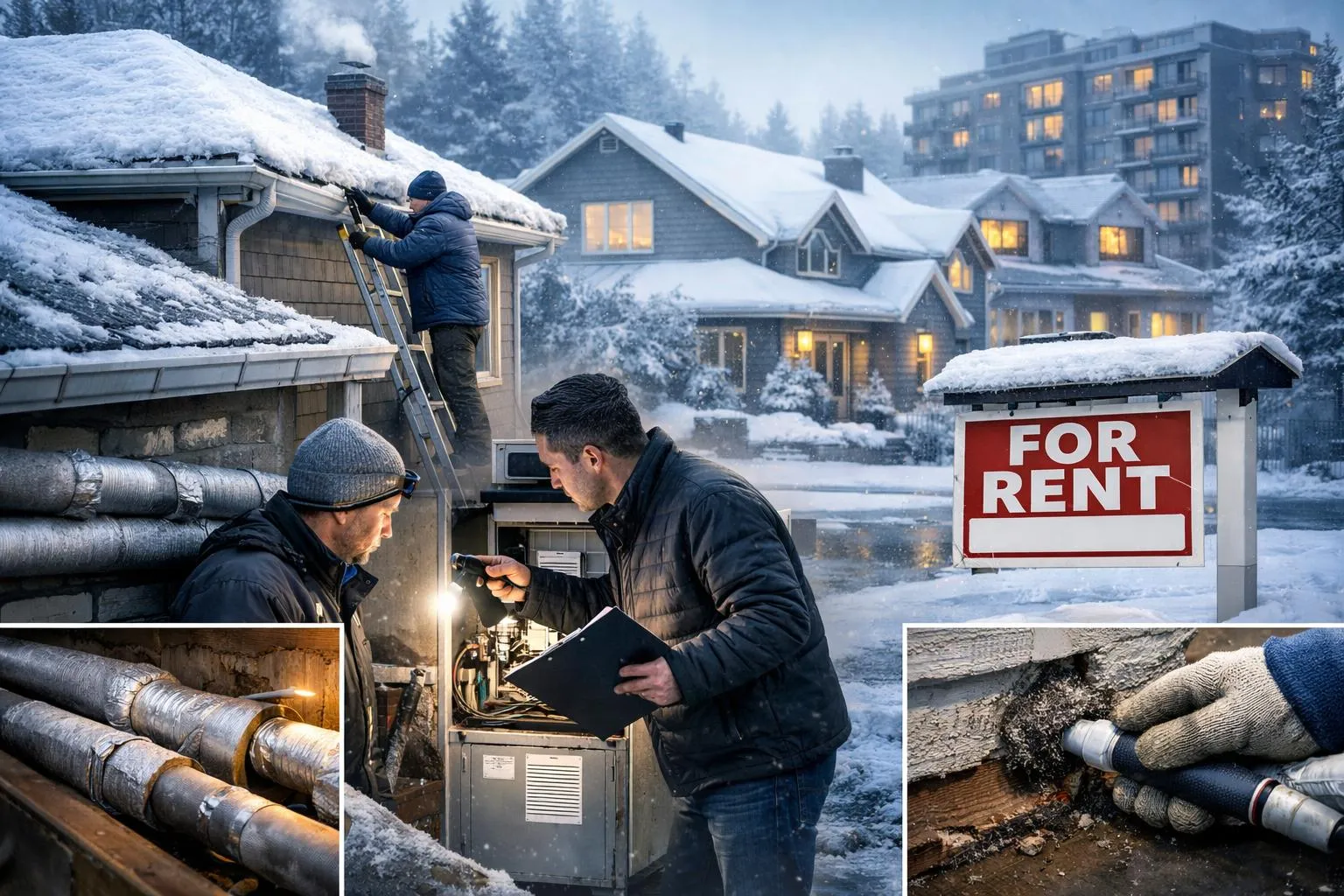
Regardless of which part of the country we live in, most Canadians cannot ignore the onset of winter. Sharply declining temperatures, howling winds, and falling snow can wreak havoc on any home. This goes double for rental properties, which may not receive the same attention afforded to owner-occupied homes. As a landlord, you must prepare your rental property for winter to keep your tenants and investment safe.
It is time to winterize.
This guide covers essential winterization steps for both tenant-occupied and vacant properties, helping you protect your investments through harsh Canadian winters.
Understanding Winterization Approaches
Winterization takes two primary forms depending on occupancy status. Occupied properties require preparation while relying on tenants for daily cold-weather tasks. Vacant properties need extra precautions to prevent damage during extended unoccupied periods.
| Property Status | Winterization Focus | Key Concerns |
|---|---|---|
| Occupied | Systems preparation | Tenant communication |
| Vacant | Freeze prevention | Monitoring needs |
Both approaches require planning and execution before cold weather arrives. Waiting until problems occur leads to expensive repairs and potential liability issues.
Communicating with Tenants
You must keep tenants informed about winterization steps. Clear communication minimizes surprises and discomfort while helping tenants understand their responsibilities.
Setting Expectations
Explain what winterization activities you will perform and when. Describe any disruptions tenants might experience during the process.
Provide written instructions for tenant responsibilities including thermostat settings, faucet care, and snow removal duties if applicable.
Ongoing Communication
Maintain communication throughout winter about any issues that arise. Establish clear channels for tenants to report problems requiring attention.
Quick response to reported issues prevents small problems from becoming expensive damage.
The right financing product can change the math on this entirely — explore our U.S. mortgage financing guide for Canadians for the options most investors use.
Starting with the Pipes
Pipes represent the most critical winterization concern. Frozen pipes can burst, causing extensive water damage and expensive repairs.
Insulation Requirements
Ensure all pipes in unheated spaces are adequately insulated. This includes pipes in crawl spaces, attics, garages, and along exterior walls.
Insulation materials range from simple foam covers to heat tape for particularly vulnerable locations. Invest in proper insulation before cold weather arrives.
Outdoor Faucets
Disconnect hoses from outdoor faucets and drain the connections. Close interior shut-off valves serving outdoor faucets and open the outdoor faucets to drain remaining water.
This simple step prevents frozen outdoor faucets from splitting and causing damage when they thaw.
Vacant Property Precautions
For vacant properties, consider draining the entire plumbing system. This involves shutting off water supply, opening all faucets, flushing toilets, and adding antifreeze to traps.
Professional winterization services can ensure complete drainage when properties will remain vacant for extended periods.
Safety Considerations
Winter brings specific safety concerns that landlords must address to protect tenants and avoid liability.
Carbon Monoxide Detection
Ensure all carbon monoxide detectors are functioning with fresh batteries. Winter heating increases carbon monoxide risk from furnaces and other heating equipment.
Carbon monoxide poisoning can be fatal. Detector maintenance is both a safety obligation and a liability protection.
Smoke Detectors
Check and test all smoke detectors. Replace batteries even if detectors appear to be functioning. Winter heating equipment increases fire risk.
Ice and Snow Hazards
Address ice and snow removal responsibilities clearly. Whether landlord or tenant handles removal, someone must be responsible for maintaining safe walkways.
Slip and fall injuries on icy surfaces create liability exposure. Clear communication and consistent execution of snow removal prevents problems.
Keeping Heat Running
For occupied properties, ensure heating systems are functioning reliably before cold weather demands peak performance.
For a deeper look at the financing angle behind this topic, see our guide to Real Estate Investor Resources & Education.
Thermostat Settings
Advise tenants on appropriate thermostat settings. Temperatures should never drop below levels that risk pipe freezing, even when tenants are away.
Consider programmable thermostats that maintain minimum temperatures regardless of tenant adjustment.
Emergency Heat Availability
Have backup heating options available for furnace failures. Space heaters or temporary heat sources can prevent pipe damage while repairs are completed.
Establish relationships with HVAC contractors who can provide emergency service during peak demand periods.
HVAC and Roof Inspection
Professional inspections identify problems before they cause winter failures.
Furnace Inspection
Schedule professional furnace inspection and maintenance before heating season. Technicians should check all components, replace filters, and verify safe operation.
Annual maintenance extends equipment life and prevents mid-winter failures that leave tenants without heat.
Roof Assessment
Inspect roofs for damaged shingles, deteriorated flashing, and potential ice dam risks. Address identified issues before winter storms expose vulnerabilities.
Ice dams form when attic heat melts snow that refreezes at roof edges. Proper attic insulation and ventilation prevent ice dam formation.
Fireplace Considerations
Properties with fireplaces require specific attention before burning season.
Professional Inspection
Schedule professional chimney inspection and cleaning annually. Creosote buildup creates fire hazards. Damaged liners can allow carbon monoxide entry.
Inspections identify issues ranging from simple cleaning needs to structural problems requiring repair.
Damper Function
Verify dampers open and close properly. Dampers stuck open waste heat while those stuck closed can cause smoke or carbon monoxide problems.
Pest Prevention
Cold weather drives rodents and insects seeking shelter indoors. Prevention is easier than elimination after infestation.
Sealing Entry Points
Inspect building exteriors for gaps that allow pest entry. Seal openings around pipes, vents, and other penetrations.
Pay particular attention to areas where utilities enter buildings. Even small gaps provide pest access.
Removing Attractants
Advise tenants about storage practices that minimize pest attraction. Food should be stored in sealed containers. Garbage should be removed regularly.
Exterior areas should be cleared of debris that provides pest shelter near buildings.
Vacant Property Monitoring
Vacant properties require ongoing monitoring throughout winter to catch problems before they cause major damage.
Regular Inspections
Visit vacant properties regularly to check for issues. Verify heating is functioning, check for water leaks, and assess overall condition.
More frequent visits during extreme cold provide additional protection against freeze damage.
Remote Monitoring
Consider installing temperature monitoring systems that alert you to heating failures. Early warning enables response before pipes freeze.
Water leak sensors provide similar protection against water damage.
Frequently Asked Questions
Ready to explore your financing options? Book a free strategy call with LendCity and let our team help you find the right path forward.
When should I start winterizing rental properties?
Who is responsible for winterization in rental properties?
What happens if pipes freeze in my rental property?
Should I drain pipes in vacant properties?
How often should I check vacant properties in winter?
What should I include in a winterization checklist for my rental properties?
How can remote temperature monitoring systems protect my vacant rental properties?
Building Your Winterization System
Effective winterization requires systematic annual preparation. Develop checklists and schedules that ensure consistent execution across all properties.
Begin preparation early enough to complete all tasks before cold weather arrives. Rushed preparation leads to missed steps and potential problems.
Maintain relationships with contractors who can provide inspection, maintenance, and emergency services. Reliable contractor relationships become invaluable during winter emergencies.
For landlords who approach winterization systematically, winter presents manageable challenges rather than crisis situations. Proper preparation protects investments, maintains tenant satisfaction, and prevents expensive damage.
Disclaimer: LendCity Mortgages is a licensed mortgage brokerage. Content on this page is for educational purposes only and does not constitute legal, tax, investment, securities, or financial-planning advice. Rates, premiums, program terms, and regulations referenced are as of the page's last updated date and are subject to change. Any investment returns, rental yields, tax savings, or case-study figures shown are illustrative only — they are not guaranteed, not typical, and individual results will vary. Consult a licensed lawyer, Chartered Professional Accountant, or registered dealer before acting on any information above. Editorial standards.

Written by
Scott Dillingham
Published
March 20, 2026
· Updated June 29, 2026Reading time
7 min read
Contractor
A licensed professional hired to perform construction, renovation, or repair work on investment properties. Using licensed and insured contractors is essential for permitted work, as unlicensed contractors can result in voided insurance, property liens, and liability for injuries.
HVAC
Heating, Ventilation, and Air Conditioning systems that control temperature and air quality in buildings. HVAC is often one of the largest energy expenses in rental properties, and upgrading to high-efficiency systems can significantly reduce operating costs and increase NOI.
Insulation
Material installed in walls, attics, and floors to resist heat flow, measured by R-value. Upgrading insulation in older properties reduces heating and cooling costs, improves tenant comfort, and can qualify for government energy rebates.
ITIN
Individual Taxpayer Identification Number - a US tax ID for foreign nationals, required for Canadians to invest in US real estate and file US taxes.
Plumbing
The system of pipes, drains, fixtures, and fittings in a building that distributes water and removes waste. Plumbing issues are among the most costly repairs in rental properties, and older galvanized or polybutylene pipes often need replacement during renovations.
Porting
Transferring your existing mortgage to a new property without penalty, keeping your current rate and terms. Useful when moving before your term ends.
STR
Short-Term Rental - a furnished property rented for periods of less than 30 days, typically through platforms like Airbnb or VRBO. STRs can generate 2-3x the income of long-term rentals but require more active management, higher operating costs, and compliance with local short-term rental regulations.
Hover over terms to see definitions. View the full glossary for all terms.