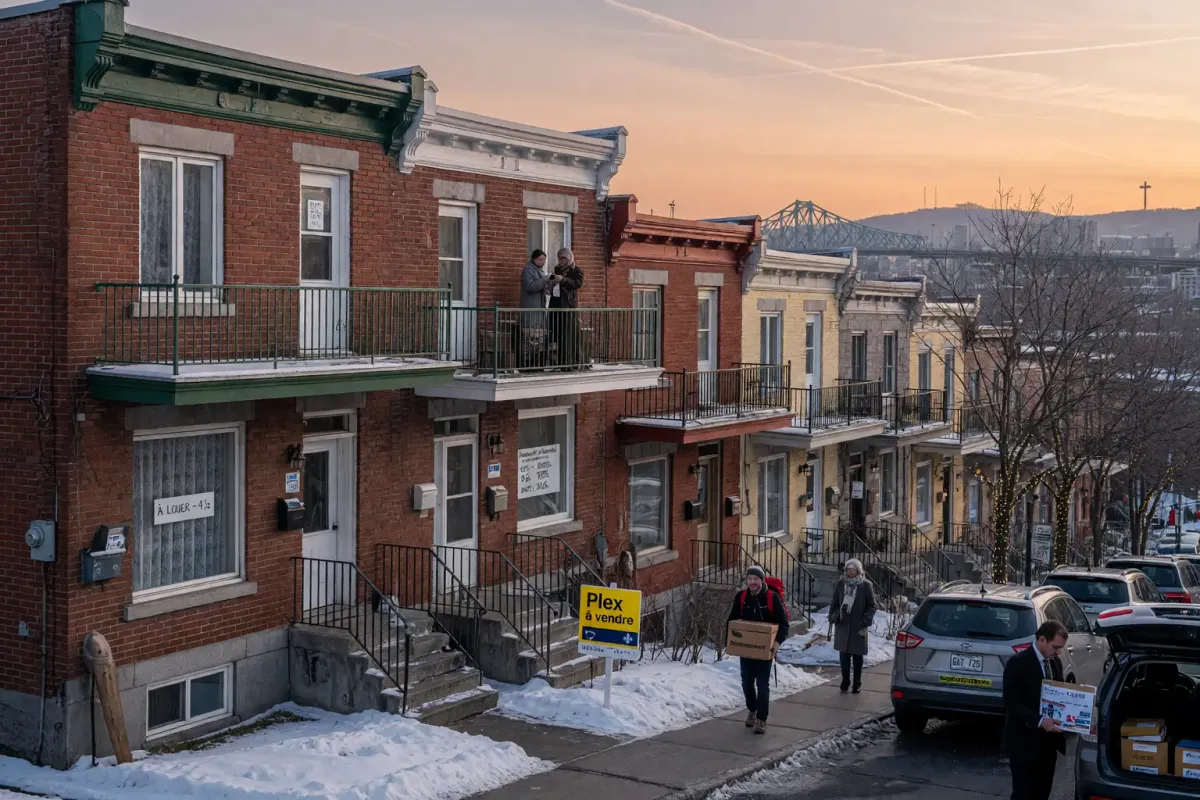
Here’s something most English Canadian investors don’t realize: Quebec might be one of the best-kept secrets in Canadian real estate.
Yes, there’s a language barrier. Yes, the legal system works differently. And yes, the rental regulations require some homework. But for investors willing to understand Quebec’s unique characteristics, the province offers opportunities that simply don’t exist in overheated markets like Toronto or Vancouver.
Let me break down what you need to know about investing in Canada’s second-most populous province.
What Makes Quebec Different
Quebec isn’t just another Canadian province—it operates on fundamentally different foundations that affect every aspect of real estate investing.
| Factor | Quebec’s Reality | What It Means for You |
|---|---|---|
| Population | ~9.1 million (Statistics Canada, 2026) | Substantial market depth, modest 2026 growth slowdown |
| Language | Francophone majority, Bill 96 in effect | Strict French-language requirements for contracts |
| Legal System | Civil law (not common law) | Different framework, notaries instead of lawyers |
| Affordability | Often well below Ontario | Accessible entry points across multiple cities |
| Regulation | Tenant-friendly, TAL oversight | Rent increase guidelines and dispute processes |
Understanding these factors isn’t optional—it’s essential for success.
The Language Reality and Bill 96
Let’s address the elephant in the room: French is Quebec’s official language and the primary language of business throughout most of the province.
And it’s gotten more formal. Bill 96, which took full effect on June 1, 2025, strengthened French-language requirements across the board. Here’s what matters for investors:
- Residential contracts for properties with fewer than five dwellings must be drafted in French unless both parties explicitly request otherwise
- Land Registry applications for property rights must be filed exclusively in French, and any documents in another language require an authenticated Quebec translation
- Co-ownership declarations (condos) must be registered exclusively in French
- Commercial lease notices must be drafted and registered in French, even if the lease itself is in English
- Business signage must feature French in a markedly predominant position
Penalties range from $700 to $7,000 for individuals and $3,000 to $30,000 for businesses, with escalating fines for repeat offenses. This isn’t something you can ignore.
If you don’t speak French, you’re going to need help—and that’s perfectly fine. Strong francophone partners or management make anglophone investor success entirely possible. I’ve seen plenty of Ontario investors build successful Quebec portfolios without speaking a word of French. The key is surrounding yourself with the right people.
Montreal’s International Flavor
Here’s some good news for anglophone investors worried about language: Montreal hosts a significant international presence including expatriates, immigrants, and thousands of international students.
This diversity creates anglophone tenant pools in certain neighborhoods. If you’re targeting these areas, you’ll find the language barrier matters less than you might expect. Just remember—your contracts, filings, and official communications still need to comply with Bill 96.
The Affordability Advantage
One of Quebec’s biggest draws for investors is simple: your money goes further here.
How Prices Compare Across Markets
Quebec properties price significantly below comparable Ontario locations. Here’s a city-by-city breakdown so you can see what you’re actually working with:
| City | Avg. Home Price | Avg. 2BR Rent | Vacancy Rate | Investment Character |
|---|---|---|---|---|
| Montreal | ~$657K | ~$2,000/mo | ~2.5–3.0% | Deepest market, +5.1% YoY (March 2026) |
| Quebec City | ~$425K | ~$1,550/mo | Tight | Government jobs, tourism, double-digit YoY appreciation |
| Gatineau | ~$485K | ~$1,550/mo | Rising | Federal employee demand, Ottawa spillover |
| Sherbrooke | ~$355K | ~$1,350/mo | Low | University town, strong rent growth |
| Trois-Rivières | ~$295K | ~$1,300/mo | Tight | Value play, strong annual price appreciation |
A couple of things jump out from this table. First, Trois-Rivières and Sherbrooke offer entry points that are genuinely accessible—you can get into the market for prices that feel almost impossible in Ontario. Second, Quebec markets have largely outperformed the Canadian average through early 2026, with Montreal up 5.1% year-over-year while the national average sits at -0.8% and the MLS HPI shows -4.7% YoY.
But here’s the catch: lower prices don’t automatically mean better investment. Rent control and other factors can limit returns. You need to understand the complete picture, not just the purchase price.
Housing Affordability Culture
Quebec has historically prioritized housing affordability through policy, affecting both tenant protections and market pricing. This philosophy is built into the province’s approach to housing.
Some investors see this as a drawback. Others see it as creating stable, sustainable rental markets. Where you land depends on your investment philosophy and strategy — and diversifying your real estate portfolio across different market types can reduce overall risk.
The difference between a good deal and a great one often comes down to how it’s financed — book a free strategy call with LendCity and let’s look at the numbers together.
The right financing product can change the math on this entirely — explore our U.S. mortgage financing guide for Canadians for the options most investors use.
Where to Invest in Quebec
The province offers diverse markets with different characteristics. Let me walk through the major options:
Montreal: The Obvious Starting Point
Montreal is Quebec’s largest city and Canada’s second-largest metropolitan area, with a metro population around 4.4 million. Average home prices sit around $657K as of March 2026 (up 5.1% year-over-year)—expensive by Quebec standards, but still a meaningful discount to Toronto or Vancouver for comparable metropolitan exposure.
For most investors, Montreal is where you start. Our Montreal real estate investing guide covers plex investments, student housing, and building your Montreal team in detail. It provides the deepest market with greatest liquidity and the widest variety of opportunities. You’ll find everything from student housing near universities to luxury condos downtown to working-class triplexes in family neighborhoods.
Two-bedroom rents averaging around $2,000 per month give you real revenue to work with, and vacancy rates remain in the 2.5–3.0% range — tighter than most other large Canadian cities, where new supply has pushed CMHC vacancy to 3.1% nationally.
If you’re building a Quebec portfolio, Montreal is almost certainly your first stop.
Quebec City: The Surging Alternative
The provincial capital continues to lead Canada in price growth, with prices up double digits year-over-year as of early 2026 even as the broader Canadian market has cooled. Royal LePage and other forecasters continue to project further aggregate price increases through 2026 — that’s exceptional in a national market down 4.7% on the MLS HPI.
Government employment provides stability, genuine tourism appeal brings economic diversity, and a structural housing shortage across all property categories keeps the market tight. Average prices around $425K still look reasonable compared to major Ontario cities.
Quebec City makes sense for investors who want Quebec exposure but find Montreal too competitive. Just be aware that the language reality is stronger here—Montreal’s bilingual pockets don’t really exist in Quebec City.
Gatineau: The Border Play
Here’s an interesting angle: Gatineau sits directly across the Ottawa River from Canada’s capital. That positioning creates unique opportunities.
Federal employees working in Ottawa can live in Gatineau and benefit from Quebec pricing while accessing federal employment. Average home prices around $485K are below Ottawa’s $617K benchmark, creating a natural draw for cost-conscious federal workers. This creates strong rental demand from a specific, stable tenant pool.
If you understand this dynamic, Gatineau can be a smart play. Two-bedroom rents around $1,550 and a tenant pool dominated by government workers with stable incomes make for predictable cash flow.
Sherbrooke and Trois-Rivières: The Value Plays
These smaller markets offer some of the most compelling value in Canadian real estate right now.
Sherbrooke (~$355K average) benefits from the Université de Sherbrooke and a growing economy. The dynamics mirror what we see in other student rental investing markets across Canada. Rents have climbed significantly since 2019, now averaging around $1,350 for a two-bedroom. That’s strong rent growth in a market with accessible entry points.
Trois-Rivières (~$295K average) has seen strong price appreciation as buyers seek affordable alternatives to larger cities. At around $1,300 for a two-bedroom, the rent-to-price ratios remain attractive.
These markets work for investors comfortable with reduced liquidity and willing to develop local knowledge. Regional investing isn’t for everyone, but value opportunities exist for those willing to do the work.
The Welcome Tax (Droits de Mutation)
Every Quebec property purchase triggers the welcome tax—a one-time transfer duty you need to budget for. Here are the standard rate brackets:
| Property Value Bracket | Tax Rate |
|---|---|
| First $61,500 | 0.5% |
| $61,500 to $307,800 | 1.0% |
| Above $307,800 | 1.5% |
These brackets are indexed annually to Quebec’s consumer price index. Some municipalities can impose higher rates on amounts exceeding $500,000 (up to 3%), and Montreal has its own schedule with rates reaching up to 4% on higher brackets.
The tax is based on whichever is highest: the purchase price, the sale price in the deed of transfer, or the market value (municipal assessment multiplied by the comparative factor). Transfers between married or civil union spouses are exempt.
For a $485,000 Gatineau property, you’re looking at roughly $5,550 in welcome tax. Not huge, but it’s a closing cost you don’t want to be surprised by.
Whether you’re buying your first rental or your tenth, having the right mortgage structure matters — schedule a free strategy session with us to build a plan that scales with you.
Related reading: Montreal Real Estate Investing Guide for 2026 covers the practical angles we see on similar files.
Navigating Quebec’s Legal System
Quebec operates under civil law rather than common law—and this difference matters for real estate investors.
How It’s Different
Real estate transactions in Quebec involve notaries rather than lawyers. The notary acts as a public officer and impartial advisor to both parties, which is fundamentally different from the adversarial lawyer system in common law provinces. Legal procedures, property rights, and contract law all follow the Civil Code of Quebec rather than common law precedent.
This doesn’t mean Quebec law is harder or easier—just different. Working with professionals who understand Quebec-specific requirements is essential.
The TAL (Tribunal Administratif du Logement)
Quebec’s rental tribunal—the Tribunal administratif du logement, or TAL (formerly the Régie du logement)—is the body that oversees landlord-tenant relations. Understanding how the TAL works is critical for any Quebec rental investor.
Rent increase guidelines: Each year, the TAL publishes recommended rent increase percentages. For 2025 leases, the recommendations were historically high (5.9% for unheated units). For 2026, the TAL adopted a new simplified calculation methodology — the 3.1% basic recommendation applies to leases renewing between April 2, 2026 and April 1, 2027. The new formula uses four factors: municipal and school tax changes, insurance cost changes, and the average Quebec CPI over the past three years. For units in seniors’ residences that include services, the 2026 guideline is 6.7%. These figures are guidelines—not legal caps—but they carry significant weight in disputes.
The dispute process: If a tenant refuses your proposed rent increase, you have one month from receiving their refusal to file an application with the TAL to modify the lease. If you miss that deadline, the old rent stays. The TAL then hears both sides and sets the rent based on its own calculation methodology.
Key tenant rights: Quebec tenants can refuse a rent increase outright. They have the right to lease transfer (assignment), which means a departing tenant can pass their lease—and their current rent—to a new tenant. This limits your ability to reset rents to market rate between tenancies, which is one of the biggest differences from other provinces.
The good news is that the system is established and predictable. The rules might not always favor landlords, but at least you can know what to expect.
Challenges of Investing in Quebec
I’m not going to sugarcoat this. Quebec has real challenges that you need to go in with eyes open about:
Language Barriers
Everything from tenant communications to legal filings to contractor negotiations typically happens in French. Bill 96 has formalized what was already the practical reality. If you’re an anglophone investor, you either need to speak French or pay people who do. That’s an added operating cost and a layer of complexity that doesn’t exist in other provinces.
Tenant-Friendly Regulations
Quebec is widely considered the most tenant-friendly province in Canada. Tenants can refuse rent increases, transfer their leases (and their below-market rents) to new tenants, and access a tribunal specifically designed to protect their interests. Evictions are difficult and time-consuming. This doesn’t make investing impossible—it means your underwriting needs to account for limited rent growth and restricted ability to reposition units.
Rent Control Realities
While Quebec doesn’t have formal rent control with hard caps, the TAL’s annual guidelines function similarly in practice. If a tenant disputes your increase, the TAL will typically apply its own formula—and that formula may not account for your renovation costs or market rate changes the way you’d like. New construction is generally exempt, but once a building ages into the system, your pricing flexibility shrinks.
Civil Law Complexity
Quebec’s Civil Code operates differently from common law provinces in ways that can trip up investors accustomed to Ontario or BC norms. Property rights, contract formation, warranty obligations, and dispute resolution all follow different rules. You can’t assume that what works legally in Ontario will work in Quebec. Budget for Quebec-specific legal advice on every transaction.
Investment Strategies for Quebec
Different approaches work well in this market. Let me walk through some options:
Cash Flow Focus
Quebec’s affordability relative to rents often supports cash flow-focused investing. Properties generating meaningful ongoing income may be more achievable here than in expensive markets where you’re betting primarily on appreciation. Learning how to analyze a rental property the right way is essential before committing to any Quebec deal. The Trois-Rivières and Sherbrooke markets, with their lower entry points and rising rents, are particularly interesting for cash flow investors.
If cash flow is your priority, Quebec deserves serious consideration.
Long-Term Hold Strategy
Patient investors can capture appreciation as Quebec markets evolve. Quebec City’s recent double-digit annual gains and Montreal’s +5.1% YoY in March 2026 (versus a -0.8% national average) show what’s possible. Long-term holding through market cycles typically works well in stable markets with growing populations.
Value-Add Opportunities
Properties needing work can create value in Quebec, but understand that renovation in a rent-controlled environment works differently. The TAL’s calculation for allowable rent increases after renovations may not give you the return you expect. Know how improvements affect what you can charge before committing to a value-add strategy. Our guide on smart renovation mistakes investors need to avoid can help you budget renovation costs accurately.
Building Your Quebec Team
Ready to explore your financing options? Book a free strategy call with LendCity and let our team help you find the right path forward.
Success in Quebec requires professional relationships with appropriate expertise—perhaps more than in any other Canadian province. Our investor resources and education page provides tools and guides for building your team.
Finding the Right Agent
Work with agents who understand Quebec markets and investor needs. Francophone capability isn’t just nice to have—it’s necessary for effective operation. Look for investor-focused agents who provide analysis support, not just transaction facilitation.
Property Management
If you don’t speak French, quality property management becomes even more critical. Managers handle tenant communications, TAL proceedings, vendor relationships, and day-to-day operations that require French capability. With Bill 96’s requirements, your management team needs to ensure all written communications comply with language laws.
Evaluate property management options early—before you need them. Our roundup of the best property management software for Canadian investors can help you compare platforms.
Legal and Financial Professionals
Ensure your professional advisors understand Quebec’s civil law system. Notaries handle real estate closings (not lawyers). Accountants need to understand Quebec’s distinct tax credits and provincial programs. For guidance on structuring your holdings, review our guide on how to structure your real estate investment properties. Don’t assume professionals experienced in other provinces will automatically understand Quebec requirements.
Key Takeaways:
- What Makes Quebec Different
- The Affordability Advantage
- Where to Invest in Quebec
- The Welcome Tax (Droits de Mutation)
- Navigating Quebec’s Legal System
Frequently Asked Questions
Can anglophone investors succeed in Quebec?
How does rent control work in Quebec?
What markets work best for beginners?
What is the welcome tax and how much will I pay?
Is distance investing possible in Quebec?
How does Quebec's civil law system affect real estate transactions differently from other provinces?
What makes Gatineau an attractive market for real estate investors?
Making Quebec Work for You
Quebec presents distinctive investment opportunities that combine affordability with genuine market depth. With a population of approximately 9.1 million (Statistics Canada, 2026), markets ranging from $295K entry points in Trois-Rivières to $657K metropolitan exposure in Montreal, and rent growth that’s been outpacing many other provinces, the fundamentals are real.
The challenges are also real: Bill 96’s language requirements add complexity, the TAL’s rent guidelines limit pricing flexibility, civil law demands Quebec-specific expertise, and tenant-friendly regulations mean you can’t operate the way you might in Alberta or Ontario.
The keys to success: research the markets thoroughly including regulatory factors, build professional relationships with appropriate Quebec expertise, ensure your operational approach addresses language requirements, and budget for the welcome tax and Quebec-specific compliance costs.
Quebec isn’t the easiest province for anglophone investors—but for those willing to do the work, it might be one of the most rewarding. Homeowners aged 55 and older in the province can also explore reverse mortgage options specific to Quebec homeowners to unlock equity in their properties without selling. La belle province has opportunity for investors smart enough to find it.
Free download
MLI Select document checklist
Appraisals, rent rolls, environmental reports, and the CMHC package lenders expect before they underwrite.
By submitting, you agree to receive occasional emails from LendCity. You can unsubscribe at any time.
4.8/5 (116 Google reviews)
Disclaimer: LendCity Mortgages is a licensed mortgage brokerage. Content on this page is for educational purposes only and does not constitute legal, tax, investment, securities, or financial-planning advice. Rates, premiums, program terms, and regulations referenced are as of the page's last updated date and are subject to change. Any investment returns, rental yields, tax savings, or case-study figures shown are illustrative only — they are not guaranteed, not typical, and individual results will vary. Consult a licensed lawyer, Chartered Professional Accountant, or registered dealer before acting on any information above. Editorial standards.
Written by
Scott Dillingham
Published
February 15, 2026
· Updated June 29, 2026Reading time
14 min read
Cash Flow
The money left over after collecting rent and paying all expenses including mortgage, taxes, insurance, maintenance, and property management. Positive cash flow is the primary goal of buy-and-hold investors. See also [NOI](/glossary/noi/), [Cash-on-Cash Return](/glossary/cash-on-cash-return/), and [Vacancy Rate](/glossary/vacancy-rate/).
Appreciation
The increase in a property's value over time, which builds [equity](/glossary/equity/) and wealth for the owner through market growth or [forced improvements](/glossary/forced-appreciation/).
Single Family
A detached home designed for one household, the most common property type for beginner real estate investors.
Value-Add Property
A property with potential to increase value through renovations, better management, rent increases, or adding units.
Vacancy Rate
The percentage of rental units that are unoccupied over a given period. A critical factor in [cash flow](/glossary/cash-flow/) analysis, typically estimated at 4-8% for conservative projections. Vacancy directly reduces [NOI](/glossary/noi/).
Property Management
The operation, control, and oversight of real estate by a third party. Property managers handle tenant screening, rent collection, maintenance, and day-to-day operations.
Subject-To
An acquisition strategy where a buyer takes title to a property while the seller's existing mortgage stays in place and the buyer makes the payments. Important caveat: virtually every Canadian (and most US) mortgage contains a due-on-sale / transfer-of-title clause, so transferring title without lender consent can trigger acceleration of the loan, leave the seller on the hook for the debt, and create title-insurance and fraud issues. Subject-to transactions should not be entered into without a real-estate lawyer reviewing the existing mortgage and advising on provincial law.
Market Value
The estimated price a property would sell for on the open market under normal conditions. Determined by comparable sales, location, condition, and market demand.
Underwriting
The process lenders use to evaluate the risk of a mortgage application, including reviewing credit, income, assets, and property value to determine loan approval.
Landlord-Tenant Board
A provincial tribunal or administrative body that resolves disputes between landlords and tenants, handles eviction applications, and enforces residential tenancy legislation. Each Canadian province has its own board or tribunal with specific procedures and timelines.
Market Rent
The rental rate that a property could reasonably command in the current market based on comparable properties, location, and condition. Understanding market rent is essential to maximize income while maintaining competitive positioning and minimizing vacancy.
Contractor
A licensed professional hired to perform construction, renovation, or repair work on investment properties. Using licensed and insured contractors is essential for permitted work, as unlicensed contractors can result in voided insurance, property liens, and liability for injuries.
Student Rental
A rental property near a college or university leased to students, typically on a per-room basis. Student rentals generate higher cash flow than traditional single-family rentals because rent is collected per bedroom rather than per unit, with risk mitigated through parental guarantors.
Rent Control
Provincial regulations that limit how much a landlord can increase rent annually for existing tenants. Rules vary by province - Ontario caps increases at a government-set guideline, while Alberta has no rent control. Rent control directly impacts investment cash flow projections.
Rent Increase
The process of raising rental rates for existing or new tenants. In provinces with rent control, annual increases for existing tenants are capped at government-set guidelines, while new tenancies can often be set at market rates.
Rent-to-Price Ratio
A metric comparing monthly rental income to a property's purchase price, expressed as a percentage. A higher ratio indicates stronger cash flow potential. Used to quickly screen properties and markets for investment viability.
Hover over terms to see definitions. View the full glossary for all terms.