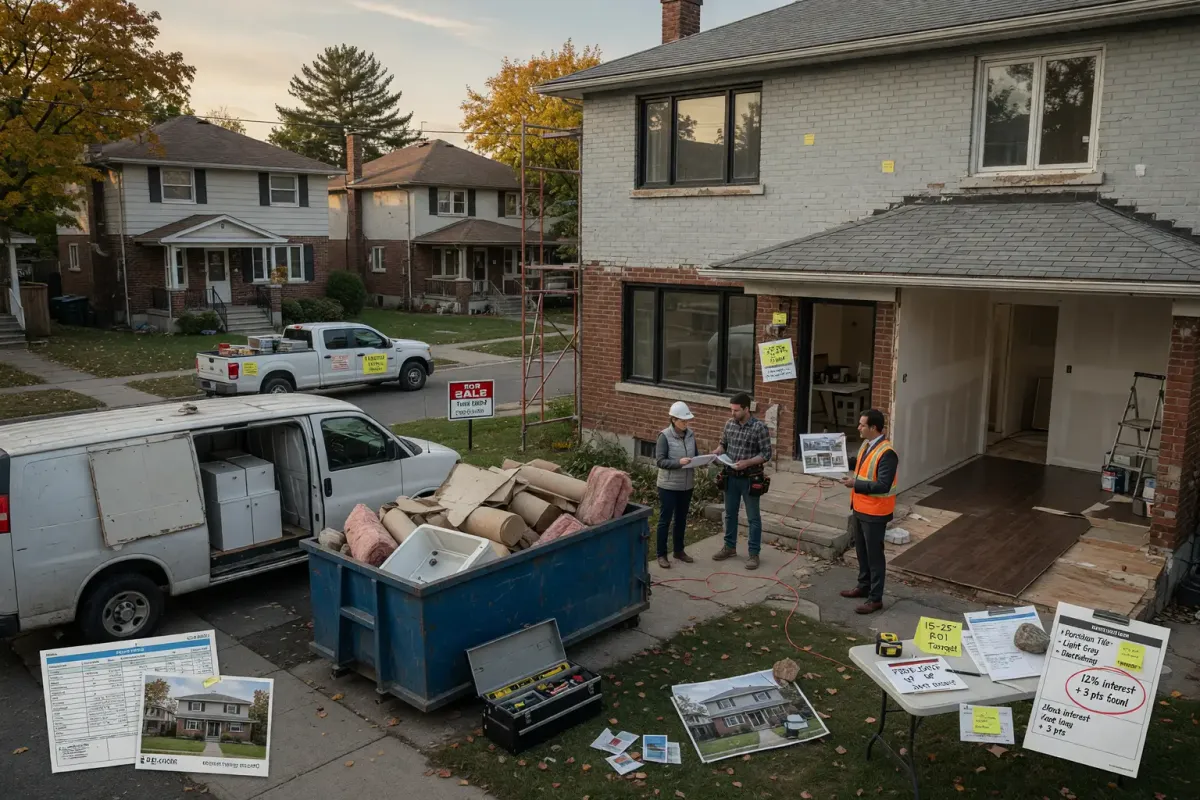
Flipping houses sounds exciting, right? Buy a property, fix it up, sell it for profit. But here’s the thing—most people who talk about flipping at real estate meetups never actually do it. They over-analyze, wait for the perfect market conditions, and end up sitting on the sidelines for years.
Manny Cabral has flipped and wholesaled over 30 properties. He didn’t come from money. His parents immigrated from Portugal with nothing in their pockets. What he’s built, he built himself—and he’s learned some hard lessons along the way.
You Need the Right Team Before You Buy Your First Flip
Here’s where most new flippers go wrong: they buy a property and guess at the renovation costs. That $100,000 budget turns into $200,000, and suddenly there’s no profit left.
Your Essential Team Members
Before you even think about buying a flip, you need these people on speed dial:
-
A reliable contractor: They walk through properties with you, spot structural issues, and give you accurate quotes. If you’re not a contractor yourself, this person will save you from disaster.
-
A great lawyer: You need someone who responds fast, can check liens immediately, and understands creative deal structures. Time-sensitive deals die when your lawyer takes three days to answer.
-
An excellent broker who understands flip mortgage financing: Funding strategies make or break your deal. You need someone who knows how to structure things properly.
-
A great real estate agent: They provide accurate comparables and help you determine realistic selling prices. Two heads are better than one when it comes to exit strategies. For more on assembling the right people, read about building a power team for real estate investors.
Know Your Numbers or Don’t Buy
This is where it gets real. You absolutely must know your numbers before you buy a flip. But here’s the tricky part—you only know what the market is doing today. You have no idea what it’ll do in six or eight months when your renovation is done.
One more number that matters in Canada: the federal Residential Property Flipping Rule, in effect since January 1, 2023, treats any property sold within 365 days of purchase as 100% business income — not capital gains — regardless of your intent (with limited life-event exceptions). Hard money and private flip rates currently sit at roughly 9–14% plus 1–3 points (April 2026). Build all of this into your projections from day one.
That projected $50,000 profit? It could become a $150,000 loss if you’re not careful. Flipping is highly speculative. Be conservative with your projections and understand the 70 percent rule for house flipping before making offers. Don’t get over-excited about potential profits.
Before that projected $50,000 profit turns into a $150,000 loss, make sure your financing and exit strategy are airtight — book a free strategy call with LendCity to review your flip numbers.
The difference between a good deal and a great one often comes down to how it’s financed — book a free strategy call with LendCity and let’s look at the numbers together.
When you’re ready to structure the mortgage side of this strategy, our flip mortgage financing guide covers the programs that typically fit.
Stop Over-Analyzing and Start Taking Action
Manny sees the same thing at investor meetups: people who haven’t bought anything in five or six years because they’re waiting for the market to crash. They were waiting five years ago, and they’re still waiting.
Here’s the problem—over-analysis leads to paralysis. You’ll never have perfect information. You’ll never eliminate all risk. What you can do is take calculated risks and minimize problems as much as possible.
Manny focused on Simcoe County and executed. That’s how he got to 30+ properties—not by waiting for perfect conditions.
The Path from Construction to Car Dealerships to Flipping
Manny didn’t start out flipping houses. He worked in construction, developed severe back problems, and had to leave the industry. He bought auto detailing facilities servicing dealerships in Mississauga, running shifts 24 hours a day. Then he moved into dealership management at major Honda stores.
The dealership treated him well. The pay was good. The people were great. But he was still punching a clock, still working for someone else, still wearing what he calls “golden handcuffs.”
For a deeper look at the financing angle behind this topic, see our guide to Bridge Loan Application for Fix and Flip Investors.
Meanwhile, his son was running their construction business, specializing in second suite conversions. They became one of the biggest companies in Hamilton for this work. But his son was overwhelmed, and Manny wanted to focus on acquiring properties. So he quit the dealership and went all-in on real estate.
Marketing: How to Find Off-Market Deals
People always ask Manny how he finds properties. Then they say they don’t have money for marketing. His response? You have to invest in marketing to get deals. The MLS isn’t where the deals are.
His Multi-Channel Approach
Manny runs radio ads on Rock 95 four to five times every day. Sixty-second spots. He gets calls every single day from potential sellers who heard him on the radio. It was his younger son’s idea, and it’s working better than anything else.
But he doesn’t just do radio. He also runs YouTube ads, Facebook ads, and sends direct mail flyers. The channels work together. Someone might keep a flyer but not act on it. Then they hear the radio ad and make the connection.
From the start, Manny committed to running marketing for an entire year minimum. He knew results wouldn’t come in months one, two, or three. Consistency builds brand recognition. He’s been at it for over a year now and plans to continue indefinitely.
Whether you’re running radio ads like Manny or hunting deals on the MLS, the right financing structure can make or break your margins — book a free strategy call with us and we’ll map out your funding plan.
Whether you’re buying your first rental or your tenth, having the right mortgage structure matters — schedule a free strategy session with us to build a plan that scales with you.
Why Saving Money Is Actually Losing Money
Manny has strong opinions about traditional savings. With current inflation rates, money in the bank is a depreciating asset. That $50,000 you’re proud of saving? It’s worth less every day.
And here’s who really benefits from your bank deposits: the banks. They can lend out multiples of what you deposit. You put in $100,000, they might loan out $1 million. That’s how they generate profits from your money.
Make Your Money Work While You Sleep
Manny knows people who aren’t millionaires but who are making their money work. They have Equity in their properties. They take out lines of credit. They lend this money to investors and earn returns on money that was previously just sitting there.
To get ahead today, especially with inflation, you must know what to do with your disposable income. Otherwise, you’ll be in the rat race forever. Working for someone is fine, but you need an investment strategy.
You Don’t Have to Quit Your Job to Invest
Here’s something important: Manny quit his job because he wanted to run his own business full-time. But not everyone needs to do that.
Many investment strategies work perfectly fine while you’re still employed. It’s about what you do with your disposable income. You can love your job and still get fix and flip mortgage financing, and avoid smart renovation mistakes that cost investors money. His decision was specific to his goals—your path might look different.
Why He Wholesales Some Properties
Manny wholesales properties when he has more deals than he can properly execute on. It’s about return on investment. If he can only handle five projects properly, he won’t take on ten. He’ll work on five and wholesale the other five.
This creates opportunities for other investors. You can sign up for his buyers list at simcohousebuyers.ca and get notifications about wholesale opportunities. These are off-market deals with margin still built in for the buyer.
The Freedom This Business Provides
Today, Manny can work from his boat. He can take vacations with his wife without asking permission. He can take time off when he wants. He doesn’t punch a clock.
He runs the financial side of the business—dealing with investors, marketing, seller appointments. His elder son acts as general contractor. His younger son provides marketing strategy through his marketing company. It’s a family operation with clearly defined roles.
Manny loves what he does so much he can’t think of retirement. He’s never bored between his work, his Corvettes, flying model aircraft, boats, and playing music. He’s busy, but it’s the kind of busy he chose.
That’s the real prize—not just the money, but the freedom to design your life the way you want it.
Key Takeaways:
- You Need the Right Team Before You Buy Your First Flip
- Know Your Numbers or Don’t Buy
- Stop Over-Analyzing and Start Taking Action
- Marketing: How to Find Off-Market Deals
- Why Saving Money Is Actually Losing Money
Frequently Asked Questions
Do I need construction experience to start flipping houses?
How much money do I need for marketing to find flip properties?
Should I quit my job to flip houses full-time?
What's the biggest mistake new house flippers make?
How do I find off-market properties to flip?
Is saving money in the bank a good strategy for investors?
What team members do I need before buying my first flip?
Why do experienced flippers wholesale some properties instead of flipping them all?
Weekly Investor Insight
Sunday financing notes for investors
Market updates, rate moves, and deal structures — once a week. Unsubscribe anytime.
By submitting, you agree to receive occasional emails from LendCity. You can unsubscribe at any time.
Disclaimer: LendCity Mortgages is a licensed mortgage brokerage. Content on this page is for educational purposes only and does not constitute legal, tax, investment, securities, or financial-planning advice. Rates, premiums, program terms, and regulations referenced are as of the page's last updated date and are subject to change. Any investment returns, rental yields, tax savings, or case-study figures shown are illustrative only — they are not guaranteed, not typical, and individual results will vary. Consult a licensed lawyer, Chartered Professional Accountant, or registered dealer before acting on any information above. Editorial standards.

Written by
Scott Dillingham
Published
December 22, 2025
· Updated June 29, 2026Reading time
9 min read
Equity
The difference between a property's current market value and the remaining mortgage balance. If your home is worth $500,000 and you owe $300,000, you have $200,000 in equity. Equity builds through mortgage payments, [appreciation](/glossary/appreciation/), and [forced appreciation](/glossary/forced-appreciation/). See also [LTV](/glossary/ltv/) and [Refinancing](/glossary/refinancing/).
Fixer-Upper
A property that needs repairs or renovations, typically priced below market value. Often targeted by investors using BRRRR or fix-and-flip strategies.
Due Diligence
The comprehensive investigation and analysis of a property before purchase, including financial review, physical inspection, title search, and market analysis.
Market Value
The estimated price a property would sell for on the open market under normal conditions. Determined by comparable sales, location, condition, and market demand.
ROI
Return on Investment - a measure of profitability calculated by dividing net profit by total investment. Used to compare the efficiency of different investments.
Mortgage Broker
A licensed professional who shops multiple lenders to find the best mortgage rates and terms for borrowers. Unlike banks, brokers have access to dozens of lending options.
Contractor
A licensed professional hired to perform construction, renovation, or repair work on investment properties. Using licensed and insured contractors is essential for permitted work, as unlicensed contractors can result in voided insurance, property liens, and liability for injuries.
Carrying Costs
The ongoing expenses of holding a property, including mortgage payments, property taxes, insurance, utilities, and maintenance. Understanding carrying costs is essential during renovation periods when the property generates no rental income.
Property Inspection
A professional examination of a property's physical condition, including structural elements, mechanical systems, roofing, and other components, typically conducted before purchase. Thorough inspections help investors identify problems, estimate repair costs, and negotiate purchase prices.
Comparable Properties
Similar properties in the same market area used to establish fair market value or rental rates through comparison of features, location, condition, and recent sale or rental prices. Analyzing comps is essential when determining offer prices and setting competitive rents.
Wholesaling
A real estate investment strategy where an investor contracts to buy a property and then assigns that contract to another buyer for a fee, without ever taking ownership. Wholesaling requires minimal capital but significant marketing and negotiation skills.
MLS
Multiple Listing Service - a database used by licensed real estate agents to list properties for sale, providing standardized property information, photos, and pricing. Investors also use off-market strategies to find deals not listed on the MLS.
Real Estate Agent
A licensed professional who represents buyers or sellers in real estate transactions, providing market expertise, negotiation skills, and access to the MLS. Working with an investor-friendly agent who understands rental property analysis and financing strategies can significantly impact deal quality.
70% Rule
A fix-and-flip guideline stating you should pay no more than 70% of a property's after-repair value (ARV) minus renovation costs. On a home with a $300,000 ARV and $50,000 in repairs, your max purchase price would be $160,000. This margin accounts for holding costs, selling costs, and profit.
Hover over terms to see definitions. View the full glossary for all terms.