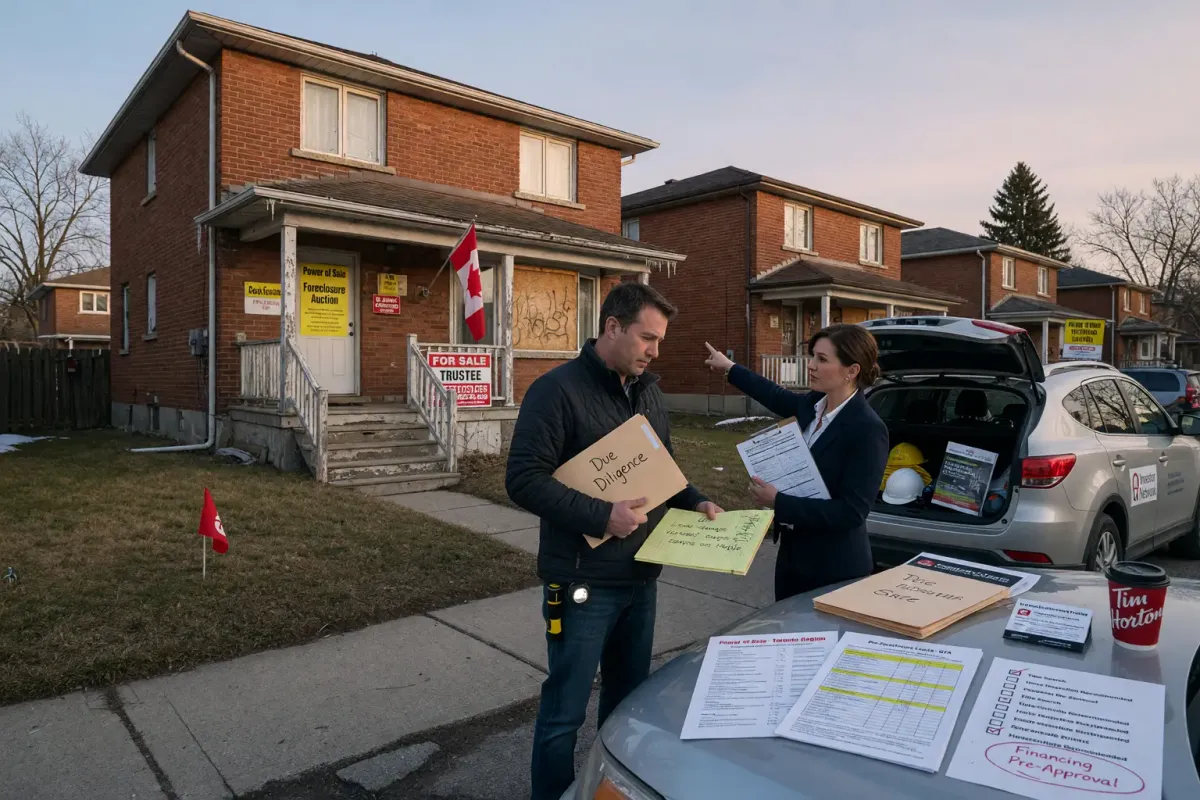
Foreclosures scare most buyers away. That’s exactly why they can be opportunities.
When homeowners default on mortgages, lenders take back properties and need to sell them. They’re not in the real estate business—they want these assets off their books. That motivation creates potential discounts for investors who know what they’re doing.
But let me be clear: foreclosure investing isn’t for beginners. Hidden problems, complicated processes, and condition issues can turn apparent bargains into expensive mistakes. If you know the risks and prepare properly, though, foreclosures can add properties to your portfolio at prices the regular market doesn’t offer.
Types of Foreclosure Opportunities
Distressed properties come in different flavors, each with its own dynamics.
| Type | Situation | Key Consideration |
|---|---|---|
| Pre-foreclosure | Owner defaulted but still owns | May accept below-market to avoid foreclosure |
| Auction | Court or trustee sale | Often requires cash, limited inspection |
| REO (Bank-Owned) | Failed to sell at auction | Bank wants it gone, may allow inspections |
| Government-owned | CMHC or other agency acquired | Specific purchase programs apply |
Pre-foreclosure catches owners who’ve defaulted but whose properties haven’t been repossessed yet. These people often accept below-market offers to avoid foreclosure hitting their credit. Finding them requires court records research or direct outreach—sensitive work, but opportunity exists.
Auction purchases happen through public sales. The catch: often cash required, limited or no inspection allowed, you buy as-is. High risk, potentially high reward. Know what you’re doing before bidding.
REO properties reverted to lender ownership after failing to sell at auction. Banks don’t want to hold real estate—they want cash. These often allow inspections and may have more negotiable terms than auctions.
Government-owned properties come through agencies like CMHC (Canada Mortgage and Housing Corporation). As of 2026, CMHC’s direct acquisition of foreclosed properties is limited. In practice, government-held inventory surfaces through provincial programs — for example, BC’s court-ordered sale process, Alberta’s foreclosure (Judicial Review) system, and Ontario’s power-of-sale regime each have distinct rules and inventories. A mortgage broker who specialises in distressed properties can tell you exactly what’s available in your province right now.
Step 1: Get Financing Sorted First
Foreclosure sellers—whether distressed owners, banks, or auctioneers—prioritize certainty and speed. Pre-approved buyers can move in days; everyone else loses the deal while their financing is still pending.
Get pre-approved before you start searching. Know your maximum. Have financing confirmed so you can move fast when opportunity appears.
Not all lenders finance foreclosed properties. Some have condition requirements distressed properties can’t meet. Work with mortgage professionals who know how to finance these deals.
Step 2: Find the Deals
Foreclosed properties don’t typically show up on MLS like regular listings. You need to look differently.
Pre-foreclosure: Court records, default notices, title searches can reveal properties in foreclosure process. Direct outreach to owners requires sensitivity but can surface opportunities.
Auctions: Legal notices, court announcements, specialized auction services. Show up even before you’re ready to bid—you’ll learn pricing patterns and competition levels.
REO: Bank-owned property websites, REO specialists, relationships with bank asset disposition departments. Agents who specialize in REO often get early access.
Step 3: Know the Risks
Foreclosures carry risks conventional purchases avoid. Understand these before writing checks.
For a deeper look at the financing angle behind this topic, see our guide to Invest in Real Estate Canada.
Property condition issues are common. Owners in financial distress defer maintenance. Some deliberately damage properties before leaving. Extended vacancies create problems—frozen pipes, pest infestations, vandalism, deterioration.
Hidden costs can eliminate your discount:
- Outstanding property taxes or utility bills you inherit
- Liens from unpaid contractors or secondary lenders
- Environmental contamination
- Code violations requiring correction
Timeline uncertainty. Foreclosure processes, especially court-supervised ones, can drag on longer than conventional transactions. In Canada, the timeline from default to deficiency judgment typically runs 90–180 days, with Ontario’s power-of-sale process generally faster than the judicial-sale regimes used in BC, Alberta, and most other provinces. Watch out for CRA priority claims on tax debts — those rank ahead of most lender liens and can survive the sale. That affects your carrying costs and opportunity timing.
Title searches and thorough due diligence identify many problems. But some only appear after you own the property.
Step 4: Get Professional Help
Foreclosures have more moving parts than conventional deals — title complications, condition unknowns, and lender-specific contracts. Bring in specialists who’ve done this before.
Home inspection is essential whenever access permits. Inspectors identify structural issues, system deficiencies, and repair requirements that affect your pricing and renovation budget. For auctions where inspection isn’t possible, assume worst-case condition in your bidding.
Real estate agents who specialize in foreclosures understand unique considerations. Their relationships with REO asset managers can provide access and information you can’t get independently.
Real estate attorney review is particularly important for foreclosures. Title complications are more common. Legal review protects you from problems that can affect your ownership.
Step 5: Execute the Purchase
With due diligence complete and risks understood, time to close.
Price your offer appropriately. Reflect property condition, carrying costs, and renovation requirements—not just market comparables. The discount you need depends on specific property needs.
Consider pursuing multiple properties simultaneously. Foreclosure deals fall through. Having backups keeps you in motion.
Understand closing requirements. Court-ordered sales may have specific procedures. REO sales often use bank-specified contracts and closing agents. Know the requirements and accommodate them.
Frequently Asked Questions
Are foreclosures always good deals?
Can I finance foreclosure purchases?
Should new investors buy foreclosures?
What risks are unique to foreclosures?
What hidden costs can eliminate the foreclosure discount?
How do I find pre-foreclosure properties in Canada?
Why is getting pre-approved essential before pursuing foreclosures?
The Bottom Line
Ready to explore your financing options? Book a free strategy call with LendCity and let our team help you find the right path forward.
Foreclosure investing can work. Motivated sellers—banks want properties off their books, distressed owners want to avoid foreclosure—create genuine opportunities for informed buyers.
But the risks are real. Condition problems, hidden costs, and process complications make foreclosures inappropriate for investors who haven’t done their homework.
If you proceed: get pre-approved first, work with specialized professionals, conduct thorough due diligence, budget conservatively for surprises, and never assume the apparent discount is real until you’ve verified it.
That’s how smart investors approach foreclosures. Carefully, with preparation, and with realistic expectations about both opportunities and risks.
Free download
MLI Select document checklist
Appraisals, rent rolls, environmental reports, and the CMHC package lenders expect before they underwrite.
By submitting, you agree to receive occasional emails from LendCity. You can unsubscribe at any time.
4.8/5 (116 Google reviews)
Disclaimer: LendCity Mortgages is a licensed mortgage brokerage. Content on this page is for educational purposes only and does not constitute legal, tax, investment, securities, or financial-planning advice. Rates, premiums, program terms, and regulations referenced are as of the page's last updated date and are subject to change. Any investment returns, rental yields, tax savings, or case-study figures shown are illustrative only — they are not guaranteed, not typical, and individual results will vary. Consult a licensed lawyer, Chartered Professional Accountant, or registered dealer before acting on any information above. Editorial standards.

Written by
Scott Dillingham
Published
April 17, 2026
· Updated June 29, 2026Reading time
6 min read
Carrying Costs
The ongoing expenses of holding a property, including mortgage payments, property taxes, insurance, utilities, and maintenance. Understanding carrying costs is essential during renovation periods when the property generates no rental income.
CMHC
CMHC (Canada Mortgage and Housing Corporation) is a federal Crown corporation that provides mortgage loan insurance to lenders when borrowers have less than a 20% down payment, enabling Canadians to purchase homes with as little as 5% down. For real estate investors, CMHC insurance is available on owner-occupied properties of up to four units, but is generally not available for non-owner-occupied investment properties, meaning investors typically need at least 20% down and must seek conventional financing.
Contractor
A licensed professional hired to perform construction, renovation, or repair work on investment properties. Using licensed and insured contractors is essential for permitted work, as unlicensed contractors can result in voided insurance, property liens, and liability for injuries.
Due Diligence
The comprehensive investigation and analysis of a property before purchase, including financial review, physical inspection, title search, and market analysis.
Foreclosure
The legal process by which a lender seizes and sells a property after the borrower defaults on mortgage payments. In Canada, the process varies by province and may include judicial sale or power of sale. Foreclosed properties can offer below-market pricing but carry condition and title risks.
ITIN
Individual Taxpayer Identification Number - a US tax ID for foreign nationals, required for Canadians to invest in US real estate and file US taxes.
Lien
A legal claim against a property used as security for a debt. Liens arise from unpaid mortgages, property taxes, contractor work, or court judgments. Undiscovered liens can eliminate an apparent purchase discount on distressed properties.
MLS
Multiple Listing Service - a database used by licensed real estate agents to list properties for sale, providing standardized property information, photos, and pricing. Investors also use off-market strategies to find deals not listed on the MLS.
Mortgage Broker
A licensed professional who shops multiple lenders to find the best mortgage rates and terms for borrowers. Unlike banks, brokers have access to dozens of lending options.
Power of Sale
A clause in Canadian mortgages allowing the lender to sell a property without court involvement after the borrower defaults. Used in Ontario and some other provinces as a faster alternative to judicial foreclosure.
Hover over terms to see definitions. View the full glossary for all terms.