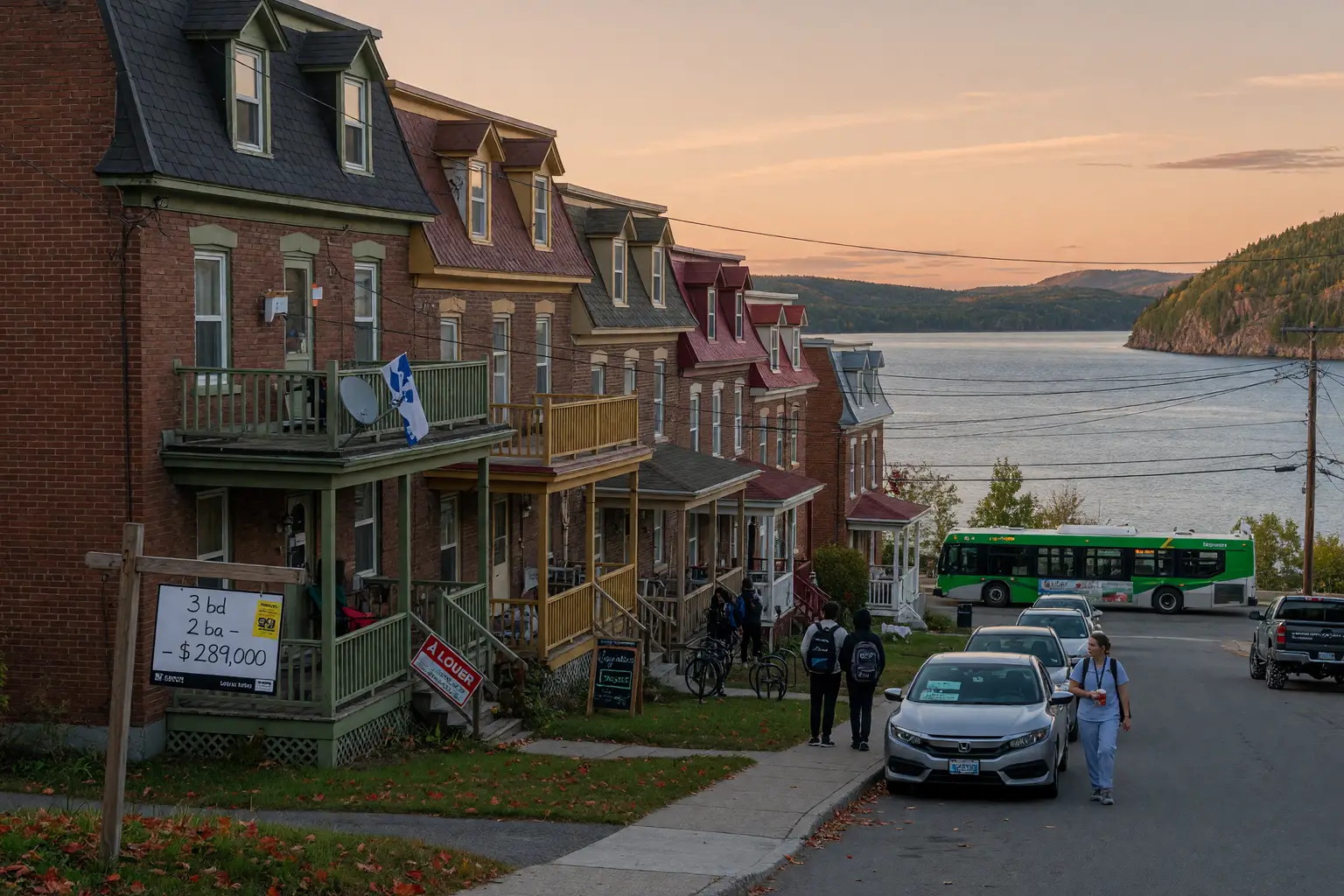
Chicoutimi-Jonquière represents a true Canadian marvel nestled in the heart of Quebec’s Saguenay region. This tranquil area, marked by charming architecture and sweeping landscapes, offers unique opportunities for real estate investors seeking alternatives to competitive metropolitan markets. Understanding what makes this region special helps investors identify undervalued opportunities with strong fundamentals.
The city invites visitors with its simple pleasures including the warmth of tight-knit communities, bustling local markets, and stunning natural scenery. But the smaller city atmosphere should not fool investors. Chicoutimi-Jonquière offers amenities, facilities, and opportunities comparable to metropolitan areas while maintaining affordability that larger markets lack.
Whether you are an experienced investor seeking geographic diversification or someone entering real estate for the first time, understanding this region and its market dynamics is crucial. Let’s look at the real estate investment market in Chicoutimi-Jonquière, providing insights to support informed investment decisions.
Understanding the Chicoutimi-Jonquière Market
Chicoutimi-Jonquière is a vibrant urban centre within Quebec offering diverse profitable real estate investment opportunities. The city is known for its thriving cultural scene, mesmerizing natural beauty, high-quality health services, and solid economy. These characteristics attract students, professionals, and retirees, creating strong and consistent housing demand.
| Market Characteristic | Description | Investment Implication |
|---|---|---|
| Diverse Demand | Students, professionals, retirees | Multiple tenant segments |
| Affordability | Lower prices than major metros | Accessible entry points |
| Economic Stability | Healthcare, education anchors | Reliable employment base |
| Natural Beauty | Tourism and lifestyle appeal | Quality of life retention |
| Cultural Richness | Francophone heritage | Community connection |
This diverse demand translates into an equally diverse real estate market. From affordable single-family homes in suburban areas to sophisticated downtown condominiums catering to young professionals, the city offers something for every investor regardless of budget or strategy.
The balance of tranquility and accessibility has investors increasingly focusing on this Quebec gem. Those who establish positions early may benefit as broader market attention eventually discovers the region’s value.
Breaking Down Investment Potential
Understanding the specific factors that create investment value in Chicoutimi-Jonquière helps identify best opportunities. Several characteristics contribute to the region’s investment appeal.
Educational and Healthcare Anchors
The presence of educational institutions and healthcare facilities provides economic stability that many smaller markets lack. Students require housing near campuses, creating consistent rental demand. Healthcare employment provides stable, well-paying jobs that support housing markets.
These anchor institutions are unlikely to relocate, providing long-term demand certainty that speculative markets cannot match. Properties serving student or healthcare worker populations benefit from this stability.
Affordability Advantage
Here’s the number that matters. As of early 2026, the average single-family home in Chicoutimi-Jonquière sits around $275,000 to $320,000. Montreal averages roughly $540,000. Toronto sits north of $1.1 million. You’re buying the same roof for a fraction of the capital.
| City | Avg. Home Price (2026) | Typical 2-Bed Rent |
|---|---|---|
| Chicoutimi-Jonquière | $275,000–$320,000 | $950–$1,200 |
| Quebec City | $380,000–$420,000 | $1,200–$1,500 |
| Montreal | ~$540,000 | $1,600–$1,900 |
| Toronto | $1.1M+ | $2,400–$2,800 |
That gap drives the yield. A duplex at $300,000 can rent for $1,800 to $2,200 combined per month. Gross yields land in the 7% to 9% range—something most Toronto investors only dream about. Vacancy in the Saguenay region typically runs 2.5% to 3.5%, so your occupancy stays solid when you price right.
Lower entry prices also pull in first-time homebuyers who’d be stuck renting forever in expensive markets. That buyer pool supports your exit when you’re ready to sell.
Tourism and Lifestyle Appeal
The region’s natural beauty attracts tourism that supports short-term rental opportunities. Seasonal visitors seeking outdoor recreation create demand for vacation rentals. This tourism component provides income diversification beyond traditional long-term rentals.
Lifestyle quality also supports permanent resident retention. Once people experience the region’s appeal, many choose to remain. This retention creates stable tenant bases and consistent buyer pools.
Property Appreciation Drivers
Understanding what drives property values in Chicoutimi-Jonquière helps investors identify properties with superior appreciation potential and time purchases appropriately.
Infrastructure Development
Government and private infrastructure investments enhance property values in affected areas. Transportation improvements, commercial development, and public facility construction all create appreciation opportunities.
Monitoring planned infrastructure projects helps identify neighborhoods likely to benefit. Acquiring properties before projects complete allows capturing appreciation as improvements are realized.
Neighborhood Dynamics
Different neighborhoods within Chicoutimi-Jonquière experience varying appreciation rates. Understanding which areas are improving, stable, or declining helps focus acquisitions appropriately.
Proximity to employment centers, quality schools, and desirable amenities correlates with stronger appreciation. Properties in convenient locations typically outperform those in less accessible areas.
Property Condition and Updates
Building condition and modernization significantly affect value. Properties with deferred maintenance appreciate more slowly than well-maintained alternatives. Updates including modern kitchens, bathrooms, and energy systems enhance both rental appeal and resale values.
Value-add investors can capture appreciation by acquiring properties below market value due to condition issues, making appropriate improvements, and realizing gains through rent increases or resale.
Similar value-add approaches prove effective in other Canadian markets offering lower entry costs and strong demand drivers. Investors can explore what to know about Oshawa eastern GTA real estate investing for details on transit access, student housing, and economic diversification.
Rental Market Analysis
Understanding rental dynamics in Chicoutimi-Jonquière helps project income potential and evaluate investment opportunities. Rental markets reflect local employment, demographics, and housing supply conditions.
Tenant Demographics
The region attracts diverse tenant populations including students attending local educational institutions, young professionals starting careers, families seeking affordable housing in quality environments, and retirees downsizing from larger homes.
Different tenant segments have different housing preferences and can pay different rent levels. Understanding which segments your properties serve helps improve marketing and pricing.
Seasonal Patterns
Student populations create some seasonality in rental markets. Demand peaks before academic terms begin and may soften during summer months. Properties heavily dependent on student tenants should account for potential summer vacancy.
Year-round tenants including healthcare workers and local families provide more consistent occupancy. Diversifying tenant bases across segments helps smooth seasonal fluctuations.
Rent Levels and Growth
Do this: run the numbers before you fall in love with a property. A $290,000 three-bedroom in a solid neighbourhood rents for about $1,100 to $1,300 per month in 2026. Put 20% down and your cash-on-cash return often lands between 6% and 8% after expenses—before any principal paydown.
Absolute rents sit below Montreal or Toronto. That doesn’t matter. Your cost basis is lower too, so the yield wins. Rent growth here tracks local wages and inflation, roughly 2% to 4% annually in recent years. Without a flood of new construction, that growth stays steady instead of getting crushed by oversupply.
Cultural Influences on Property Value
Understanding local culture tells you what residents actually value—and how you should position your properties. The Francophone heritage of Chicoutimi-Jonquière shapes community expectations and preferences. Ignore that, and you’ll miss what buyers and tenants care about most.
Community Connection
Strong community ties characterize the region. Residents value knowing their neighbors and participating in local activities. Properties in walkable, community-oriented neighborhoods often command premiums.
Long-term residents provide tenant stability. Once families establish community connections, they tend to remain. This stability reduces turnover costs and provides reliable income streams.
Language Considerations
French language proficiency benefits investors operating in the region. While business can be conducted in English, French communication demonstrates respect for local culture and helps with relationships.
Investors from outside Quebec should consider partnering with local professionals who can navigate language and cultural requirements effectively.
Building Your Professional Network
Success in Chicoutimi Jonquiere Real Estate real estate requires understanding local market dynamics and developing appropriate investment strategies.
Real Estate Professionals
Investors targeting Chicoutimi Jonquiere Real Estate should focus on thorough market research and careful property selection aligned with their goals.
Notaires handle real estate closings in Quebec. Working with experienced notaires ensures transactions proceed smoothly and all legal requirements are satisfied.
Property Management
Property managers familiar with the local market handle tenant relations, maintenance, and day-to-day operations. For investors not residing in the region, professional management enables successful remote ownership.
Evaluate property management capabilities before acquiring properties. Understanding management costs and quality helps project realistic investment returns.
Financing Partners
Success in Chicoutimi Jonquiere Real Estate real estate requires understanding local market dynamics and developing appropriate investment strategies.
Some lenders specialize in investment properties and understand investor needs better than consumer-focused institutions.
Frequently Asked Questions
Is Chicoutimi-Jonquière a good market for out-of-province investors?
What types of properties work best for investment in the region?
How do rental yields compare to major metropolitan markets?
What are the main risks of investing in smaller regional markets?
How do I get started investing in Chicoutimi-Jonquière?
How does student housing demand affect rental strategies in the Saguenay region?
What infrastructure developments could drive future appreciation in Chicoutimi-Jonquiere?
Building Your Chicoutimi-Jonquière Investment Strategy
Ready to explore your financing options? Book a free strategy call with LendCity and let our team help you find the right path forward.
The Chicoutimi-Jonquière region offers genuine opportunities for real estate investors seeking alternatives to overheated metropolitan markets. The combination of affordability, stable demand drivers, and quality of life factors creates favorable investment conditions.
Success requires developing local expertise through research, relationships, and experience. Understanding the region’s unique characteristics helps identify best opportunities and avoid common pitfalls.
Consider starting with properties that match your experience level and risk tolerance. Each investment builds knowledge applicable to future acquisitions. Patient investors who develop regional expertise can build substantial portfolios over time.
The region may not capture headlines like Toronto or Vancouver, but its fundamentals support sustainable investment returns for those willing to look beyond obvious markets. By approaching Chicoutimi-Jonquière thoughtfully, investors can successfully participate in this Quebec opportunity.
Weekly Investor Insight
Sunday financing notes for investors
Market updates, rate moves, and deal structures — once a week. Unsubscribe anytime.
By submitting, you agree to receive occasional emails from LendCity. You can unsubscribe at any time.
Disclaimer: LendCity Mortgages is a licensed mortgage brokerage. Content on this page is for educational purposes only and does not constitute legal, tax, investment, securities, or financial-planning advice. Rates, premiums, program terms, and regulations referenced are as of the page's last updated date and are subject to change. Any investment returns, rental yields, tax savings, or case-study figures shown are illustrative only — they are not guaranteed, not typical, and individual results will vary. Consult a licensed lawyer, Chartered Professional Accountant, or registered dealer before acting on any information above. Editorial standards.

Written by
Scott Dillingham
Published
July 12, 2026
Reading time
9 min read
Appreciation
The increase in a property's value over time, which builds [equity](/glossary/equity/) and wealth for the owner through market growth or [forced improvements](/glossary/forced-appreciation/).
Cash Flow Optimization
Cash flow optimization is the strategic process of maximizing the net income generated from a rental property by increasing rental revenue and minimizing operating expenses, mortgage costs, and vacancies. For Canadian real estate investors, this often involves tactics such as selecting the right financing structure, leveraging rental income from multiple units, and managing expenses like property taxes and maintenance to ensure the property generates consistent positive monthly returns.
Cash Flow
The money left over after collecting rent and paying all expenses including mortgage, taxes, insurance, maintenance, and property management. Positive cash flow is the primary goal of buy-and-hold investors. See also [NOI](/glossary/noi/), [Cash-on-Cash Return](/glossary/cash-on-cash-return/), and [Vacancy Rate](/glossary/vacancy-rate/).
Cash-on-Cash Return
A metric that measures the annual pre-tax [cash flow](/glossary/cash-flow/) relative to the total cash invested in a property. Calculated as annual cash flow divided by total cash invested (including [down payment](/glossary/down-payment/) and [closing costs](/glossary/closing-costs/)), expressed as a percentage. A 10% cash-on-cash return means you earn $10,000 annually on a $100,000 investment. See also [Cap Rate](/glossary/cap-rate/).
Condominium
A type of property ownership where an individual owns a specific unit within a larger building or complex, sharing ownership of common areas with other unit owners. Condos offer lower entry prices but come with monthly fees and potential rental restrictions that affect investment returns.
Deferred Maintenance
Necessary repairs and maintenance that have been postponed or neglected, creating a backlog of work that will eventually require attention. Properties with significant deferred maintenance can be value-add opportunities for investors willing to address accumulated issues.
Duplex
A residential property containing two separate dwelling units, either side-by-side or stacked. Duplexes are popular among beginner investors because they can house-hack by living in one unit while renting the other to offset mortgage costs.
Foundation
The structural base of a building that transfers loads to the ground. Foundation issues such as cracks, settling, or water intrusion are among the most expensive repairs in real estate and can significantly impact property value and financing eligibility.
ITIN
Individual Taxpayer Identification Number - a US tax ID for foreign nationals, required for Canadians to invest in US real estate and file US taxes.
Market Value
The estimated price a property would sell for on the open market under normal conditions. Determined by comparable sales, location, condition, and market demand.
Hover over terms to see definitions. View the full glossary for all terms.