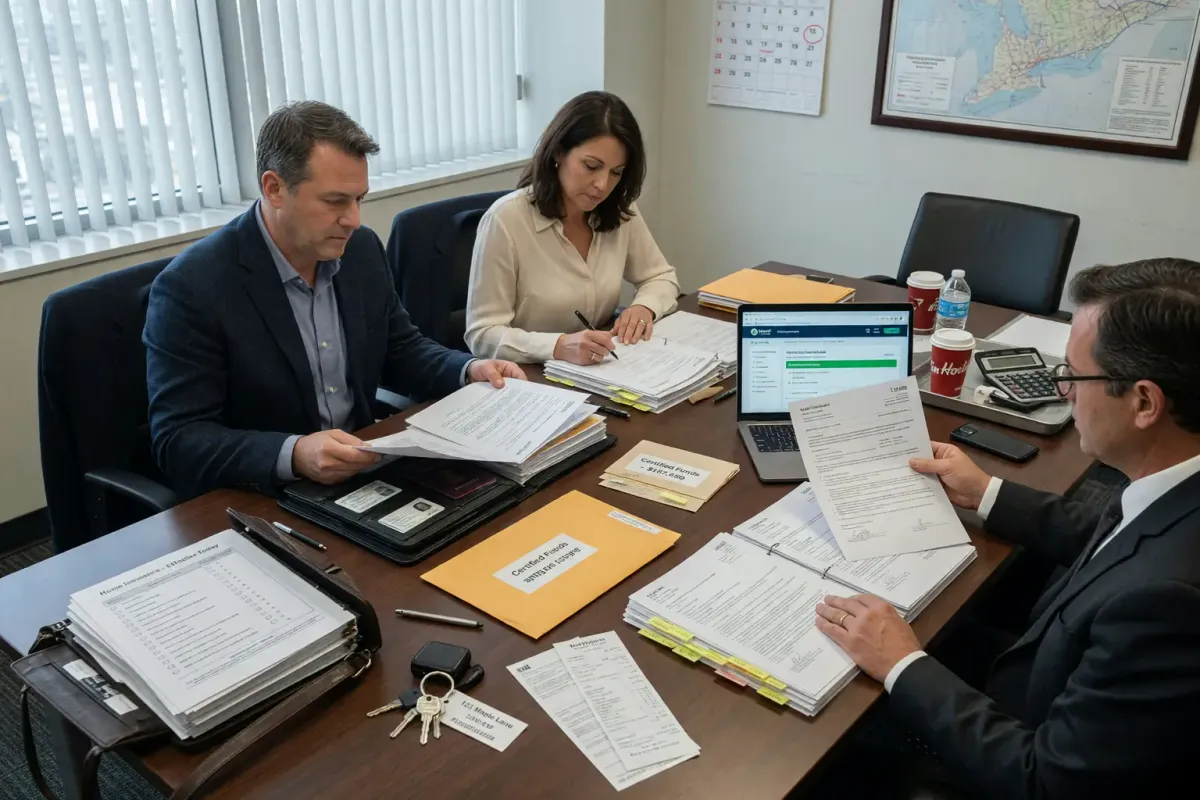
Closing day is when everything finally comes together. All the house hunting, negotiating, inspecting, and financing culminates in actually getting the keys.
It should be exciting. For many investors, it’s stressful—especially the first few times.
If you prepare properly, closing day is just paperwork. Show up with what you need, sign where they tell you, and walk out as a property owner.
Let me tell you exactly what to expect and how to prepare.
What Actually Happens on Closing Day
| Activity | Typical Timing |
|---|---|
| Document signing | Morning |
| Fund transfers | Mid-morning |
| Title registration | Late morning |
| Key release | Afternoon |
The process: Your money and the mortgage funds flow through lawyers. You sign a stack of documents. Everything gets registered with the land registry. Once registration confirms, the seller releases the keys.
Expect the whole process to take several hours. You probably won’t get keys until early-to-mid afternoon.
Who’s involved:
- You (buyer) - signing documents, providing funds
- Seller - signing their documents (usually separately)
- Lawyers - coordinating everything
- Witnesses - required for certain signatures
Your real estate agent typically isn’t there—their job ended when you signed the purchase agreement.
What to Bring
Show up prepared and avoid delays.
Identification:
- Government-issued photo ID (driver’s license or passport)
- Bring two forms of ID to be safe
- Your Social Insurance Number (memorized or bring the card)
Financial items:
- Certified cheque or bank draft for closing funds (your lawyer will tell you the exact amount)
- Void cheque for setting up mortgage payments
Documentation:
- Proof of insurance (policy or binder showing coverage effective from closing date)
- Copy of purchase agreement
- Any specific instructions from your lawyer
Useful extras:
- Contact info for key parties
- Your checkbook for unexpected small costs
- Questions list for your lawyer
Before closing day arrives, know your exact funding amount and get your mortgage locked in—book a free strategy call with LendCity and we’ll make sure your financing is structured to close smoothly without surprises.
What You’ll Sign
Prepare to sign a lot of documents. Here’s what you’re looking at:
Transfer documents:
- Transfer/Deed: The main document transferring ownership
- Statement of Adjustments: Financial calculations for property tax adjustments, utilities, etc.
- Direction Regarding Title: How you want ownership registered
Mortgage documents:
- Mortgage Agreement: Your loan contract with the lender
- Mortgage Commitment: Lender’s formal commitment
- Payment Authorization: Sets up automatic payments
Various declarations:
- Statutory declarations about the transaction
- Residency declarations for tax purposes
- Acknowledgments confirming you understand disclosures
Important: Actually read what you’re signing. Don’t just flip through. Ask your lawyer about anything you don’t understand. You’re making major financial commitments—understand them.
What You’ll Pay
Various costs come due at closing:
Legal fees: Your lawyer’s charge for handling the transaction. Typical Canadian residential closings run $1,500–$3,000 depending on file complexity. Discuss this in advance so there are no surprises.
For a deeper look at the financing angle behind this topic, see our guide to Invest in Real Estate Canada.
Land transfer tax: Provincial (and sometimes municipal) tax on the property transfer. Often the biggest closing cost. Note that this varies significantly by province — Ontario charges a Land Transfer Tax, BC has a Property Transfer Tax, and Alberta has no provincial land transfer tax at all. Some municipalities (like Toronto) layer on an additional tax on top.
Title insurance: One-time premium protecting against title defects and ownership disputes — typically $200–$400 for a standard Canadian residential property.
Adjustments: Prorated property taxes, utilities, condo fees if applicable.
For new construction: HST/GST implications, new home warranty fees, development levies, other builder-related costs.
Your lawyer should provide detailed closing cost estimates before the big day. You should know the exact amount needed in advance.
If you’re buying a property with existing tenants, rent proration and lease continuity get complicated fast—schedule a free strategy session with us and we’ll walk you through how to structure the deal so everything transfers cleanly.
Special Situations
Buying with existing tenants:
- Tenants need to know about ownership change and new rent payment procedures
- Rent gets prorated between buyer and seller
- Security deposits transfer to you
- Existing leases continue under new ownership
Condo purchases:
- Status certificate review is critical
- Condo fee adjustments get calculated
- Reserve fund contribution gets reviewed
- Any special assessments should be disclosed
Can’t attend in person?
- Documents can often be signed in advance
- Power of attorney arrangements may work
- Video conference signing is sometimes available
- Coordinate with your lawyer well ahead of time
When Things Go Wrong
Sometimes closing day hits bumps.
Fund transfer delays: Banking can be slow. Position your funds well in advance and follow lawyer instructions exactly.
Document issues: Missing signatures, incorrect information, errors requiring correction. Allow time for fixes.
Registration delays: High-volume periods slow processing. Your lawyer monitors this and will notify you when complete.
Last-minute discoveries: Sometimes the final walkthrough reveals problems. Address concerns with your lawyer immediately.
Most problems get resolved. Major issues may require agreement amendments. Stay calm and let the lawyers handle it.
After Closing
Once you have keys, you’re not quite done.
Immediate tasks:
- Do a thorough property inspection
- Change the locks (always!)
- Transfer utilities into your name
- Update your address everywhere relevant
- Set up property management systems for investment properties
Document organization: Keep these safe and organized:
- All transfer and mortgage documents
- Title insurance policy
- Closing statements
- Property-related receipts
You’ll need these for taxes, future refinancing, or eventual sale.
For rental properties:
- Notify existing tenants of ownership change
- Set up rent collection procedures
- Establish maintenance systems
- Organize all lease documents
Frequently Asked Questions
When should I expect keys?
What if something goes wrong at closing?
Do I have to attend in person?
How much money should I bring?
What if the seller doesn't leave on time?
What should I do immediately after getting the keys?
What special considerations apply when closing on a property with existing tenants?
The Bottom Line
Closing day should be anticlimactic. If you’ve prepared properly, it’s just showing up, signing documents, and waiting for keys.
The key is preparation. Know what you need to bring. Understand what you’re signing. Have your funds in order. Know what to expect for timing.
Do those things, and closing day becomes exactly what it should be: the straightforward conclusion to a good investment.
Free tool
Build a property proforma
Fill in income and expenses, then export a Year-1 operating statement (NOI, cap rate, cash flow, DSCR).
Disclaimer: LendCity Mortgages is a licensed mortgage brokerage. Content on this page is for educational purposes only and does not constitute legal, tax, investment, securities, or financial-planning advice. Rates, premiums, program terms, and regulations referenced are as of the page's last updated date and are subject to change. Any investment returns, rental yields, tax savings, or case-study figures shown are illustrative only — they are not guaranteed, not typical, and individual results will vary. Consult a licensed lawyer, Chartered Professional Accountant, or registered dealer before acting on any information above. Editorial standards.

Written by
Scott Dillingham
Published
April 21, 2026
· Updated June 29, 2026Reading time
6 min read
Condo Fees
Monthly fees paid by condo owners to cover building maintenance, insurance, common area utilities, reserve fund contributions, and amenities. Also known as strata fees or maintenance fees, these directly reduce cash flow and are a critical consideration when analyzing condo investment opportunities.
ITIN
Individual Taxpayer Identification Number - a US tax ID for foreign nationals, required for Canadians to invest in US real estate and file US taxes.
Land Transfer Tax
A provincial tax paid when purchasing property, calculated as a percentage of the purchase price. Some cities like Toronto add additional municipal tax.
New Construction
New Construction refers to residential or commercial properties that have been newly built and are being sold for the first time, offering Canadian investors the advantage of modern building standards, warranty protections, and potential appreciation as the property enters the market. For investors, new construction provides opportunities for capital gains, customization options, and often incentives from developers, though it may involve longer closing timelines and construction risk compared to resale properties.
Power of Sale
A clause in Canadian mortgages allowing the lender to sell a property without court involvement after the borrower defaults. Used in Ontario and some other provinces as a faster alternative to judicial foreclosure.
Property Inspection
A professional examination of a property's physical condition, including structural elements, mechanical systems, roofing, and other components, typically conducted before purchase. Thorough inspections help investors identify problems, estimate repair costs, and negotiate purchase prices.
Property Management
The operation, control, and oversight of real estate by a third party. Property managers handle tenant screening, rent collection, maintenance, and day-to-day operations.
Property Tax Assessment
The process by which a municipality determines the value of a property for taxation purposes. Investors can appeal assessments they believe are too high, potentially reducing annual property tax expenses and improving cash flow.
Property Tax
Annual tax levied by municipalities on real estate based on the assessed value of the property. Property taxes fund local services and are a significant operating expense that investors must account for in cash flow projections.
Real Estate Agent
A licensed professional who represents buyers or sellers in real estate transactions, providing market expertise, negotiation skills, and access to the MLS. Working with an investor-friendly agent who understands rental property analysis and financing strategies can significantly impact deal quality.
Hover over terms to see definitions. View the full glossary for all terms.