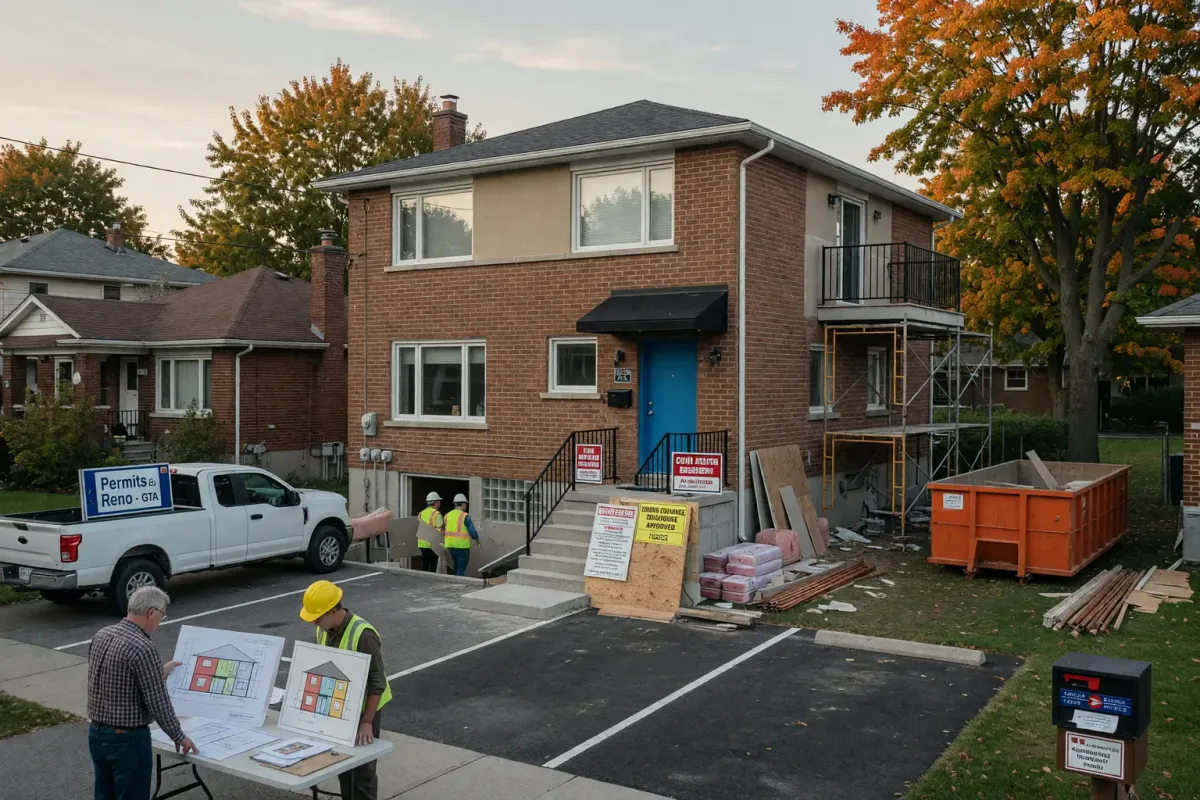
Converting single-family homes into multi-family properties represents one of the most effective strategies for improving investment cash flow and creating additional value from existing real estate holdings. By adding secondary suites, basement apartments, or additional units, investors can significantly increase rental income while providing housing in supply-constrained markets. Understanding how to evaluate conversion potential, navigate regulatory requirements, and execute transformations successfully enables investors to get hidden value in properties that might otherwise underperform.
Here we navigate single-family to multi-family conversion, providing the knowledge necessary to evaluate and execute these profitable transformations.
Understanding the Conversion Opportunity
Converting properties from single-family to multi-family use creates value through increased income potential and housing density that standard single-family investment cannot match.
Why Convert Properties
Conversion offers compelling benefits:
Increased Cash Flow - Multiple units generate more rental income than single residences, often doubling or tripling cash flow potential.
Housing Creation - Conversions add housing supply in markets facing shortages, meeting demand while generating returns.
Property Value Increase - Multi-family properties often command higher values than single-family equivalents based on income valuation.
Portfolio Efficiency - One property generates returns of multiple properties, improving portfolio efficiency.
Market Positioning - Units targeting different price points or tenant profiles capture broader demand.
| Property Type | Typical Units | Income Streams | Management Complexity |
|---|---|---|---|
| Single-family | 1 | 1 | Lower |
| Duplex conversion | 2 | 2 | Moderate |
| Triplex conversion | 3 | 3 | Higher |
Conversion vs New Purchase
Converting existing properties offers advantages over purchasing already-converted multi-family:
Below-Market Acquisition - Single-family properties may price below equivalent multi-family.
Created Equity - Conversion investment often creates equity exceeding costs.
Customization - Control over unit design and finish level.
Existing Holdings - Conversion works with properties already owned.
Evaluating Conversion Potential
Not every single-family property suits multi-family conversion. Careful evaluation prevents costly mistakes.
Structural Considerations
Physical characteristics determine conversion feasibility:
Size and Layout - Adequate space for separate units with appropriate living areas, kitchens, and bathrooms.
Multiple Entrances - Ability to create separate entrances for each unit, often through existing or creatable entry points.
Ceiling Heights - Basement conversions require adequate ceiling height, typically 7 feet minimum.
Utility Separation - Capability to separate or sub-meter utilities for individual units.
Egress Requirements - Windows meeting bedroom egress requirements for each unit.
Zoning and Regulatory Research
Legal requirements affect conversion feasibility:
Zoning Permissions - Does current zoning permit multi-family use? In Ontario, Bill 23 permits up to three residential units as-of-right on most serviced residential lots province-wide (with several municipalities, including Toronto, expanding to four units). British Columbia’s Bill 44 requires most municipalities to allow up to four units on standard single-family lots, and up to six near frequent transit. These provincial rules dramatically streamline the path to conversion.
Secondary Suite Programs - Many municipalities have programs permitting secondary suites under specific conditions. Ontario’s as-of-right rule removes the rezoning step for most Ontario properties, though building permits and Building Code compliance remain required.
Building Code Requirements - Conversion must meet building codes for multi-family occupancy.
Permit Requirements - What permits you need, and what approval processes apply?
Parking Requirements - Additional units may require additional parking spaces.
Research regulatory requirements thoroughly before committing to conversion projects.
Financial Analysis
Evaluate conversion economics:
Conversion Costs - Construction, permits, professional fees, and contingencies.
Income Increase - Realistic additional rent from new units.
Return Calculation - Does income increase justify conversion investment?
Value Impact - How does conversion affect property value?
Conservative analysis using realistic costs and achievable rents reveals genuine opportunity versus wishful projections.
Converting Properties You Already Own
Owners of existing single-family properties can evaluate conversion potential.
Assessment Process
Evaluate your property for conversion:
For a deeper look at the financing angle behind this topic, see our guide to Invest in Real Estate Canada.
- Review zoning and regulatory permissions
- Assess physical conversion feasibility
- Develop preliminary conversion plans
- Estimate costs with contractor input
- Research achievable rents for new units
- Calculate return on conversion investment
- Consider financing requirements and options
Financing Conversion Projects
Fund conversions through:
Home Equity Access - Existing equity can finance conversions.
Construction Loans - Renovation loans fund conversion work.
Cash Investment - Self-funding from savings or other sources.
Refinancing - Refinance upon completion at higher multi-family value.
Managing Tenant Relationships
If currently occupied:
Communicate conversion plans appropriately, Consider timing to minimize disruption, Ensure continued habitability during construction, and Adjust rent to reflect completed improvements.
Converting New Purchases
Investors can specifically target properties with conversion potential.
Identifying Opportunities
Seek properties offering:
Conversion-Friendly Layouts - Multiple floors, finished basements, or divisible floor plans.
Adequate Size - Sufficient square footage for meaningful unit creation.
Favorable Zoning - Areas permitting secondary suites or multi-family use.
Below-Market Pricing - Properties priced as single-family despite multi-family potential.
Due Diligence Emphasis
For conversion-targeted acquisitions:
Verify zoning permits intended conversion, Confirm building code compliance is achievable, Obtain contractor estimates before purchasing, Calculate post-conversion returns accurately, and Ensure financing accounts for conversion costs.
Financing Structure
Structure acquisition and conversion financing appropriately:
- Purchase financing based on current condition
- Construction or renovation financing for conversion work
- Refinancing upon completion capturing increased value
Lender Communication Requirements
Mortgage implications of conversion require attention.
Disclosure Importance
Communicate with lenders about:
Planned Changes - Major property modifications may affect mortgage terms.
Use Changes - Converting to investment property affects mortgage classification.
Insurance Requirements - Lenders require appropriate coverage for property use.
Appraisal Implications - Conversions may trigger reappraisal requirements.
Mortgage Considerations
Understand how conversion affects financing:
Occupancy Classification - Rental units may change property from owner-occupied to investment classification.
Rate Implications - Investment classification may affect interest rates.
Qualification Changes - Rental income may support qualification for subsequent financing.
Refinancing Opportunities - Increased value may enable equity access.
Execution Best Practices
Successful conversion requires careful execution.
Planning Thoroughly
Ready to explore your financing options? Book a free strategy call with LendCity and let our team help you find the right path forward.
Before starting:
Complete architectural plans meeting code requirements, Obtain all necessary permits, Develop detailed budgets with contingencies, Establish construction timelines, and Secure financing commitments.
Working with Professionals
Engage appropriate expertise:
Architects or Designers - For plans meeting code and improving layouts.
Contractors - Experienced with residential conversions.
Electricians and Plumbers - For utility separation and code compliance.
Inspectors - For permit inspections and compliance verification.
Quality Focus
Ensure quality in:
Code compliance preventing future problems, Soundproofing between units for tenant satisfaction, Finish quality supporting target rents, and Functionality making units genuinely livable.
Key Takeaways:
- Understanding the Conversion Opportunity
- Evaluating Conversion Potential
- Converting Properties You Already Own
- Converting New Purchases
- Lender Communication Requirements
Frequently Asked Questions
Is converting single-family to multi-family legal everywhere?
How much does conversion typically cost?
Does conversion always increase property value?
Can I convert a rental property I already own?
Do I need permits for conversion?
What minimum ceiling height is required for basement conversions?
How does soundproofing between units affect tenant satisfaction?
Free download
MLI Select document checklist
Appraisals, rent rolls, environmental reports, and the CMHC package lenders expect before they underwrite.
By submitting, you agree to receive occasional emails from LendCity. You can unsubscribe at any time.
4.8/5 (116 Google reviews)
Disclaimer: LendCity Mortgages is a licensed mortgage brokerage. Content on this page is for educational purposes only and does not constitute legal, tax, investment, securities, or financial-planning advice. Rates, premiums, program terms, and regulations referenced are as of the page's last updated date and are subject to change. Any investment returns, rental yields, tax savings, or case-study figures shown are illustrative only — they are not guaranteed, not typical, and individual results will vary. Consult a licensed lawyer, Chartered Professional Accountant, or registered dealer before acting on any information above. Editorial standards.

Written by
Scott Dillingham
Published
February 26, 2026
· Updated June 29, 2026Reading time
6 min read
Cash Flow
The money left over after collecting rent and paying all expenses including mortgage, taxes, insurance, maintenance, and property management. Positive cash flow is the primary goal of buy-and-hold investors. See also [NOI](/glossary/noi/), [Cash-on-Cash Return](/glossary/cash-on-cash-return/), and [Vacancy Rate](/glossary/vacancy-rate/).
Equity
The difference between a property's current market value and the remaining mortgage balance. If your home is worth $500,000 and you owe $300,000, you have $200,000 in equity. Equity builds through mortgage payments, [appreciation](/glossary/appreciation/), and [forced appreciation](/glossary/forced-appreciation/). See also [LTV](/glossary/ltv/) and [Refinancing](/glossary/refinancing/).
Multifamily
Properties with multiple dwelling units, from duplexes to large apartment buildings. Often offer better cash flow and economies of scale.
Single Family
A detached home designed for one household, the most common property type for beginner real estate investors.
Refinance
Replacing an existing mortgage with a new one, typically to access equity, get a better rate, or change terms. Investors commonly refinance to pull out capital for purchasing additional properties (cash-out refinance) while retaining ownership of the original property.
Interest Rate
The cost of borrowing money, expressed as a percentage. It determines how much you pay on top of the principal borrowed. Interest rates directly affect monthly payments, [cash flow](/glossary/cash-flow/), and [DSCR](/glossary/dscr/). See also [Amortization](/glossary/amortization/).
Appraisal
A professional assessment of a property's market value, required by lenders to ensure the property is worth the loan amount.
Due Diligence
The comprehensive investigation and analysis of a property before purchase, including financial review, physical inspection, title search, and market analysis.
Turnover
The process and cost of preparing a rental unit for a new tenant after the previous tenant moves out, including cleaning, repairs, marketing, and vacancy time. High turnover rates significantly reduce profitability through lost rent and preparation expenses.
Rental Income
Revenue generated from tenants paying rent on an investment property. Gross rental income is the total collected before expenses, while net rental income subtracts operating costs to show actual profitability.
Duplex
A residential property containing two separate dwelling units, either side-by-side or stacked. Duplexes are popular among beginner investors because they can house-hack by living in one unit while renting the other to offset mortgage costs.
Triplex
A residential property containing three separate dwelling units. Triplexes offer higher rental income potential than duplexes while still qualifying for residential mortgage financing in most cases, making them attractive to growing investors.
Contractor
A licensed professional hired to perform construction, renovation, or repair work on investment properties. Using licensed and insured contractors is essential for permitted work, as unlicensed contractors can result in voided insurance, property liens, and liability for injuries.
Zoning
Municipal regulations that dictate how properties in specific areas can be used, including residential, commercial, industrial, or mixed-use designations. Zoning bylaws affect what investors can do with properties, including rental restrictions, multi-unit conversions, and home-based businesses.
ADU
Accessory Dwelling Unit - a secondary residential unit on a single-family property, such as a basement suite, laneway house, garden suite, or in-law suite. ADUs increase rental income and property value while leveraging existing land and infrastructure.
Insulation
Material installed in walls, attics, and floors to resist heat flow, measured by R-value. Upgrading insulation in older properties reduces heating and cooling costs, improves tenant comfort, and can qualify for government energy rebates.
Hover over terms to see definitions. View the full glossary for all terms.