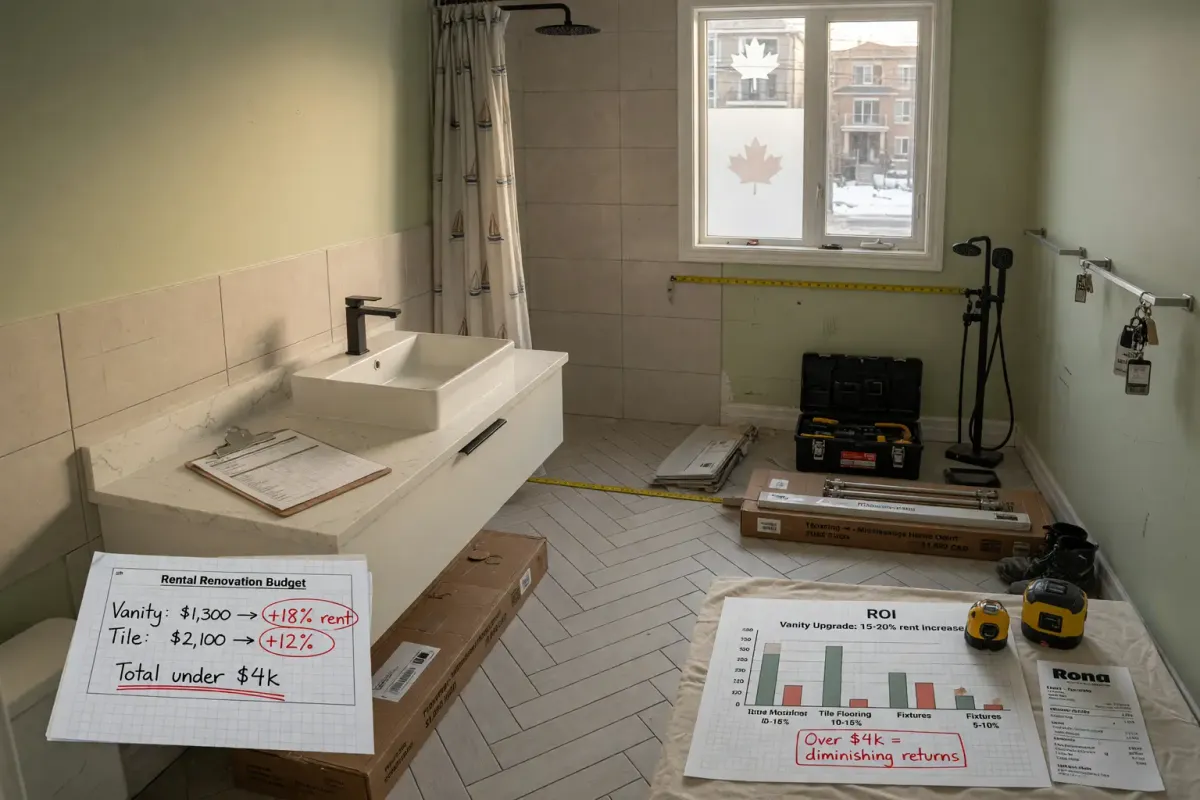
Here’s something I’ve seen catch landlords off guard over and over: bathroom condition influences rental decisions more than almost any other single factor in your property.
Think about what happens during a showing. Your prospect walks through the living room, checks out the kitchen, peeks into the bedrooms. They’re doing mental math the whole time. But when they step into the bathroom? That’s when gut feelings take over.
A dated bathroom makes your whole property feel dated. An updated bathroom makes everything else look better by association.
The question isn’t whether bathroom renovations matter. They do. The real question is: which renovations actually put money back in your pocket? Understanding how to analyze a rental property the right way will help you run these numbers.
Why Bathrooms Punch Above Their Weight in Rental Properties
Your bathroom probably takes up less than 5% of your rental’s total square footage. But it has an outsized impact on how tenants perceive your entire property.
First impressions stick. A prospect who sees a dingy, yellowed bathroom has already started looking for reasons to say no. One who sees a clean, updated space has started looking for reasons to say yes. I’ve watched tenants overlook all kinds of issues in other rooms after seeing a sharp-looking bathroom.
Daily experience matters. Your tenants use that bathroom multiple times every single day. A space that bothers them every morning motivates them to leave when the lease expires. A space they actually enjoy? That encourages renewal—and renewals are where you make your money.
Quality signals extend everywhere. An updated bathroom tells tenants you care about maintenance. A neglected one tells them… well, you can guess what they’re thinking about the furnace and the roof.
| What Tenants Notice | Why It Matters |
|---|---|
| Fixture quality | Sets the tone the moment they walk in |
| How clean it can get | Affects daily satisfaction |
| Storage space | Practical need they think about immediately |
| Lighting | Makes the space feel comfortable or cramped |
| Overall look | Shapes how they see your whole property |
How to Make Small Bathrooms Feel Bigger (Without Knocking Out Walls)
Let’s be honest: most rental bathrooms in Canada are small. That galley-style bathroom in your Toronto condo or the cramped en suite in your Calgary townhouse? That’s just reality.
But you can make them feel less like a closet without major construction.
Declutter the visual field. Clean lines, simple designs, and organized storage make a huge difference. Every bottle visible on the counter makes the space feel smaller. Built-in storage keeps necessities accessible without eating up visual space.
Go light on colour. White, pale grey, soft blue—light tones reflect light and reduce visual weight. I’ve seen investors try to get fancy with dark accent walls in small bathrooms. Don’t. Save the drama for larger spaces.
Max out your lighting. Well-lit rooms feel larger. Period. Brighter fixtures, additional light sources, better bulbs. If you’ve got a window, make sure it’s not blocked. Natural light does more for spatial perception than any design trick.
Use mirrors strategically. Mirrors create the illusion of depth. Consider going larger than the standard medicine cabinet mirror—covering the entire wall above the vanity makes a noticeable difference. I’ve seen investors add a second mirror on an opposite wall and basically double the perceived space.
Choose glass over shower curtains. Clear glass enclosures connect your shower space with the rest of the bathroom visually. The whole room reads as larger than when an opaque curtain chops it in half. Yes, glass costs more upfront. Yes, it’s worth it in most markets.
If you’re weighing a cosmetic refresh against a full gut renovation and want to know how to finance the project, book a free strategy call with LendCity to talk through your numbers.
Whether you’re buying your first rental or your tenth, having the right mortgage structure matters — book a free strategy call with LendCity to build a plan that scales with you.
The right financing product can change the math on this entirely — explore our real estate investing guide for the options most investors use.
The Investor Renovation Mindset (It’s Not Your Dream Bathroom)
Here’s where a lot of landlords make costly renovation mistakes: they renovate like homeowners.
You’re not building your dream bathroom. You’re creating attractive, functional space that justifies rental premiums while controlling costs and choosing materials that withstand tenant use.
Durability beats luxury. That Carrara marble counter looks stunning in your Pinterest board. It also scratches easily, stains from hair products, and costs three times as much as solid surface material that looks nearly as good and lasts twice as long.
Broad appeal beats personal taste. Neutral colours and timeless designs work for more tenants than bold fashion statements. Let your tenants personalize with towels and accessories. Your job is to provide a clean canvas.
Cost-effectiveness beats premium brands. Mid-range fixtures from Delta, Moen, or Pfister provide attractive appearance and reliable performance without the Kohler or Grohe price tag. Your tenants won’t notice the difference—and they definitely won’t pay extra for it.
Bathroom Upgrades That Actually Boost Your Rent
These are the renovations I’ve seen move the needle on rental income:
Updated fixtures. New faucets, showerheads, toilets, and hardware transform the appearance for $500-$1,500 in materials. Modern water-efficient fixtures also cut utility costs if you’re covering water. A new toilet alone can change how the whole room feels.
Fresh finishes. New paint ($100-$200), updated lighting ($150-$400), and contemporary accessories ($100-$300) make spaces feel renovated without major construction. Total cost under $1,000, and tenants see “updated bathroom” in your listing photos.
Quality tile work. Porcelain and ceramic tiles resist moisture and wear while looking sharp at $3-$8 per square foot. Classic white subway tile never goes out of style—I’ve seen it in rentals from Vancouver to Halifax, and it works everywhere.
Adequate storage. Built-in shelving, a proper medicine cabinet, and vanity storage address practical needs tenants actually care about. A pedestal sink looks pretty but offers zero storage. Most tenants will take the storage.
Good ventilation. A proper exhaust fan prevents moisture damage and mold. It’s not glamorous, but it’s essential—especially in humid climates like southern Ontario or the BC coast. Budget $200-$400 for a quality fan with installation. Poor ventilation is one of the common home repairs every property owner should know before buying any rental.
A $500 fixture swap can justify a rent increase, but spa features rarely pay back — book a free strategy call with us and we’ll help you budget renovations that actually move the needle on cash flow.
Many investors leave money on the table by not exploring all their financing options — schedule a free strategy session with us and we’ll show you what’s available.
Bathroom Upgrades That Rarely Pay Off
These are the renovations I’ve watched landlords regret:
Spa features. Heated floors sound amazing. Steam showers seem luxurious. Jacuzzi tubs look impressive. But in most Canadian rental markets? They rarely command proportionate rent premiums. A tenant in Edmonton paying $1,800/month for a two-bedroom isn’t going to pay $2,100 because you added heated floors.
High-end natural stone. Granite and marble cost significantly more than quartz or solid surface alternatives without generating proportional rental increases. Save the natural stone for your own home.
Trendy designs. That bold emerald green tile or matte black everything might look cutting-edge right now. In five years? It looks dated. Stick with neutrals that age gracefully.
Expanding square footage. Bumping out walls to make a bathroom bigger rarely generates returns that justify the construction cost—if you want more rentable space, look into additional dwelling units as a value-add strategy instead.
Refresh vs. Full Renovation: How to Decide
Not every bathroom needs to be gutted. Here’s how to figure out what your situation actually requires:
A minor refresh works when: The basic elements—tub, toilet, vanity—remain serviceable, but the appearance has become dated. New fixtures, fresh paint, updated lighting, and hardware replacement can dramatically change perception for under $2,000.
A full renovation makes sense when you can finance the work through a purchase plus improvements mortgage, or when:
- Water damage exists behind walls or under flooring
- Waterproofing has failed (you’ll know from soft spots or mold)
- Layout is severely dysfunctional
- Accumulated problems exceed what patchwork can fix
- You’re repositioning the property to a premium rental tier
Here’s my rule: don’t spend full renovation money ($8,000-$15,000+) on a bathroom that just needs refreshing. And don’t try to refresh your way out of problems that require real renovation. I’ve seen investors try to paint over water damage and end up spending twice as much when they had to redo everything six months later. Knowing how to spot a money pit property before you buy can save you from inheriting someone else’s botched renovation.
Managing Your Bathroom Renovation Project
Define your scope before you start. Write down exactly what’s included and what’s not. Scope creep during bathroom projects is notorious. “While we’re in there, we might as well…” is how a $5,000 refresh becomes a $15,000 renovation.
Budget realistically. In most Canadian markets, expect to pay:
- Minor refresh: $2,000-$4,000
- Moderate update (new vanity, fixtures, flooring): $6,000-$12,000
- Full gut renovation: $15,000-$30,000+
If you’re hiring contractors: Get at least three quotes. Understand exactly what’s included. Establish clear timelines with penalties for delays. Check references—specifically for bathroom work, not just general contracting. Keep a running list of repairs so you can spot shoddy workmanship before signing off.
Think about timing. Renovating during a tenancy requires careful coordination and tenant cooperation. Between tenancies gives you flexibility but extends your vacancy. Run the numbers both ways. If you’re also considering adding rentable space, explore how to refinance your home to add a rental unit to fund the project.
Key Takeaways:
- Why Bathrooms Punch Above Their Weight in Rental Properties
- How to Make Small Bathrooms Feel Bigger (Without Knocking Out Walls)
- The Investor Renovation Mindset (It’s Not Your Dream Bathroom)
- Bathroom Upgrades That Actually Boost Your Rent
- Bathroom Upgrades That Rarely Pay Off
Frequently Asked Questions
How much should I spend on a rental bathroom renovation?
Should I hire contractors or DIY my bathroom renovation?
What bathroom features do Canadian tenants value most?
What are the most common bathroom renovation mistakes landlords make?
When should I do a full gut renovation instead of a cosmetic refresh?
Which bathroom materials hold up best in rental properties?
How do bathroom renovations affect tenant retention and vacancy rates?
Make Your Bathroom Renovations Pay
Bathroom renovations offer some of the best returns available for rental property improvements—but only when you focus on what actually moves the needle.
Update fixtures. Improve lighting. Choose durable materials in neutral styles. Create clean, functional spaces that photograph well and keep tenants happy day after day. And make sure your residential mortgage financing is structured to support value-add projects from the start.
Skip the luxury features that impress you but don’t increase rent. Match quality to your rental market. Control costs like your returns depend on it—because they do.
That’s how bathroom renovations become profit centres instead of money pits. Ready to finance your next value-add project? Explore flip financing options.
Free tool
Build a property proforma
Fill in income and expenses, then export a Year-1 operating statement (NOI, cap rate, cash flow, DSCR).
Disclaimer: LendCity Mortgages is a licensed mortgage brokerage. Content on this page is for educational purposes only and does not constitute legal, tax, investment, securities, or financial-planning advice. Rates, premiums, program terms, and regulations referenced are as of the page's last updated date and are subject to change. Any investment returns, rental yields, tax savings, or case-study figures shown are illustrative only — they are not guaranteed, not typical, and individual results will vary. Consult a licensed lawyer, Chartered Professional Accountant, or registered dealer before acting on any information above. Editorial standards.

Written by
Scott Dillingham
Published
January 29, 2026
· Updated June 29, 2026Reading time
10 min read
Value-Add Property
A property with potential to increase value through renovations, better management, rent increases, or adding units.
Vacancy Rate
The percentage of rental units that are unoccupied over a given period. A critical factor in [cash flow](/glossary/cash-flow/) analysis, typically estimated at 4-8% for conservative projections. Vacancy directly reduces [NOI](/glossary/noi/).
Purchase Plus Improvements
A Canadian mortgage program that combines the purchase price with renovation costs into a single mortgage, based on the property's after-improvement value.
Turnover
The process and cost of preparing a rental unit for a new tenant after the previous tenant moves out, including cleaning, repairs, marketing, and vacancy time. High turnover rates significantly reduce profitability through lost rent and preparation expenses.
Rental Income
Revenue generated from tenants paying rent on an investment property. Gross rental income is the total collected before expenses, while net rental income subtracts operating costs to show actual profitability.
Condominium
A type of property ownership where an individual owns a specific unit within a larger building or complex, sharing ownership of common areas with other unit owners. Condos offer lower entry prices but come with monthly fees and potential rental restrictions that affect investment returns.
Hover over terms to see definitions. View the full glossary for all terms.