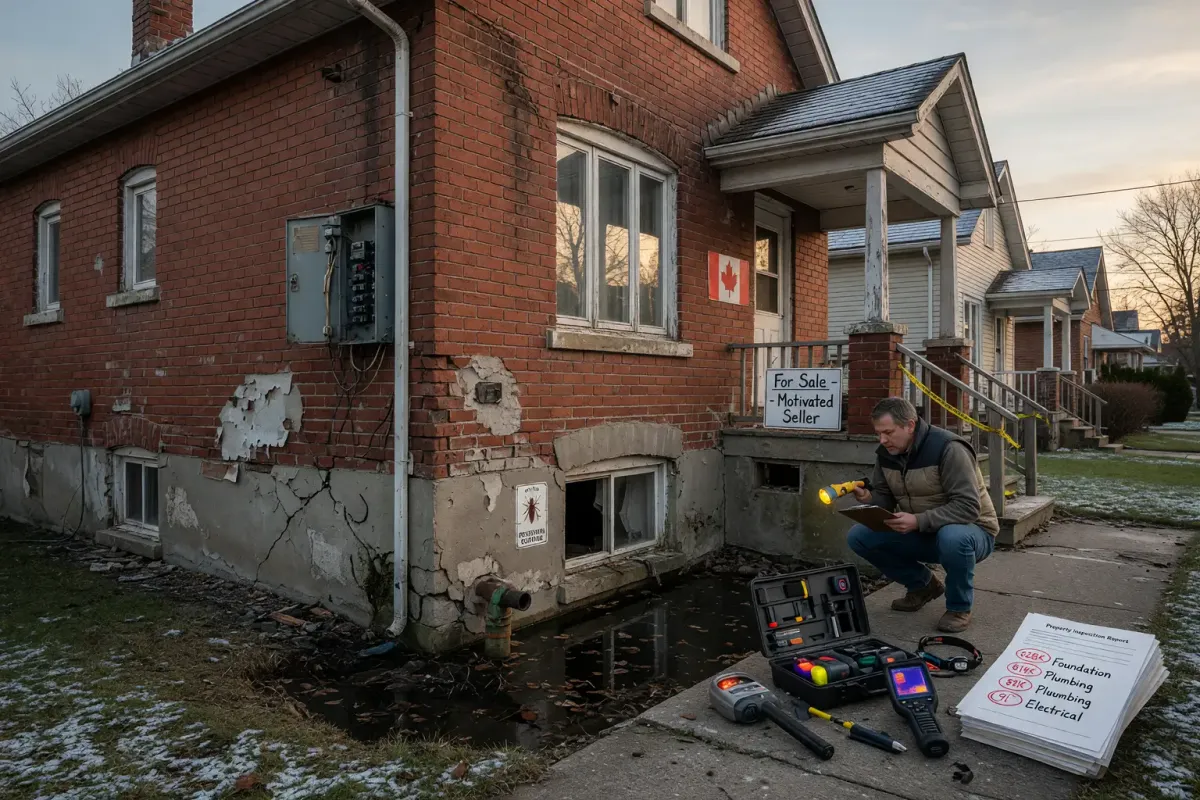
Investing in a distressed property can be a strategic move. Distressed properties allow you to sharpen your investing skills as a real estate investor and cultivate value in your portfolio.
While distressed properties often have the greatest potential for return on your investment, they are also some of the riskiest investments you can make. Understanding how to spot a money pit property before you buy is essential.
To minimize your investment risk, consider the most common risks below. By reading over them, you can turn your risky investment into a profitable one.
It doesn’t take an expert to see these potential problems for what they are, but it does take a careful eye to spot them. Especially if they’re being hidden from you on purpose.
Now, if you are interested in learning how to properly finance the purchase of a distressed property, click the link below for a free strategy call with our team at LendCity to weigh your financing options.
What Makes a Property “Distressed”
Not every problem property is distressed for the same reason. Understanding the type of distress helps you anticipate the risks you’ll actually face:
| Type | What Happened | What You’re Getting Into |
|---|---|---|
| Physical damage | Fire, flood, storms | Renovation expertise needed |
| Deferred maintenance | Years of neglect | May hide bigger problems |
| Financial distress | Foreclosure, bankruptcy | Often sold as-is, fast closings |
| Legal issues | Liens, title problems | Legal expertise required |
The common thread: current condition creates acquisition opportunities at below-market prices. You’re buying problems that you’ll profit from solving—if you identify them accurately before you commit.
Most Common Issues Found In A Distressed Property
When you purchase a distressed property, you don’t expect everything to be perfect. But you must be mindful of the kinds of repairs that are necessary to rehab the property.
Buying a distressed property that needs extensive repair, and rehabilitation might cause you to exceed your budget and overspend on the home.
It’s important to understand the most common issues when investing in distressed properties. Whether you’re following the BRRRR method investing strategy or flipping using the 70 percent rule, understanding these issues helps you budget accurately and avoid surprises.
Here’s where to pay very close attention.
Foundation Problems
Foundation issues are among the most expensive problems in distressed properties. Warning signs include diagonal cracks in walls, doors and windows that stick or won’t close, uneven or sloping floors, gaps between walls and ceilings, and visible foundation cracks or crumbling. Stabilization often runs $15,000–$50,000+, and major structural repairs may require engineering assessments. Financing can also be unavailable until structural issues are resolved.
Plumbing Issues
Distressed properties are notorious for having plumbing issues that can be difficult to identify at first glance.
Plumbing leaks can be found anywhere in the home. You might not be able to find the source of a leak until it becomes a major problem.
You should pay special attention to plumbing issues every real estate investor must know when inspecting a property you are considering purchasing.
Failing to identify any plumbing issues within the house, you can check the water meter to help you determine if there are plumbing issues.
Turn off all faucets and appliances and check the water meter. If the meter is spinning, then you potentially have plumbing issues.
Additionally, you can bring a moisture sensor with you when inspecting the rental property. A moisture sensor can help you find leaks within the walls.
Water Damage
Water damage is one of the most serious issues that can occur in a home. It’s always easy to spot if you don’t know what to look for.
Besides obvious leaks and water damage out in the open, keep your eye out for mould growth. Mould can grow:
-
underneath sinks
-
near water lines in the basement
-
in the attic from the roof
-
under flooring
Water damage also can cause warped flooring in and around bathrooms and kitchens.
Keep in mind, water damage may not necessarily be a plumbing issue. Bad grading on the property can leave it vulnerable to flooding and water intrusion after a storm. Or, a previous one-time plumbing incident may not have been properly re-mediated, leaving behind lasting issues.
Water damage can be visible and structural. If you see spots on the ceilings in any rooms, this can be a sign of a previous leak.
Also, try to use your nose and smell around and see if you can smell anything musty. Usually, a damp property will smell musty. This musty smell indicates potential water, or plumbing issues.
Broken Sewer Lines
A broken sewer line can be an incredibly expensive and labour-intensive issue to repair. Sewer lines can be damaged by debris being flushed into the system, overgrown tree root systems or erosion. Regardless of the cause, you would rather not get stuck with a property that has a broken sewer line.
You can’t easily look at the sewer line to see whether it’s in good condition. You will need to look for signs of damage on the surface.
Check for any depressions around the line that indicate erosion and line collapse. Also, pay attention to greener grass growth above the line that indicates a leak and look for signs of digging nearby.
Also, if you’re doing a home inspection, you can bring a plumber with a camera and run it into the sewer line. This does come at a cost, so try to only have your plumber if you are serious about a certain property.
Pests
Dealing with a pest issue is the last thing you want to do after you purchase a distressed property.
Depending on how long the pests have been on the property, it may be challenging to get rid of them.
By the time you identify and eradicate unwelcome guests, chances are that they have already done damage to the distressed properties structure and foundation.
You can look for rotten wood, sawdust, tiny holes and other signs of nesting and burrowing. These signs indicate the presence of pests in a home.
Another great tip is to ask the neighbours how the pest are. Often, if your neighbour is having pest issues, so could you.
If you’re eyeing a fixer-upper and want to know whether a purchase plus improvements mortgage covers your rehab budget, book a free strategy call with LendCity and we’ll break down your financing options.
Wiring Problems
Electrical wiring is incredibly important in a home but can also be incredibly dangerous if it isn’t in good condition.
Electrical wiring that’s old and corroded doesn’t have the capacity to support the electrical needs of a property can cause an increased fire risk.
Find out as much as you can about the existing wiring at the property. A purchase plus improvements mortgage can help finance these repairs. You can avoid purchasing a home if it requires extensive wiring installation and repair, if you’re not financially ready to update it.
Check the electrical panel and wiring that is exposed to get a general idea of the condition of the wiring. Stay away from knob and tube wiring, or expect a hefty bill for replacement.
Environmental Contamination
Older distressed properties may also hide environmental issues: asbestos in insulation or flooring, lead paint in homes built before 1978, underground fuel storage tanks that contaminate soil, or illegal dumping in vacant structures. Remediation can be substantial and may be legally required before occupancy—consider environmental assessments when a property’s history or visible condition raises red flags.
Financing Distressed Purchases
Traditional mortgages usually don’t work for heavily distressed properties—lenders require minimum condition standards. Common alternatives include hard money lenders, private lenders, renovation loan specialists, and cash purchases. Expect higher rates and larger down payments. Establish lending relationships before pursuing properties so you can act quickly when opportunities appear.
Budget renovations with a 20–30% contingency above estimated costs. Distressed properties routinely reveal hidden problems once demolition begins, and aggressive projections often erase the profit margin.
Keep Your Wits Sharp While You Inspect
Investing in a distressed property can be a great choice, but extra caution is necessary to ensure your investment pays off.
Taking the time to inspect a distressed property and check for major issues before you buy can save you a headache and financial loss. For broader trends affecting property values and deal flow, see our Real Estate Market Update: What Investors Need to Know.
Now, if you are interested in learning how to properly finance the purchase of a distressed property, explore Fix & Flip Mortgage Financing or click the link below for a free strategy call with our team at LendCity.
Before you put an offer on a distressed property, it pays to know your renovation financing limits upfront — book a free strategy call with us so you don’t exceed your budget on repairs the lender won’t cover.
Real estate investing is a team sport, and your mortgage strategy is the foundation — book a free strategy call with LendCity to make sure yours is solid.
When you’re ready to structure the mortgage side of this strategy, our flip mortgage financing guide covers the programs that typically fit.
Frequently Asked Questions
What is a distressed property and why should I invest in one?
What are the most common problems found in distressed properties?
How can I identify hidden water damage in a distressed property?
Should I hire a professional inspector before buying a distressed property?
How do I check for plumbing issues in a distressed property?
What electrical problems should I watch for in distressed properties?
How can I tell if a distressed property has a broken sewer line?
How can LendCity help me finance a distressed property investment?
Can I inspect before buying a distressed property at auction?
What profit margin should I target on a distressed deal?
Weekly Investor Insight
Sunday financing notes for investors
Market updates, rate moves, and deal structures — once a week. Unsubscribe anytime.
By submitting, you agree to receive occasional emails from LendCity. You can unsubscribe at any time.
Disclaimer: LendCity Mortgages is a licensed mortgage brokerage. Content on this page is for educational purposes only and does not constitute legal, tax, investment, securities, or financial-planning advice. Rates, premiums, program terms, and regulations referenced are as of the page's last updated date and are subject to change. Any investment returns, rental yields, tax savings, or case-study figures shown are illustrative only — they are not guaranteed, not typical, and individual results will vary. Consult a licensed lawyer, Chartered Professional Accountant, or registered dealer before acting on any information above. Editorial standards.

Written by
Scott Dillingham
Published
December 18, 2025
· Updated August 2, 2026Reading time
9 min read
Down Payment
The upfront cash payment when purchasing a property. For 1-4 unit investment properties, minimum 20% down is required. 5+ unit multifamily can use CMHC MLI Select with lower down payments, and house hackers can put as little as 5% down on owner-occupied 2-4 plexes. Your down payment directly affects your [LTV](/glossary/ltv/) and the amount of [leverage](/glossary/leverage/) you use.
Due Diligence
The comprehensive investigation and analysis of a property before purchase, including financial review, physical inspection, title search, and market analysis.
Fixer-Upper
A property that needs repairs or renovations, typically priced below market value. Often targeted by investors using BRRRR or fix-and-flip strategies.
Purchase Plus Improvements
A Canadian mortgage program that combines the purchase price with renovation costs into a single mortgage, based on the property's after-improvement value.
Market Value
The estimated price a property would sell for on the open market under normal conditions. Determined by comparable sales, location, condition, and market demand.
Rental Income
Revenue generated from tenants paying rent on an investment property. Gross rental income is the total collected before expenses, while net rental income subtracts operating costs to show actual profitability.
Property Inspection
A professional examination of a property's physical condition, including structural elements, mechanical systems, roofing, and other components, typically conducted before purchase. Thorough inspections help investors identify problems, estimate repair costs, and negotiate purchase prices.
Plumbing
The system of pipes, drains, fixtures, and fittings in a building that distributes water and removes waste. Plumbing issues are among the most costly repairs in rental properties, and older galvanized or polybutylene pipes often need replacement during renovations.
Foundation
The structural base of a building that transfers loads to the ground. Foundation issues such as cracks, settling, or water intrusion are among the most expensive repairs in real estate and can significantly impact property value and financing eligibility.
70% Rule
A fix-and-flip guideline stating you should pay no more than 70% of a property's after-repair value (ARV) minus renovation costs. On a home with a $300,000 ARV and $50,000 in repairs, your max purchase price would be $160,000. This margin accounts for holding costs, selling costs, and profit.
Hover over terms to see definitions. View the full glossary for all terms.