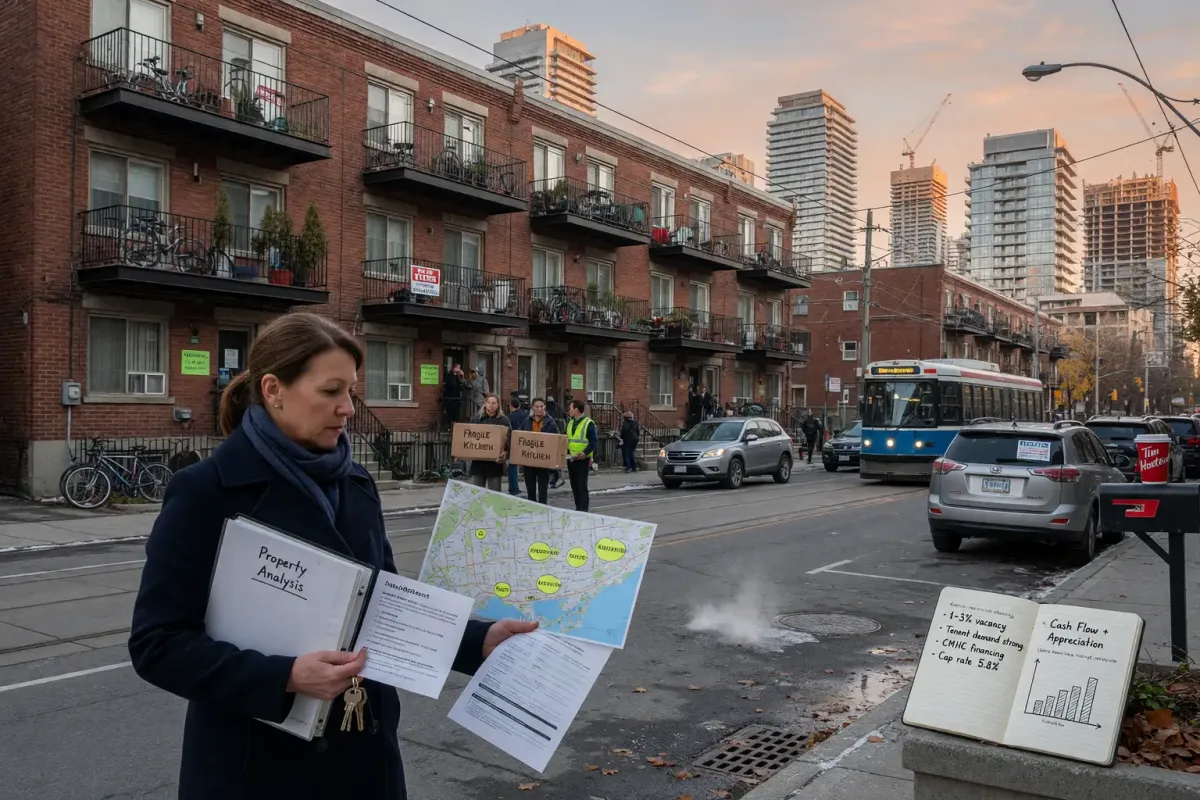
Want cash flow and long-term appreciation in the same deal? Look at Canada’s big cities.
I’ve seen investors chase the suburbs for cheaper doors, then watch their units sit empty while a Toronto condo or a Vancouver duplex fills in a week. People still want to live where the jobs, transit, and amenities are—and that demand pays you rent every month.
Whether you’re eyeing a condo in downtown Calgary, a duplex near a Montreal metro stop, or a small multifamily in Ottawa, urban investing works when you understand how city markets actually behave. Here’s what you need to know before you buy.
Why Urban Real Estate Attracts Investors
A lot of investors I know have moved capital into urban deals for one simple reason: the numbers work when you buy right.
Take inventory. Markets like Toronto, Vancouver, and Montreal keep adding purpose-built rentals and condos. You’re not stuck waiting on one listing in a quiet suburb—you’ve got options that match your budget and strategy.
Tenant demand is the real engine. StatsCan and CMHC data keep showing tight vacancy in core urban centres—often in the 1–3% range in cities like Toronto and Vancouver, versus higher vacancies farther out. Dense populations and steady in-migration mean your unit isn’t hunting for a renter; renters are hunting for your unit.
And marketing is easier. Foot traffic, transit stops, and walkable streets put your property in front of people every day. Less money on ads. Faster fills.
Benefits of Urban Property Investment
Urban real estate offers distinct advantages that appeal to investors at all experience levels. These benefits explain the sustained interest in city property investment despite higher entry costs.
| Benefit | Description | Investor Impact |
|---|---|---|
| Strong Rental Demand | Core-city vacancy often 1–3% in markets like Toronto and Vancouver (CMHC) | Fewer empty months, steadier cash flow |
| Property Diversity | Condos, duplexes, multiplexes, mixed-use | Start small, scale as capital grows |
| Appreciation Potential | Job growth and limited urban land support values | Long-term equity build |
| Infrastructure Access | Transit, walkability, amenities tenants will pay for | Higher achievable rents |
| Economic Resilience | Diverse employment bases in major centres | More stable income through cycles |
Diverse Property Options
Urban markets give you more ways in than the suburbs. Not ready for a full house or a commercial building? Buy a condo near a CTrain stop in Calgary or a skytrain line in Metro Vancouver. Start manageable. Scale when your capital and experience catch up.
You’ll find everything from studio condos to fourplexes to larger apartment buildings. Mixed-use—residential over ground-floor retail—lets you diversify inside one asset. Match the property type to your risk tolerance and the return you actually need.
Who Actually Rents Urban Units
Density alone doesn’t pay the mortgage—knowing your renter does. In Canadian cities you’re usually serving young professionals, students near universities (think Waterloo, downtown Montreal, or Toronto’s core), and households that want transit over a long commute.
Employment hubs drive this. When major employers cluster downtown or along transit corridors, workers pay for proximity. That employment-tied demand is what keeps your rent roll predictable year after year.
Appreciation Fundamentals
Urban values tend to climb as cities grow—and Canadian land in established cores is finite. When supply is tight, existing stock holds value. Transit expansions, parks, and streetscape upgrades push desirability (and rents) higher over time. Think Ontario Line impacts in Toronto or Broadway Subway in Vancouver: investors who bought near planned stations early captured the upside.
Neighbourhood transitions matter too. Areas that shift from overlooked to in-demand have produced strong returns for investors who got in before the crowd. Do the homework on city plans and permit activity before you chase the hype.
Infrastructure Advantages
Infrastructure is free equity if you buy near it. A unit within a short walk of SkyTrain, TTC, STM, or CTrain service lets tenants skip car costs—and they’ll pay more rent for that. Walkable blocks with grocery, dining, and services command premium pricing for the same reason.
Watch what the city is funding. Parks, bike lanes, and public realm upgrades lift nearby values. Properties next to those improvements tend to outperform ones left behind. Pull the municipal capital plan before you write an offer.
Finding the Right Urban Property
Successful urban investing begins with identifying properties matching your investment criteria. Systematic property search processes increase the likelihood of finding attractive opportunities.
Neighborhood Analysis
Urban neighborhoods vary dramatically in character, tenant demographics, and investment potential. Some areas attract young professionals seeking nightlife and dining options. Others appeal to families prioritizing schools and parks. Understanding neighborhood dynamics helps target properties matching your tenant strategy.
Neighborhood trajectory matters as much as current conditions. Areas experiencing improvement may offer value opportunities with appreciation upside. Declining neighborhoods may present challenges despite lower purchase prices. Evaluating trends requires both data analysis and on-the-ground observation.
Property Condition Assessment
Urban stock—especially pre-1980 walk-ups and older condos common in Canadian cores—needs a hard look under the paint. Deferred maintenance, outdated electrical, and envelope issues hide behind fresh staging. A proper inspection gives you negotiation ammo and a real capital plan.
City buildings often run older than suburban ones. Budget for plumbing, electrical, windows, and roof work on a timeline, not as a surprise. Those capital costs belong in your return projections before you buy, not after.
Financial Analysis
Urban prices run higher than suburban alternatives, so your down payment and carrying costs jump in absolute dollars. Build reserves for vacancy and repairs into the deal from day one—thin reserves kill cash flow when a boiler dies in February.
Price your rent off true comps on the same block, not city-wide averages. A unit two streets from a metro stop in Montreal can outperform one farther out by hundreds a month. Micromarket research is non-negotiable.
Securing Financing for Urban Properties
Financing a Canadian urban investment property is not the same as financing your primary home. Get clear on the rules before you fall in love with a listing.
For rentals, expect larger down payments—often 20% or more on conventional deals. CMHC-insured financing can apply on eligible multi-unit residential (for example, certain 5+ unit purchases) and may improve your leverage, but qualification, premiums, and property criteria are stricter than owner-occupied lending. Higher down payments lower lender risk and can improve your rate.
In expensive cores like Vancouver and Toronto, purchase prices push you into higher loan amounts and tighter underwriting. Work with lenders who actually do urban investment files—they know how to structure the deal.
Mixed-use or larger multifamily often lands in commercial territory. Shorter amortizations, different covenants, and sometimes balloon structures change your cash-on-cash. Model those terms into total cost before you commit.
Important Considerations for Urban Investors
Urban real estate investing involves challenges that require attention and planning. Acknowledging these considerations upfront enables realistic expectations and appropriate preparation.
Competition and Pricing
Urban markets often attract significant investor competition, particularly for attractive properties. This competition can drive prices to levels that compress returns. Maintaining discipline regarding purchase price helps ensure adequate returns despite competitive pressure.
Off-market properties may offer opportunities to avoid bidding wars and negotiate favorable terms. Building relationships with real estate professionals, property managers, and other investors can generate leads on properties before public marketing.
Regulatory Environment
Canadian cities layer on rules suburban towns often skip. Ontario’s Residential Tenancies Act and guideline rent increases, BC’s rental regulations, and Quebec’s Tribunal administratif du logement each change how fast you can raise rents and how you end tenancies. Short-term rental bylaws and landlord licensing also vary by municipality—Toronto, Vancouver, and Montreal all run different playbooks. Know the rules before you buy or your pro forma is fiction.
Zoning drives what you can do next. Lots that allow gentle density or additional units can unlock value-add plays. Restrictive zoning boxes you in. Read the zoning bylaw and the official plan, not just the listing remarks.
Management Intensity
Urban properties may require more intensive management than suburban alternatives. Tenant density, building complexity, and competitive markets all increase management demands. Self-managing investors should honestly assess their capacity to handle urban property management.
Professional management in Canadian markets often runs about 8–12% of collected rent for residential, sometimes with leasing fees on top. Put that cost in your spreadsheet. If you don’t live near the asset—say you buy in Edmonton from out of province—paid management is usually the smarter play.
Market Volatility
Urban real estate markets can experience significant price volatility compared to more stable suburban markets. Economic disruptions, changing neighborhood dynamics, and shifting tenant preferences all affect urban property values. Understanding this volatility helps establish appropriate investment timeframes.
Long-term investment horizons typically smooth urban market volatility. Investors focused on short-term gains may find urban markets challenging. Patient investors willing to hold through market cycles often achieve attractive long-term returns.
Frequently Asked Questions
Is urban real estate a good investment for beginners?
How do I find good urban investment properties?
What types of urban properties work best for investors?
How do I manage an urban rental property effectively?
What are the biggest risks in urban real estate investing?
How do rent control regulations affect urban investment properties?
What financing challenges are unique to urban investment properties?
Building Your Urban Investment Strategy
Ready to explore your financing options? Book a free strategy call with LendCity and let our team help you find the right path forward.
Success in urban real estate investing requires developing a coherent strategy aligned with your resources and objectives. Random property purchases rarely produce best results. Strategic planning enables focused effort and improved outcomes.
Begin by clarifying your investment goals including desired returns, acceptable risk levels, and investment timeframe. These parameters guide property selection and neighborhood targeting. Consider whether you seek cash flow, appreciation, or balanced returns.
Identify target neighborhoods matching your strategy. Research demographic trends, development plans, and market dynamics in these areas. Develop expertise in your target markets that provides competitive advantage in identifying and evaluating opportunities.
Build your team of professionals including real estate agents, lenders, inspectors, contractors, and property managers. These relationships provide support throughout your investment career and often generate opportunities unavailable to isolated investors.
Urban deals reward investors who prepare and stay disciplined. Canadian city fundamentals—tight vacancies, job centres, and limited core supply—support income today and equity over time. Learn the market, build your team, and buy with a clear strategy. That’s how you win in the city.
Free tool
Build a property proforma
Fill in income and expenses, then export a Year-1 operating statement (NOI, cap rate, cash flow, DSCR).
Disclaimer: LendCity Mortgages is a licensed mortgage brokerage. Content on this page is for educational purposes only and does not constitute legal, tax, investment, securities, or financial-planning advice. Rates, premiums, program terms, and regulations referenced are as of the page's last updated date and are subject to change. Any investment returns, rental yields, tax savings, or case-study figures shown are illustrative only — they are not guaranteed, not typical, and individual results will vary. Consult a licensed lawyer, Chartered Professional Accountant, or registered dealer before acting on any information above. Editorial standards.

Written by
Scott Dillingham
Published
August 1, 2026
Reading time
9 min read
A Lender
A major bank or institutional lender offering the most competitive mortgage rates and terms but with the strictest qualification criteria, including full income verification and stress test compliance. Most investors use A lenders for their first four to six properties.
Amortization
The period over which a mortgage is scheduled to be fully paid off through regular payments of principal and [interest](/glossary/interest-rate/). In Canada, common amortization periods are 25 or 30 years, though the mortgage term (when you renegotiate) is typically 1-5 years. A longer amortization lowers monthly payments, improving [cash flow](/glossary/cash-flow/) but increasing total interest paid.
Appreciation
The increase in a property's value over time, which builds [equity](/glossary/equity/) and wealth for the owner through market growth or [forced improvements](/glossary/forced-appreciation/).
Capital Expenditures
Major one-time expenses for property improvements that extend the useful life of the asset, such as roof replacement, foundation repairs, or new HVAC systems. CapEx differs from regular maintenance and is typically budgeted separately in investment property analysis.
Capital Cost Allowance
The Canadian tax deduction that allows property owners to write off the depreciation of a building over time, reducing taxable rental income. CCA cannot be used to create a rental loss and must be recaptured upon sale of the property.
Carrying Costs
The ongoing expenses of holding a property, including mortgage payments, property taxes, insurance, utilities, and maintenance. Understanding carrying costs is essential during renovation periods when the property generates no rental income.
Cash Flow Optimization
Cash flow optimization is the strategic process of maximizing the net income generated from a rental property by increasing rental revenue and minimizing operating expenses, mortgage costs, and vacancies. For Canadian real estate investors, this often involves tactics such as selecting the right financing structure, leveraging rental income from multiple units, and managing expenses like property taxes and maintenance to ensure the property generates consistent positive monthly returns.
Cash Flow
The money left over after collecting rent and paying all expenses including mortgage, taxes, insurance, maintenance, and property management. Positive cash flow is the primary goal of buy-and-hold investors. See also [NOI](/glossary/noi/), [Cash-on-Cash Return](/glossary/cash-on-cash-return/), and [Vacancy Rate](/glossary/vacancy-rate/).
CMHC
CMHC (Canada Mortgage and Housing Corporation) is a federal Crown corporation that provides mortgage loan insurance to lenders when borrowers have less than a 20% down payment, enabling Canadians to purchase homes with as little as 5% down. For real estate investors, CMHC insurance is available on owner-occupied properties of up to four units, but is generally not available for non-owner-occupied investment properties, meaning investors typically need at least 20% down and must seek conventional financing.
Commercial Financing
Commercial financing refers to loans specifically designed to fund the purchase, refinancing, or development of income-producing properties such as office buildings, retail spaces, apartments, or industrial facilities for Canadian real estate investors. These loans typically involve larger principal amounts, shorter amortization periods, and stricter lending criteria than residential mortgages, with rates and terms negotiated based on the property's cash flow and the borrower's financial profile.
Hover over terms to see definitions. View the full glossary for all terms.