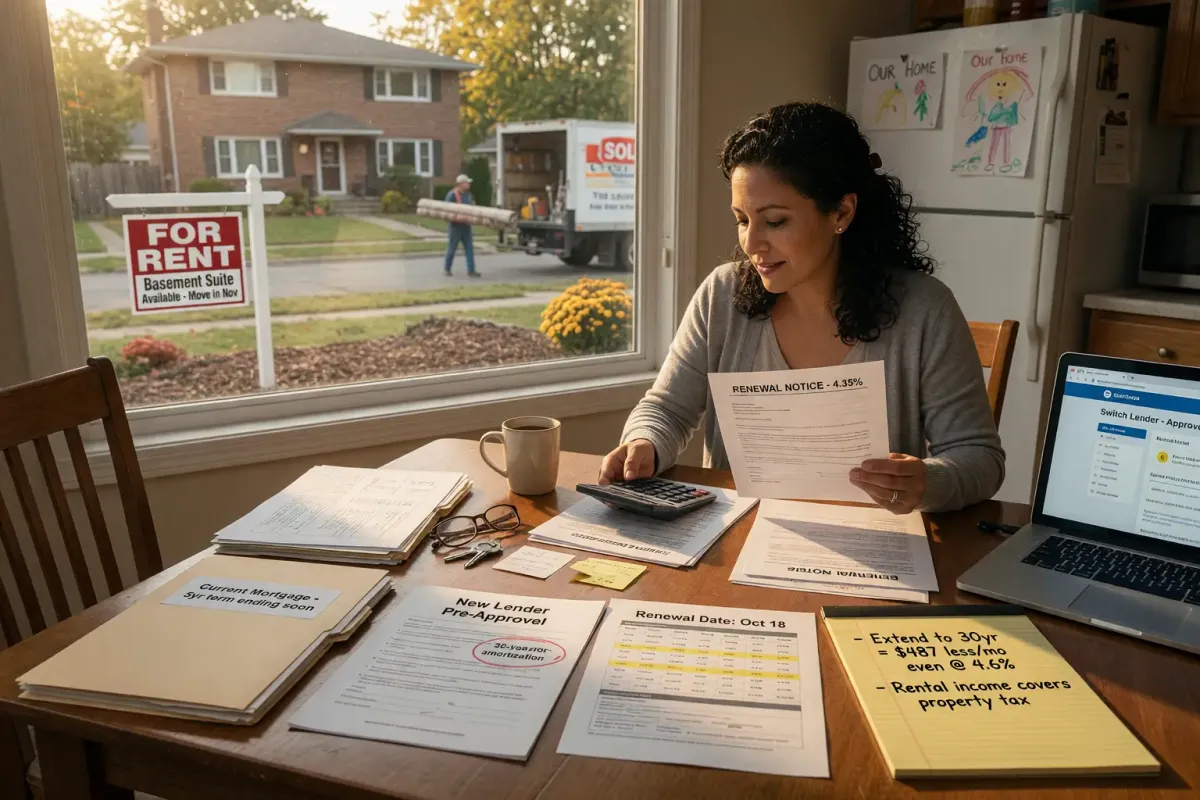
Your Mortgage Renewal Is Coming. Here’s What You Need to Know.
Here’s the situation. Millions of Canadian homeowners and investors locked in mortgages during COVID when rates were sitting at historic lows — some under 2%. Those terms are expiring right now. And the rates waiting on the other side? They’re sitting in the roughly 4.0–4.3% range for 5-year fixed.
That’s not a small jump. That’s a gut punch to your monthly budget.
But here’s what I want you to hear: this doesn’t have to wreck you. There are real, proven moves you can make right now to soften the blow, protect your cash flow, and even come out ahead. Let’s break it down.
Why the Renewal Wave Is a Big Deal
During COVID, lenders were competing hard for business. They offered shorter terms, promotional rates, and all kinds of deals to get you in the door. Nobody predicted the run-up in inflation, the rapid Bank of Canada hiking cycle that followed, or how long elevated rates would stick around.
So now we’ve got a massive pile of mortgages all coming due at the same time — and the rate environment is very different from when those COVID terms were locked in.
Fixed rates are tied to the bond market. The Bank of Canada cut rates through 2024–2025 and has held the overnight rate at 2.25% since late October 2025 (most recently held June 10, 2026; next decision July 15, 2026) — down from a peak of 5.0% — and prime is 4.45% (down from a peak of 7.20%). Best 5-year fixed rates are around 4.04% from brokers and 5-year variable around 3.40%. Those are friendlier than they were two years ago, but still well above the 1.5–2.5% you locked in during COVID.
You might have been paying $1,800/month on your mortgage. Renew at a higher rate with the same amortization left, and that payment could jump to $2,400 or more. Meanwhile, groceries cost more. Gas costs more. Everything costs more.
That’s the squeeze. And it’s real.
The math on extending your amortization versus chasing a lower rate can get messy fast — book a free strategy call with LendCity and we’ll show you exactly which move saves you the most on your monthly payment.
If this approach is on your radar, our U.S. mortgage financing guide for Canadians walks through how LendCity structures these deals.
The #1 Move Most People Don’t Know They Can Make
Here’s what almost nobody tells you at renewal time: you don’t have to stay with your current lender.
When your mortgage comes up for renewal, you can move it to a new lender and — this is the key part — reset your amortization back up to 30 years.
Yes, even if you only have 15 years left on your current mortgage.
Technically, this is processed as a refinance (that’s just how the system categorizes it). But you’re not pulling out extra cash for spending. You’re just moving the balance and extending the repayment timeline.
Here’s what that does for you:
- Your monthly payment drops significantly. Stretching a $400,000 balance from 15 years to 30 years can save you $700–$1,000/month or more.
- You get breathing room. If everything around you is getting more expensive, a lower mortgage payment is your financial buffer.
- You’re not trapped. The 30-year amortization is your minimum payment — like the minimum payment on a credit card. If you have a great month, pay extra. If things are tight, pay the minimum. You’re in control.
Think of it this way: a 30-year amortization isn’t a 30-year sentence. It’s a safety net.
But Wait — What About the Rate?
Here’s where people trip up. They see a lender offering a killer rate to keep their business, and they think that’s the obvious win.
It’s not always.
A lower rate with a 15-year amortization can mean a higher monthly payment than a slightly higher rate with a 30-year amortization. We’re talking maybe 0.25%–0.50% difference in rate, but hundreds of dollars difference in monthly payment.
Your payment is what you live with every month. Optimize for that first.
Add a Rental Suite — And Stack the Savings
Once you’ve optimized your renewal, here’s the next move: add a secondary suite to your property.
This is one of the most powerful things a homeowner or investor can do right now. And there’s financing built specifically for it — see our guide on how to refinance your home to add a rental unit.
Through Sagen (one of Canada’s mortgage insurers), you can finance up to 90% of your home’s future value to add a rental unit. That could be:
- A basement suite
- A backyard ADU (Additional Dwelling Unit)
- A suite above the garage
The money goes directly toward renovation costs — that’s how the program works. You can’t use it to pay off other debts. But what you can do is create a rental income stream that changes your financial picture entirely.
Combine that with your renewal optimization, and the math gets interesting fast:
- Save $800/month by extending your amortization
- Add a basement suite renting for $1,400/month
- That’s a $2,200/month swing in your monthly cash flow
That’s not a small number. That’s the difference between financial stress and financial stability.
If you’ve got space for a secondary suite, combining that rental income with your renewal optimization can shift your cash flow by thousands per month — schedule a free strategy session with us and we’ll map out whether it makes sense for your property.
For Investors: This Is Your Buying Window
If you’re an investor reading this, pay attention. Rising foreclosures — even at historically low levels — mean motivated sellers and deal opportunities. When homeowners are squeezed by higher payments, some will sell. Some will price to move fast.
That’s your window.
The investors I’ve seen build serious wealth didn’t wait for the perfect market. They moved when others were frozen. They bought when the news was scary and the deals were real.
Optimize your existing portfolio now. Lower your payments. Free up cash flow. Then go find deals while other people are distracted by the headlines.
The Bottom Line: Optimize Everything Now
Here’s the mindset shift I want you to make: don’t wait for a problem to fix your finances. Optimize now, while you have options.
If your mortgage is coming up for renewal in the next 12–24 months:
- Talk to a mortgage broker — not just your bank — about your options
- Run the numbers on extending your amortization — compare monthly payments, not just rates
- Look at your property — is there a suite you could add?
- Think about your whole financial picture — lower payments mean more resilience if income changes
You don’t know what’s coming. AI is reshaping industries. Tariffs are shaking supply chains. The economy does what it wants. What you can control is how lean and optimized your financial foundation is.
Get that right, and whatever comes next — you’ll be ready for it.
Key Takeaways:
- Your Mortgage Renewal Is Coming. Here’s What You Need to Know.
- Why the Renewal Wave Is a Big Deal
- The #1 Move Most People Don’t Know They Can Make
- Add a Rental Suite — And Stack the Savings
- For Investors: This Is Your Buying Window
Frequently Asked Questions
What is the mortgage renewal wave and why is it happening now?
Can I extend my amortization when I renew my mortgage?
Is a lower rate always better when renewing my mortgage?
What is an ADU and how can it help during my renewal?
What is the Sagen secondary suite financing program?
Should I worry about foreclosures during the renewal wave?
If I extend to a 30-year amortization, am I stuck paying for 30 years?
When should I start planning for my mortgage renewal?
Free download
MLI Select document checklist
Appraisals, rent rolls, environmental reports, and the CMHC package lenders expect before they underwrite.
By submitting, you agree to receive occasional emails from LendCity. You can unsubscribe at any time.
4.8/5 (116 Google reviews)
Disclaimer: LendCity Mortgages is a licensed mortgage brokerage. Content on this page is for educational purposes only and does not constitute legal, tax, investment, securities, or financial-planning advice. Rates, premiums, program terms, and regulations referenced are as of the page's last updated date and are subject to change. Any investment returns, rental yields, tax savings, or case-study figures shown are illustrative only — they are not guaranteed, not typical, and individual results will vary. Consult a licensed lawyer, Chartered Professional Accountant, or registered dealer before acting on any information above. Editorial standards.

Written by
Scott Dillingham
Published
March 9, 2026
· Updated July 11, 2026Reading time
8 min read
Mortgage Renewal
A mortgage renewal occurs when a mortgage term ends and the borrower renegotiates a new term with their existing lender or switches to a new one, without fully paying off the remaining principal balance. For Canadian real estate investors, renewal periods present a strategic opportunity to reassess interest rates, amortization schedules, and lender options to optimize cash flow across their portfolio.
Amortization Extension
Amortization extension is the process of lengthening the remaining repayment period of a mortgage, which reduces monthly payments by spreading the outstanding balance over a longer timeframe. For Canadian investors, this can improve cash flow on rental properties but typically results in paying more interest over the life of the loan and may require lender approval or refinancing.
Secondary Suite
A self-contained rental unit within or attached to a single-family home, such as a basement apartment, laneway house, or garden suite. Secondary suites help investors generate additional rental income from one property and can qualify for rental offset programs that improve mortgage qualification.
ADU
Accessory Dwelling Unit - a secondary residential unit on a single-family property, such as a basement suite, laneway house, garden suite, or in-law suite. ADUs increase rental income and property value while leveraging existing land and infrastructure.
Bond Market
The bond market is where government and corporate bonds are bought and sold, and it directly influences Canadian mortgage rates, as lenders typically price fixed-rate mortgages based on Government of Canada bond yields. When bond yields rise, fixed mortgage rates tend to follow, increasing borrowing costs for real estate investors.
Sagen
Sagen (formerly Genworth Canada) is a private mortgage default insurer in Canada that provides insurance to lenders when borrowers have a down payment of less than 20%, protecting the lender against borrower default. For Canadian real estate investors, Sagen's insurance products can enable high-ratio financing on owner-occupied properties, though investment properties typically require a minimum 20% down payment and are generally not eligible for default insurance.
Cash Flow Optimization
Cash flow optimization is the strategic process of maximizing the net income generated from a rental property by increasing rental revenue and minimizing operating expenses, mortgage costs, and vacancies. For Canadian real estate investors, this often involves tactics such as selecting the right financing structure, leveraging rental income from multiple units, and managing expenses like property taxes and maintenance to ensure the property generates consistent positive monthly returns.
Hover over terms to see definitions. View the full glossary for all terms.