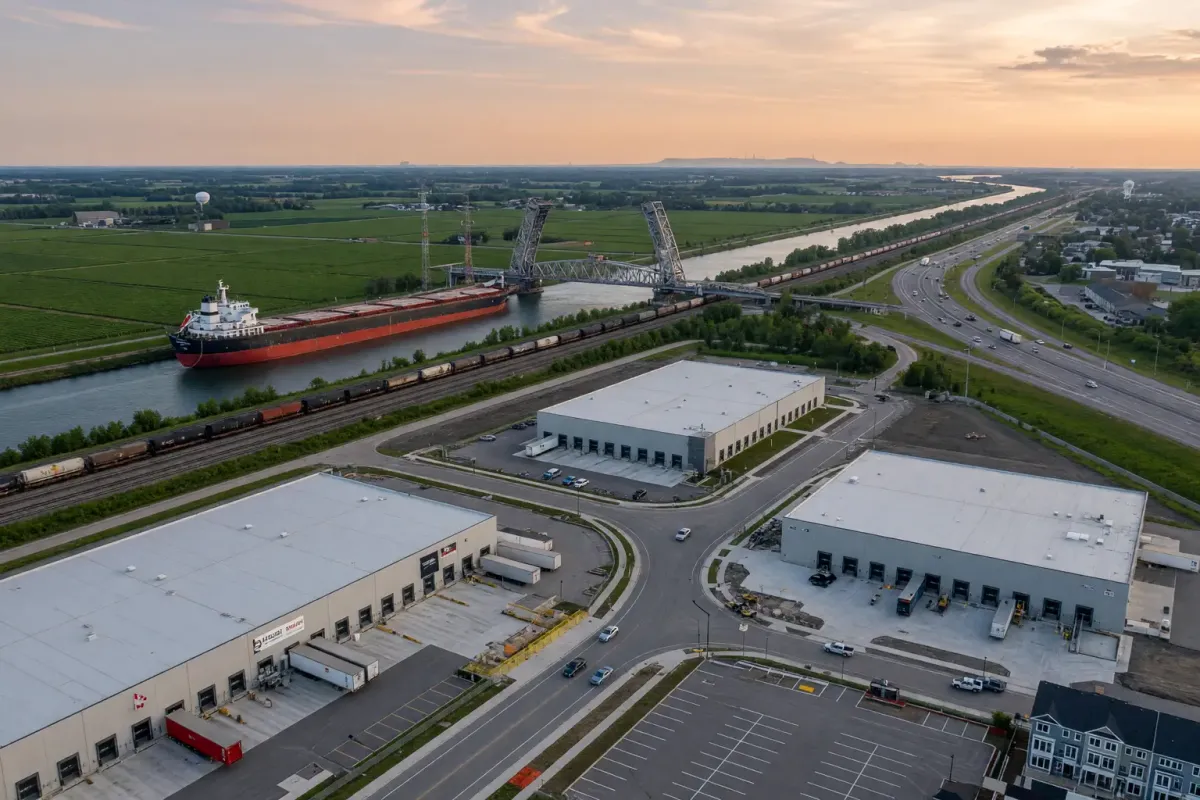
Welland represents one of the most compelling opportunities for real estate investors seeking exposure to Ontario’s industrial growth corridor. Located in the heart of the Niagara Region with exceptional transportation infrastructure, Welland offers unique advantages for investors targeting commercial, residential, and industrial properties. Understanding this market’s fundamentals helps investors capitalize on the city’s strategic position and development-friendly environment.
Understanding Welland’s Strategic Location
Welland developed around its waterways, establishing the city as a critical hub where trade, industry, and transportation converge. The city’s geographic position provides unparalleled access to major population centers and trading partners across North America.
Transportation Infrastructure
The Welland Canal and Welland River shaped the city’s industrial heritage and continue driving economic activity. These waterways connect Welland to ocean ports worldwide, including destinations in Europe, South America, Asia, and the Pacific Rim. This global connectivity creates opportunities for businesses requiring international supply chain access.
Beyond waterways, Welland benefits from railway connections, highway access, and proximity to airports. This multimodal transportation network makes the city attractive for logistics, manufacturing, and distribution operations that require flexible shipping options.
Regional Market Access
Welland’s location within eight hours of approximately sixty percent of the United States population and a significant portion of the Canadian industrial market creates exceptional market reach for businesses based in the city. This accessibility drives demand for industrial and commercial properties from companies seeking central distribution locations.
| Transportation Mode | Connectivity Advantage |
|---|---|
| Waterways | Global port access via Welland Canal |
| Railways | Direct freight connections |
| Highways | Quick access to major markets |
| Air | Regional airport accessibility |
Economic Diversification and Stability
Welland’s economy benefits from diversification across multiple sectors, reducing dependence on any single industry and creating stability attractive to both businesses and real estate investors.
Key Industry Sectors
Advanced manufacturing forms a core component of Welland’s economy, with companies producing goods ranging from automotive components to specialized equipment. The manufacturing sector benefits from the city’s skilled workforce and cost-competitive environment.
Food processing represents another significant sector, using the Niagara Region’s agricultural production and transportation infrastructure. Business services and sports tourism round out the economic picture, providing additional employment and commercial property demand.
Workforce Development
Local institutions including Niagara College, Brock University, and the Vineland Research Institute provide workforce training that supports Welland’s industries. The labor force exceeds twenty-five thousand workers, providing employers with access to skilled talent across various disciplines.
This educational infrastructure means businesses locating in Welland can access trained workers while also developing specialized training programs for their specific needs. For investors, this workforce availability translates into stable tenant demand for both commercial properties and residential housing.
Tax Advantages for Investors
One of Welland’s most significant competitive advantages lies in its favorable tax structure. Understanding these tax benefits helps investors accurately project returns and compare Welland to alternative markets.
Industrial Property Taxation
Industrial property tax rates in Welland significantly undercut rates in many competing Ontario municipalities. Industrial properties face substantially lower tax burdens than comparable properties in cities like Hamilton or Oakville, creating meaningful cost savings for tenants.
These lower operating costs make Welland properties more attractive to industrial tenants, supporting occupancy rates and potentially commanding premium rents relative to tax-inclusive total occupancy costs.
Commercial and Office Properties
Office property taxation also remains competitive, making Welland attractive for business services operations seeking cost-effective locations. Combined with lower land costs, these tax advantages create compelling economics for commercial development.
Land Taxation
Land taxes per acre remain a fraction of rates charged in larger Ontario cities. This difference particularly benefits industrial development requiring significant acreage for manufacturing or logistics operations.
Residential Real Estate Opportunities
While industrial properties represent Welland’s distinctive investment opportunity, residential real estate also offers attractive possibilities for investors.
Property Values and Market Dynamics
Residential property costs in Welland typically fall below averages for both the broader Niagara Region and Southern Ontario generally. This relative affordability creates lower barriers to entry for investors while maintaining strong fundamentals driven by local employment and regional growth.
Properties in Welland often spend fewer days on market compared to regional averages, indicating healthy demand. The combination of affordable entry points and reasonable market velocity creates opportunities for investors seeking buy-and-hold residential strategies.
Rental Market Considerations
Welland’s employment base supports rental demand from workers in manufacturing, services, and related sectors. The city’s lower cost of living compared to nearby metropolitan areas attracts tenants seeking value while maintaining access to employment opportunities.
Investors should research current rental rates and vacancy levels for their target property types before making acquisition decisions. Local property managers and real estate professionals can provide market-specific insights.
Development-Friendly Environment
Welland has actively worked to create an environment conducive to development and investment, reducing barriers and providing incentives that accelerate project timelines and improve returns.
Streamlined Approval Processes
The city has implemented streamlined approval processes for site plans and building permits. Working collaboratively with developers, city officials focus on moving projects through construction phases efficiently. The Development Team Approach provides coordinated services across building, planning, engineering, utility management, and economic development functions.
This integrated approach reduces the complexity typically involved in development approvals, potentially shortening project timelines and reducing carrying costs. For investors, faster approvals mean quicker paths to income generation.
Development Incentives
Multiple Community Improvement Plans (CIPs) provide incentives for specific types of development within designated areas.
The Gateway CIP targets employment lands with incentives including property tax reimbursement, development charge exemptions, and planning application fee grants. This program aims to generate significant new commercial and industrial space while creating employment opportunities.
The Brownfield CIP addresses environmental remediation challenges by providing environmental study grants, property tax assistance, and development charge exemptions for brownfield redevelopment projects.
Additional incentive programs target downtown areas and health and wellness sector development, offering grants for urban design, facade improvements, building improvements, and residential development.
Investment Strategies for Welland
Internet infrastructure affects tenant demographics. Understanding which strategies align with local fundamentals helps investors focus their efforts effectively.
Industrial Investment
Welland’s competitive advantages concentrate in industrial real estate. Investors with capital and expertise for industrial properties may find the most distinctive opportunities here. The combination of low tax rates, shovel-ready land availability, and development incentives creates favorable conditions for industrial investment.
Consider both acquisition of existing industrial properties and ground-up development, depending on available opportunities and your capabilities.
Residential Rental Investment
More accessible entry points in residential real estate suit investors with limited capital or those building initial portfolios. Single-family rentals and small multifamily properties allow participation in Welland’s growth without the capital requirements of commercial or industrial investment.
Focus on properties serving the local workforce, emphasizing locations with convenient access to employment centers and amenities.
Commercial Investment
Retail and office properties serve Welland’s growing population and business community. These investments require understanding local commercial dynamics and tenant creditworthiness but can provide stable returns for investors willing to conduct appropriate due diligence.
Building Your Welland Investment Team
Success in any market requires relationships with qualified professionals who understand local dynamics. Welland is no exception.
Real Estate Professionals
Connect with real estate agents and brokers experienced in Welland investment properties. Look for professionals who regularly work with investors rather than focusing primarily on owner-occupied residential transactions.
Real estate lawyers familiar with Ontario commercial and investment property transactions protect your interests during acquisitions and handle title, zoning, and other legal matters specific to your investments.
Financing Partners
Mortgage brokers experienced with investment property financing help access appropriate loan products for your strategy. Investment properties often require different financing approaches than owner-occupied homes, making specialized expertise valuable.
Property Management
For investors who won’t manage properties personally or who invest from outside the region, professional property management becomes essential. Research management companies serving Welland before acquiring properties to ensure qualified management is available at reasonable costs.
Frequently Asked Questions
Is Welland suitable for first-time investors?
How do Welland's incentive programs work?
What due diligence should I conduct in Welland?
How does Welland compare to other Niagara Region cities?
Should I invest in residential or industrial properties?
What role does the Welland Canal play in the local real estate market?
How do Welland's Community Improvement Plans benefit real estate investors?
Conclusion
Ready to explore your financing options? Book a free strategy call with LendCity and let our team help you find the right path forward.
Welland offers compelling opportunities for real estate investors willing to understand its distinctive characteristics and market dynamics. The city’s strategic location, diversified economy, competitive tax structure, and development-friendly environment create conditions favorable for various investment strategies.
Whether focusing on industrial properties that use Welland’s unique advantages or building residential rental portfolios that serve the local workforce, investors can find opportunities aligned with their goals. Success requires the same fundamentals as any market: thorough research, qualified professional relationships, appropriate financing, and disciplined execution. With these elements in place, Welland can contribute meaningfully to building long-term real estate wealth.
Weekly Investor Insight
Sunday financing notes for investors
Market updates, rate moves, and deal structures — once a week. Unsubscribe anytime.
By submitting, you agree to receive occasional emails from LendCity. You can unsubscribe at any time.
Disclaimer: LendCity Mortgages is a licensed mortgage brokerage. Content on this page is for educational purposes only and does not constitute legal, tax, investment, securities, or financial-planning advice. Rates, premiums, program terms, and regulations referenced are as of the page's last updated date and are subject to change. Any investment returns, rental yields, tax savings, or case-study figures shown are illustrative only — they are not guaranteed, not typical, and individual results will vary. Consult a licensed lawyer, Chartered Professional Accountant, or registered dealer before acting on any information above. Editorial standards.

Written by
Scott Dillingham
Published
August 1, 2026
Reading time
8 min read
Building Permit
Official municipal approval required before conducting certain types of construction or renovation work, ensuring compliance with building codes and safety regulations. Unpermitted work on investment properties can result in fines, required demolition, difficulty selling, and voided insurance claims.
Carrying Costs
The ongoing expenses of holding a property, including mortgage payments, property taxes, insurance, utilities, and maintenance. Understanding carrying costs is essential during renovation periods when the property generates no rental income.
Comparable Properties
Similar properties in the same market area used to establish fair market value or rental rates through comparison of features, location, condition, and recent sale or rental prices. Analyzing comps is essential when determining offer prices and setting competitive rents.
Days on Market
The number of days a property has been listed for sale or rent without being leased or sold, used as an indicator of market demand and pricing appropriateness. Properties with high days on market typically signal pricing issues or property deficiencies.
Due Diligence
The comprehensive investigation and analysis of a property before purchase, including financial review, physical inspection, title search, and market analysis.
Environmental Assessment
A professional evaluation of a property's environmental condition, typically required by commercial lenders. Phase I reviews historical records for contamination risk. Phase II involves soil and water testing. Essential for commercial and industrial property purchases.
Industrial Property
Real estate used for manufacturing, warehousing, distribution, or storage. Industrial properties often feature long-term net leases with lower management requirements than residential or retail properties.
Mortgage Broker
A licensed professional who shops multiple lenders to find the best mortgage rates and terms for borrowers. Unlike banks, brokers have access to dozens of lending options.
Multifamily
Properties with multiple dwelling units, from duplexes to large apartment buildings. Often offer better cash flow and economies of scale.
Occupancy Rate
The percentage of rental units that are currently occupied by paying tenants, calculated as occupied units divided by total available units. High occupancy rates indicate strong property management and market demand, while low rates signal problems that reduce cash flow.
Hover over terms to see definitions. View the full glossary for all terms.