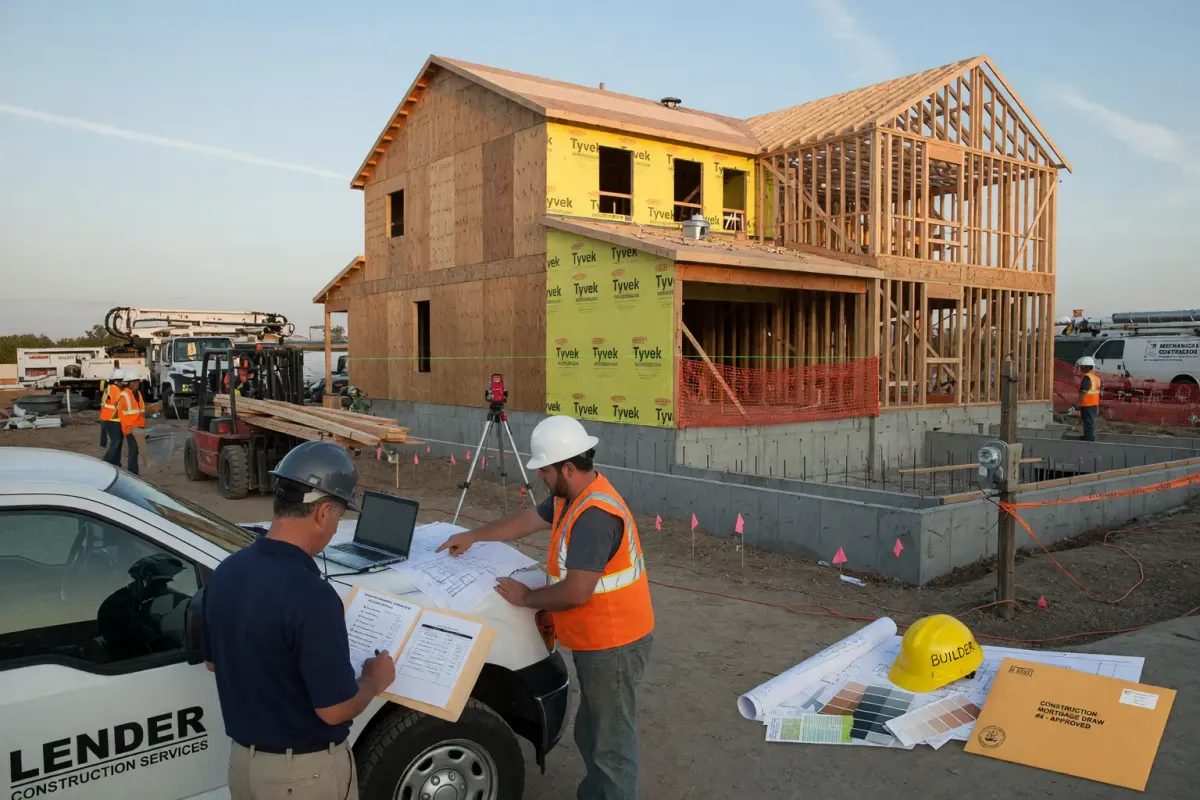
Construction mortgages enable individuals and developers to finance the building of new homes, transforming empty lots or tear-down properties into custom residences. As more buyers seek the personalization that new construction offers, understanding how construction mortgages work becomes increasingly important. These specialized loans differ significantly from standard mortgages, involving draw processes, builder relationships, and qualification requirements that prospective builders must understand.
This overview examines construction mortgages from application through completion, providing the knowledge necessary to finance your building project successfully.
Understanding Construction Mortgages
Construction mortgages fund new home building through structures designed for the unique nature of construction financing.
How Construction Mortgages Differ
Construction mortgages differ from standard mortgages in basic ways:
Draw-Based Funding - Rather than receiving full loan amounts at closing, borrowers receive funds in stages as construction progresses.
Interest-Only Payments - During construction, borrowers typically pay interest only on drawn amounts rather than principal and interest on full loan balances.
Temporary Structure - Construction mortgages are interim financing, converting to or being replaced by permanent mortgages upon completion.
Builder Involvement - Lenders require approved builders and monitor construction progress throughout the building process.
Verification Requirements - Inspections verify work completion before subsequent draws are released.
These differences reflect the unique risks construction lending involves.
| Feature | Standard Mortgage | Construction Mortgage |
|---|---|---|
| Funding | Lump sum | Progressive draws |
| Payments | P+I from start | Interest only initially |
| Term | 5+ years | Construction period |
| Collateral | Completed home | Building in progress |
Why Construction Mortgages Exist
Standard mortgages aren’t suitable for construction because:
No Collateral - Before construction, no home exists to secure the loan.
Progressive Value - Value increases as building progresses, justifying graduated funding.
Risk Profile - Construction involves risks completed homes don’t present.
Monitoring Need - Ensuring funds finance actual construction requires oversight.
Construction mortgages address these realities through specialized structures.
The Draw Process Explained
Understanding draw processes helps borrowers manage construction financing effectively.
How Draws Work
The typical draw process involves:
Draw Schedule - Lenders establish draw points aligned with construction stages—foundation, framing, mechanical, finishing, completion.
Completion Verification - Inspectors verify that specified work is complete before releasing draws.
Draw Request - Builders or borrowers submit draw requests with documentation of completed work.
Inspection - Lender-appointed inspectors verify work completion.
Fund Release - Upon verification, lenders release scheduled draw amounts.
Continuation - Process repeats through construction stages until completion.
Draw Timing Considerations
Managing draw timing involves:
Builder Cash Flow - Builders need reliable draw releases to pay for materials and labor.
Inspection Scheduling - Coordinating inspections with work completion prevents delays.
Documentation Readiness - Having required paperwork ready accelerates draw processing.
Communication - Maintaining lender communication prevents misunderstandings that delay releases.
Common Draw Issues
Challenges during the draw process include:
Inspection Disputes - Disagreements about completion percentages.
Work Sequence Variations - Construction not following expected order.
Documentation Gaps - Missing or incomplete paperwork.
Timing Delays - Gaps between work completion and fund availability.
Proactive management and communication minimize these issues.
Qualification Requirements
Construction mortgage qualification involves both borrower and project assessment.
Borrower Qualification
Lenders evaluate borrowers based on:
Income and Employment - Stable income supporting construction period payments plus eventual permanent mortgage payments.
Credit History - Strong credit demonstrating payment reliability.
Down Payment - Typically 20-25%+ of total project cost including land.
Reserves - Additional funds for contingencies and completion assurance.
Existing Debts - Debt levels affecting ability to carry construction and permanent financing.
Project Requirements
Beyond borrower qualification, projects must meet standards:
Approved Builder - Lenders require builders meeting their qualification standards.
Complete Plans - Architectural plans and specifications sufficient for cost estimation.
Realistic Budget - Detailed cost breakdown supporting requested financing.
Building Permits - Approved permits demonstrating regulatory compliance.
Appraisal Support - Projected value supporting loan amounts requested.
Builder Approval
Lender-approved builders typically demonstrate:
Experience - Track record building similar homes.
Licensing - Appropriate contractor licensing and insurance.
Financial Stability - Capacity to perform through construction.
References - Successful completion of previous projects.
Using non-approved builders typically disqualifies borrowers from most construction mortgages.
Construction Mortgage Products
Various construction mortgage products serve different situations.
Construction-to-Permanent Loans
Combined products providing:
Single Closing - One loan closing covers both construction and permanent phases.
Rate Lock - Permanent mortgage rate may be locked at construction start.
Simplified Process - Avoid second approval and closing upon completion.
smooth Transition - Automatic conversion from construction to permanent financing.
These products offer convenience but may have higher rates or stricter qualification.
Stand-Alone Construction Loans
Separate construction financing:
Flexible Permanent Financing - Choose permanent mortgage separately upon completion.
might Better Terms - May access better rates for each phase independently.
Two Closings Required - Separate closings for construction and permanent phases.
Rate Uncertainty - Permanent rates unknown until completion.
Stand-alone products offer flexibility but involve more complexity.
Builder Financing Programs
Some builders offer financing arrangements:
Streamlined Process - Builder handles financing coordination.
might Competitive Terms - Volume relationships may offer advantages.
Limited Flexibility - May be tied to specific builders or options.
Incentive Packages - May include upgrades or closing cost assistance.
Evaluate builder programs against independent financing options.
Managing the Construction Process
Success with construction mortgages requires active project management.
Budget Management
Controlling costs involves:
Realistic Budgeting - Accurate initial cost estimates preventing shortfalls.
Contingency Reserves - 10-20% contingency for unexpected costs (many experienced builders plan 15-25% on complex or renovation-heavy jobs).
Change Order Control - Managing scope changes that increase costs.
Regular Monitoring - Tracking spending against budget throughout construction.
If the loan runs dry before completion - Typical fixes are painful: gap financing, injecting more developer equity, reducing scope, or renegotiating an increased commitment with the existing lender. Prevention beats rescue — favour fixed-price contracts with qualified builders, value-engineer during design, and escalate cost variance early while options still exist. Mezzanine or JV equity can fill a senior-debt gap, but price that capital into the project before you break ground.
Timeline Management
Keeping projects on schedule:
Realistic Scheduling - Achievable timelines preventing extension costs.
Milestone Tracking - Monitoring progress against scheduled completion.
Issue Resolution - Addressing delays promptly to minimize impacts.
Communication - Keeping lenders informed of progress and any delays.
Quality Oversight
Ensuring construction quality:
Regular Inspections - Visiting construction sites throughout building.
Documentation - Photographing progress and any concerns.
Issue Identification - Catching problems before they compound.
Builder Communication - Addressing concerns promptly with builders.
Completion and Conversion
Ready to explore your financing options? Book a free strategy call with LendCity and let our team help you find the right path forward.
Transitioning from construction to permanent financing requires attention.
Completion Requirements
Before conversion or take-out:
Final Inspection - Verification that construction is complete.
Occupancy Permit - Municipal approval for occupancy.
Final Draw - Release of any remaining construction funds.
Punch List Completion - Addressing remaining items.
Conversion Process
For construction-to-permanent loans:
Automatic Transition - Loan converts per original terms.
Payment Change - Shift from interest-only to principal and interest.
Term Commencement - Permanent mortgage term begins.
For stand-alone construction loans:
New Application - Apply for permanent mortgage.
Appraisal - New appraisal of completed home.
Qualification - Meet permanent mortgage qualification requirements.
Closing - Close permanent loan and repay construction loan.
Frequently Asked Questions
How much down payment do I need for a construction mortgage?
Can I be my own builder?
What if construction costs exceed my budget?
How long does construction financing last?
What happens if I can't qualify for permanent financing?
What is the difference between construction-to-permanent and stand-alone construction loans?
Why do lenders require an approved builder for construction mortgages?
Weekly Investor Insight
Sunday financing notes for investors
Market updates, rate moves, and deal structures — once a week. Unsubscribe anytime.
By submitting, you agree to receive occasional emails from LendCity. You can unsubscribe at any time.
Disclaimer: LendCity Mortgages is a licensed mortgage brokerage. Content on this page is for educational purposes only and does not constitute legal, tax, investment, securities, or financial-planning advice. Rates, premiums, program terms, and regulations referenced are as of the page's last updated date and are subject to change. Any investment returns, rental yields, tax savings, or case-study figures shown are illustrative only — they are not guaranteed, not typical, and individual results will vary. Consult a licensed lawyer, Chartered Professional Accountant, or registered dealer before acting on any information above. Editorial standards.

Written by
Scott Dillingham
Published
July 11, 2026
· Updated August 2, 2026Reading time
6 min read
ADU
Accessory Dwelling Unit - a secondary residential unit on a single-family property, such as a basement suite, laneway house, garden suite, or in-law suite. ADUs increase rental income and property value while leveraging existing land and infrastructure.
Appraisal
A professional assessment of a property's market value, required by lenders to ensure the property is worth the loan amount.
Building Permit
Official municipal approval required before conducting certain types of construction or renovation work, ensuring compliance with building codes and safety regulations. Unpermitted work on investment properties can result in fines, required demolition, difficulty selling, and voided insurance claims.
Cash Flow Optimization
Cash flow optimization is the strategic process of maximizing the net income generated from a rental property by increasing rental revenue and minimizing operating expenses, mortgage costs, and vacancies. For Canadian real estate investors, this often involves tactics such as selecting the right financing structure, leveraging rental income from multiple units, and managing expenses like property taxes and maintenance to ensure the property generates consistent positive monthly returns.
Cash Flow
The money left over after collecting rent and paying all expenses including mortgage, taxes, insurance, maintenance, and property management. Positive cash flow is the primary goal of buy-and-hold investors. See also [NOI](/glossary/noi/), [Cash-on-Cash Return](/glossary/cash-on-cash-return/), and [Vacancy Rate](/glossary/vacancy-rate/).
Construction Financing
A short-term loan that funds the building or major renovation of a property, disbursed in stages (draws) as construction milestones are completed. Once building is finished, the construction loan is typically replaced with a permanent mortgage through a process called takeout financing. Interest is charged only on the amount drawn.
Construction Loan
Short-term financing used to fund building a new property. Funds are released in stages (draws) as construction milestones are completed, and interest is charged only on drawn amounts. Construction loans typically convert to permanent financing upon project completion.
Contractor
A licensed professional hired to perform construction, renovation, or repair work on investment properties. Using licensed and insured contractors is essential for permitted work, as unlicensed contractors can result in voided insurance, property liens, and liability for injuries.
Down Payment
The upfront cash payment when purchasing a property. For 1-4 unit investment properties, minimum 20% down is required. 5+ unit multifamily can use CMHC MLI Select with lower down payments, and house hackers can put as little as 5% down on owner-occupied 2-4 plexes. Your down payment directly affects your [LTV](/glossary/ltv/) and the amount of [leverage](/glossary/leverage/) you use.
Draw Schedule
A plan specifying when and how much of a construction loan's funds will be released as building milestones are reached. An inspector verifies work completion before each draw is disbursed.
Hover over terms to see definitions. View the full glossary for all terms.