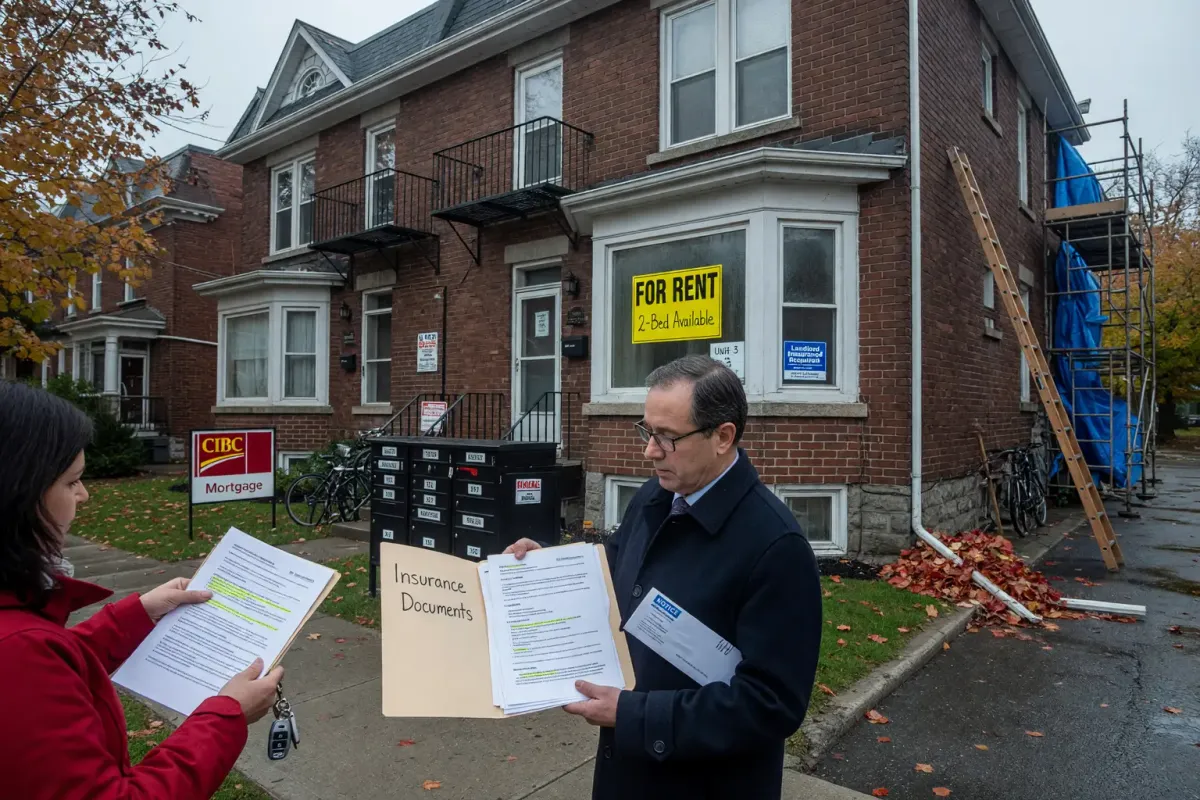
Landlord insurance (also called rental property insurance) is a specialized policy for tenant-occupied properties in Canada. It covers the building, your liability as owner, and often lost rental income during repairs—unlike a homeowner policy, which assumes you live there, or tenant/renters insurance, which covers the renter’s belongings. The wrong policy—or no policy at all—can cost you the property. Insurance is regulated provincially, and this guide walks through the coverage you actually need, how landlord and tenant policies fit together, and how to keep premiums under control.
What Is Landlord Insurance?
Why Landlord Insurance Matters
Your rental properties are big assets sitting exposed to fire, flood, liability claims, and a dozen other risks. I’ve seen investors lose years of equity because one uninsured event hit harder than the property was worth—and personal liability followed them home.
Insurance turns those unpredictable disasters into a predictable premium you can budget for. In Canada, your landlord policy covers the building and your liability; it does not cover your tenant’s belongings. That’s their renters insurance. Know the split before you buy.
| Risk Type | Potential Impact | Insurance Solution |
|---|---|---|
| Fire/Natural disaster | Total property loss | Fire and hazard insurance |
| Flooding | Severe property damage | Flood insurance |
| Tenant injury | Lawsuit liability | Liability insurance |
| Rental income loss | Cash flow disruption | Loss of income insurance |
| Contractor issues | Project liability | General contractor insurance |
Lender Requirements
Most Canadian lenders require proof of property insurance before they’ll fund your mortgage—and they’ll want to stay named on the policy for as long as the loan is outstanding. Even on free-and-clear properties, running rentals without coverage is an unacceptable risk.
Insurance isn’t optional. It’s a basic operating cost.
Essential Coverage Types
Fire and Hazard Insurance
Fire and hazard insurance is your base landlord policy. It covers damage from fire, wind, storms, and many natural disasters so you can repair or rebuild instead of eating a total loss.
Every lender requires it. Every investor needs it whether a lender is involved or not. Confirm with your broker what perils your province’s standard form includes—wording and exclusions vary by insurer and region.
Flood Insurance
Standard Canadian property policies often limit or exclude overland flood and sewer backup. You usually need optional endorsements—or a separate flood product—for real protection.
Check flood maps, grading, and sump/backup history on every deal. Don’t assume only waterfront or basement units are exposed. Ask your broker specifically about overland water, sewer backup, and groundwater so you’re not surprised at claim time.
Liability Insurance
If a tenant, guest, or contractor gets hurt on your property and sues, liability coverage pays defense costs and damages. One claim can exceed the value of the building. That’s why liability limits matter as much as the brick-and-mortar coverage.
A personal umbrella policy that sits above your landlord limits is often cheap relative to the protection. In Canada, confirm the umbrella works with your provincial landlord policy and that limits match what your lender or partners expect.
Terrorism Insurance
Most standard policies exclude acts of terrorism. For high-profile, downtown, or landmark-adjacent buildings, a separate terrorism endorsement can close that gap.
Weigh it against location and property type. For a typical suburban rental, you may not need it. For a busy urban mixed-use asset, ask your broker what’s excluded and what add-ons cost.
Loss of Income Insurance
When a covered loss makes a unit uninhabitable, loss of rents (loss of income) coverage replaces the rent you’d otherwise collect while repairs happen. That cash flow keeps the mortgage and bills paid.
If your debt service depends on rent, this isn’t a nice-to-have. Confirm waiting periods, monthly caps, and how long benefits run—Canadian forms differ on all three.
General Contractor Insurance
Before any reno or repair, verify your contractor carries liability and WSIB (or equivalent provincial workers’ compensation) coverage. Get certificates naming you as additional insured where it makes sense.
Your own policy may not fully protect you from damage or injuries tied to their work. Make insurance proof a non-negotiable step in every hire.
Lenders won’t fund your deal without proof of insurance and their name on the policy — book a free strategy call with LendCity and we’ll walk you through the coverage Canadian lenders actually require so closing doesn’t stall.
Reducing Insurance Costs
Asset Insurability Assessment
Before you buy, know exactly what you’re covering: replacement cost (not just market value), liability limits, and which perils are in or out. Over-insure and you waste premium. Under-insure and a claim leaves you short.
Sit down with a broker who understands investment properties in your province. Replacement-cost calculators and local build costs change fast—get current numbers.
Higher Deductible Consideration
Higher deductibles lower your premiums, but you pay more out of pocket when you claim. Run the math: if raising the deductible saves you $400 a year and you can comfortably write a larger cheque after a loss, it can be a smart trade.
This only works if you keep cash reserves ready. Don’t pick a deductible you can’t fund tomorrow morning.
Policy Customization
Off-the-shelf landlord forms often include coverages you don’t need and skip ones you do—like sewer backup, overland water, or short-term rental use. Build the policy around the actual property: type, location, tenure, and how you rent it.
A tailored policy frequently costs less and protects you better than a generic package.
Discount Requests
Insurers quietly offer breaks for bundling multiple properties, monitored alarms, claims-free years, newer roofs, and hard-wired smoke detection. They often won’t apply these unless you ask.
Bring a short list of discounts to every quote call. Simple questions regularly shave real money off the premium.
Multiple Quote Comparison
Get quotes from several insurers or a broker who shops multiple markets. For the same building, premiums can differ by hundreds or thousands of dollars a year.
Compare apples to apples: limits, deductibles, exclusions, and endorsements. A cheap quote that drops sewer backup or loss of rents isn’t a deal.
Specialized Coverage Considerations
House Hacking and Owner-Occupied Rentals
Renting a basement suite, spare room, or ADU in a home you still occupy is not the same as a vacant investment property—and neither your mortgage nor your insurance treats it that way by default.
Standard homeowner policies often exclude or limit business/rental use. Undisclosed rental activity discovered at claim time can mean a denied claim. Before you advertise a suite:
- Tell your insurer and get the right endorsement or a landlord form in writing
- Check occupancy and use clauses in your mortgage; owner-occupied loans may require lender notice or approval when you start renting space
- Confirm municipal permits for secondary suites and any short-term rental licensing
- Remember that significant rental use can affect principal residence tax treatment—ask a tax pro, not your insurer
Concealment is a false economy. Lenders and insurers find out through claims, listings, refinances, and tenant complaints. Disclose early and get coverage that matches how the property is actually used.
Short-Term Rental Insurance
Airbnb and other short-term stays carry different risks than a 12-month lease. Many standard Canadian landlord policies exclude or restrict short-term rental use.
Tell your broker how you actually rent the unit before you list it. You want written confirmation the policy covers commercial short-term occupancy—not a surprise denial after a claim.
Vacant Property Insurance
Leave a property empty too long and your standard landlord policy may slash coverage or void key perils. Renovations and extended vacancy usually need a vacancy permit or a vacant-building policy.
If a unit will sit empty beyond your insurer’s limit (often 30 days—check your wording), call before it happens. Don’t assume you’re still covered.
Equipment and Contents Coverage
If you supply furniture, appliances, or equipment, confirm your landlord policy covers those contents. Building coverage alone often won’t.
Keep an inventory with photos and receipts. Your tenant’s renters insurance covers their stuff—not yours.
If your mortgage depends on rental income, loss of rents coverage keeps payments flowing when a unit is uninhabitable — schedule a free strategy session with us and we’ll structure your financing around real cash-flow protection, not just purchase price.
Claims Process Understanding
Documentation Importance
Keep ongoing records: condition photos, renovation receipts, appliance serial numbers, and tenant communication. Strong files make faster, fairer settlements.
Photos taken after the loss never land as well as a clear before-and-after trail you already had.
Claim Filing Procedures
Know your notice deadlines, what documents the insurer wants, and whether you need approval before hiring contractors. Miss a step and you can shrink the settlement—or lose the claim.
Read the claims section of your policy now, not the night of the fire.
Settlement Negotiation
The first offer isn’t always the final number. Know your coverage, use your documentation, and push back when the scope or pricing doesn’t match the damage.
For large or disputed claims, a public adjuster can help—weigh their fee against the dollars at stake.
Working with Insurance Professionals
Insurance Broker Value
A good insurance broker works for you, shopping multiple Canadian insurers and explaining the differences in plain language. They know which markets like rental risks in your province and which endorsements actually matter.
You typically don’t pay the broker a separate fee—commissions come from the insurer. Use that access. One specialized broker often beats three direct quotes you ran yourself.
Coverage Reviews
Replacement costs, rents, and renovations change. Review coverage every year and after any major upgrade so limits still match reality.
Annual check-ins catch gaps before a claim does.
Risk Consultation
Ask your broker to walk the risks on each property: trip hazards, short-term rental use, oil tanks, older knob-and-tube, basement suites, and local weather exposure. They’ll spot gaps you might miss and recommend endorsements that fit Canadian landlord forms.
Frequently Asked Questions
What insurance is required for rental properties?
How much liability coverage do I need?
Does landlord insurance cover tenant belongings?
Should I require renters insurance in the lease?
What happens if I have a claim?
Should I have insurance on investment properties without mortgages?
What is loss of income insurance and when do I need it?
How can I reduce my rental property insurance premiums?
Putting It All Together
Rental property insurance is how you stop one fire, flood, or lawsuit from erasing years of equity. Get the basics right—fire and hazard, solid liability limits, and the Canadian endorsements your property actually needs (overland water, sewer backup, loss of rents, vacancy).
Cut cost the smart way: higher deductibles you can fund, endorsements you need (and none you don’t), every discount you’re entitled to, and real quote comparison across insurers.
Insurance isn’t optional overhead. It’s part of running the investment so a single bad day doesn’t take you out.
Free tool
Build a property proforma
Fill in income and expenses, then export a Year-1 operating statement (NOI, cap rate, cash flow, DSCR).
Disclaimer: LendCity Mortgages is a licensed mortgage brokerage. Content on this page is for educational purposes only and does not constitute legal, tax, investment, securities, or financial-planning advice. Rates, premiums, program terms, and regulations referenced are as of the page's last updated date and are subject to change. Any investment returns, rental yields, tax savings, or case-study figures shown are illustrative only — they are not guaranteed, not typical, and individual results will vary. Consult a licensed lawyer, Chartered Professional Accountant, or registered dealer before acting on any information above. Editorial standards.

Written by
Scott Dillingham
Published
July 31, 2026
· Updated August 11, 2026Reading time
9 min read
A Lender
A major bank or institutional lender offering the most competitive mortgage rates and terms but with the strictest qualification criteria, including full income verification and stress test compliance. Most investors use A lenders for their first four to six properties.
Airbnb
An online marketplace connecting property owners with short-term guests. In real estate investing, Airbnb is commonly used as shorthand for the short-term rental business model, which involves higher operational demands but potentially higher returns than long-term rentals.
Cash Flow Optimization
Cash flow optimization is the strategic process of maximizing the net income generated from a rental property by increasing rental revenue and minimizing operating expenses, mortgage costs, and vacancies. For Canadian real estate investors, this often involves tactics such as selecting the right financing structure, leveraging rental income from multiple units, and managing expenses like property taxes and maintenance to ensure the property generates consistent positive monthly returns.
Cash Flow
The money left over after collecting rent and paying all expenses including mortgage, taxes, insurance, maintenance, and property management. Positive cash flow is the primary goal of buy-and-hold investors. See also [NOI](/glossary/noi/), [Cash-on-Cash Return](/glossary/cash-on-cash-return/), and [Vacancy Rate](/glossary/vacancy-rate/).
Cash Reserve
Liquid funds set aside by a property investor to cover unexpected expenses such as repairs, vacancy periods, or mortgage payments during tenant turnover. Lenders may require proof of cash reserves as part of mortgage qualification.
Contractor
A licensed professional hired to perform construction, renovation, or repair work on investment properties. Using licensed and insured contractors is essential for permitted work, as unlicensed contractors can result in voided insurance, property liens, and liability for injuries.
Debt Service Ratio
A broad term for ratios measuring a borrower's ability to service debt. In Canadian residential lending, the key ratios are GDS and TDS. In commercial lending, the DSCR serves a similar function but focuses on property income rather than personal income.
Equity
The difference between a property's current market value and the remaining mortgage balance. If your home is worth $500,000 and you owe $300,000, you have $200,000 in equity. Equity builds through mortgage payments, [appreciation](/glossary/appreciation/), and [forced appreciation](/glossary/forced-appreciation/). See also [LTV](/glossary/ltv/) and [Refinancing](/glossary/refinancing/).
ITIN
Individual Taxpayer Identification Number - a US tax ID for foreign nationals, required for Canadians to invest in US real estate and file US taxes.
Landlord Insurance
Landlord insurance is specialized property coverage for tenant-occupied rentals in Canada. It typically protects the building against fire, storm, and other insured perils; covers the owner's liability if someone is injured on the property; and may include loss of rental income while the unit is uninhabitable after a claim. Unlike a homeowner policy (which assumes you live there) or tenant/renters insurance (which covers the renter's belongings), landlord insurance is built for investment-property risks. Most Canadian lenders require proof of landlord or rental-property insurance before funding a mortgage.
Hover over terms to see definitions. View the full glossary for all terms.