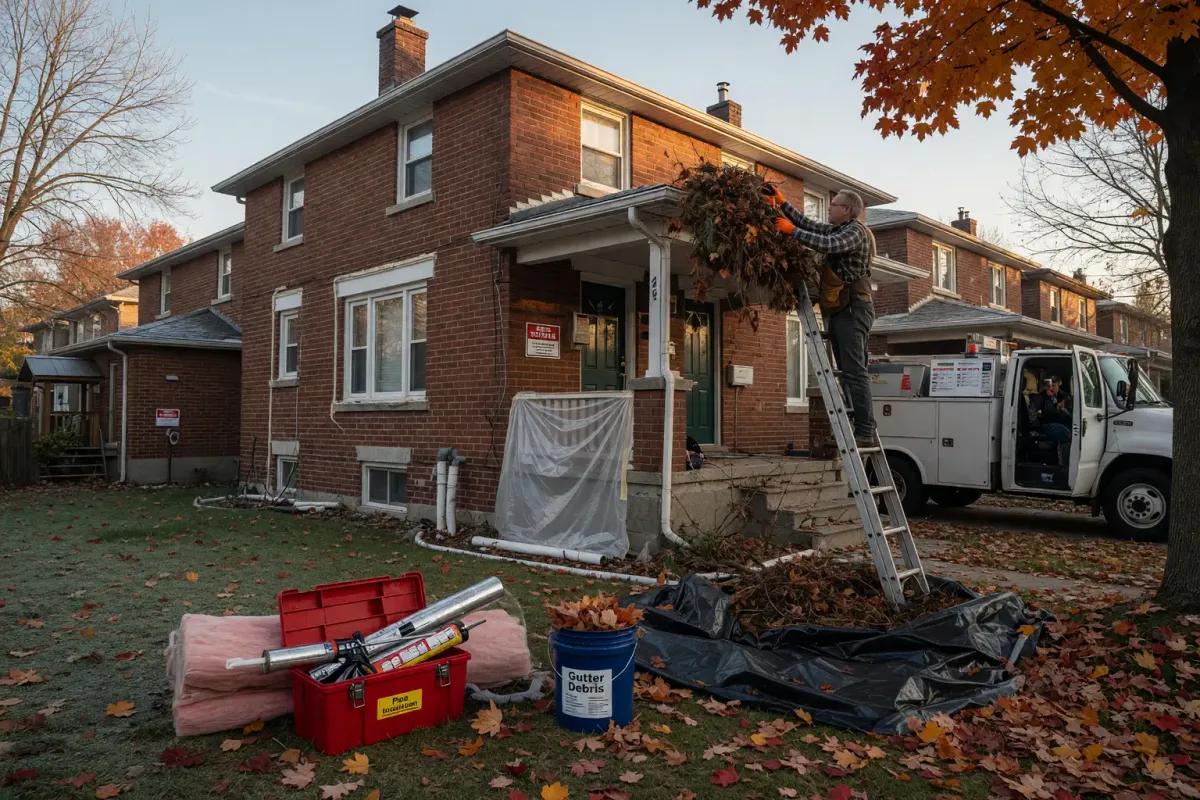
As summer fades and cooler weather arrives, you have a critical window to prepare your properties for winter. Fall maintenance isn’t optional—it directly impacts tenant satisfaction, property preservation, and your bottom line.
Skip them and you’re looking at emergency repair bills in January—when contractors charge premium rates and you’re lucky to get anyone on the phone.
The relatively mild fall weather provides ideal conditions for completing work before harsh winter makes outdoor repairs impossible.
Why This Matters Financially
| Maintenance Area | Prevention Cost | Emergency Repair Cost |
|---|---|---|
| Air sealing | $100-300 | Ongoing high heating bills |
| Heating system inspection | $150-200 | $500-5,000+ for failures |
| Gutters/Roof | $150-400 | $2,000-15,000+ for water damage |
| Pipe protection | $50-200 | $3,000-10,000+ for burst pipes |
A small leak ignored in October becomes a major water damage claim by February. A minor repair turns into a renovation project costing thousands and disrupting rental income.
Tenant retention matters too. Tenants dealing with cold drafts, heating problems, or water intrusion from clogged gutters are far more likely to move. The cost of turnover often exceeds the maintenance that would have prevented it.
Inspecting for Air Leaks
One of the most impactful fall tasks is checking for air infiltration. Gaps around windows, doors, and other penetrations let cold air in and heated air out—driving up utility costs and creating uncomfortable drafts.
How to Check
Hold thin paper or a feather near closed window and door edges. Any movement indicates air flowing through seals.
Pay attention to:
- Older windows
- Door thresholds
- Where different building materials meet
- Electrical outlets and switches on exterior walls
Insulation Assessment
Run the heating system until comfortable, then turn it off and monitor how quickly temperature drops. A well-insulated property holds heat; poor insulation means rapid loss.
If certain rooms are consistently colder, you may have insulation problems warranting professional assessment.
Heating System Inspection
Your heating system is the most critical component for winter tenant comfort. A failure during a cold snap creates an emergency regardless of contractor availability or cost.
DIY Assessment
Turn on the furnace and observe:
- How long does it take to reach temperature? (Longer than previous years signals declining efficiency)
- Any unusual sounds—banging, squealing, rumbling?
- Is heated air reaching all rooms?
Professional Inspection
Schedule annual professional inspection, especially for forced-air systems:
- Burner cleaning and adjustment
- Safety control checks
- Heat exchanger inspection for cracks
- Filter changes
Cost: $150-200, but prevents far more expensive repairs while keeping tenants safe.
For a deeper look at the financing angle behind this topic, see our guide to Invest in Real Estate Canada.
Schedule early fall when technicians are less busy and pricing is competitive.
Gutter Cleaning and Roof Inspection
Falling leaves plus increased precipitation make gutter maintenance critical. Clogged gutters cause:
- Water overflow onto fascia boards
- Seeping behind siding
- Foundation water pooling
- Ice dam formation in winter
The Cleaning Process
- Remove all debris from gutter troughs
- Flush system with water to verify drainage
- Check downspouts for clogs
- Inspect for sagging, separated joints, or corrosion
While You’re Up There—Roof Inspection
- Missing, cracked, or curled shingles
- Deteriorating flashings around chimneys and vents
- Dips or irregularities in roof plane
- Any areas where tenants reported ceiling stains
Protecting Pipes from Freezing
A single burst pipe can release hundreds of gallons per hour, causing catastrophic damage and creating mold conditions. Prevention is far simpler than dealing with aftermath.
Focus Areas
- Plumbing in unheated spaces: crawl spaces, garages, exterior walls
- Insulate with foam sleeves or heat tape
- Consider blocking crawl space vents during coldest months
Exterior Faucets
- Disconnect all garden hoses
- Drain remaining water by opening valve until empty
- Close interior shutoff valves for outdoor faucets
- Open exterior valve to drain pipe
- Consider insulated faucet covers
Yard and Sidewalk Responsibilities
Clear communication with tenants about winter outdoor maintenance prevents misunderstandings and liability issues.
Know your province’s rules. Maintenance obligations aren’t one-size-fits-all across Canada. In Ontario, the Residential Tenancies Act requires landlords to maintain properties in a good state of repair—and the province mandates a minimum indoor temperature of 20°C from September 1 to June 15. Quebec, BC, and Alberta each have their own standards. Before you assign any task to a tenant in your lease, check your provincial residential tenancy legislation. What’s enforceable in one province may not hold up in another.
If Tenants Are Responsible
- Discuss specific expectations for snow/ice removal timing
- Explain municipal ordinances requiring sidewalk clearing
- Provide tools: shovels, ice melt, storage containers
- Consider whether elderly/disabled tenants need assistance
If You’re Responsible
- Establish contractor relationships before winter
- Get multiple quotes
- Verify insurance coverage
- Specify response times for different snow levels
- Have a backup contractor identified
| Task | Who Is Legally Responsible | Landlord’s Role | Tenant’s Role |
|---|---|---|---|
| Leaf removal | Typically landlord (varies by lease) | Remove leaves or supply bags/tools | Rake if lease assigns responsibility |
| Snow & ice removal | Landlord by default; can be assigned to tenant in lease | Hire contractor or provide tools | Shovel within timeframe set by lease and municipal bylaw |
| Ice management | Shared—landlord ensures product is available | Supply ice melt products | Apply to walkways promptly |
| Hazard reporting | Tenant obligation | Act on reports quickly | Report hazards to landlord right away |
Frequently Asked Questions
How often should gutters be cleaned?
Should I hire professionals or DIY for fall maintenance?
What if tenants report heating problems after my inspection?
How do I prevent ice dams?
What should I document for fall maintenance?
When should I schedule fall maintenance tasks?
How do I communicate winter responsibilities to tenants?
The Bottom Line
Ready to explore your financing options? Book a free strategy call with LendCity and let our team help you find the right path forward.
Fall maintenance is one of the best investments you can make in your properties. The few hundred dollars spent on prevention saves thousands in emergency repairs.
Create a checklist. Work through it systematically. Document everything.
Your future self—and your tenants—will thank you when winter arrives.
Free tool
Build a property proforma
Fill in income and expenses, then export a Year-1 operating statement (NOI, cap rate, cash flow, DSCR).
Disclaimer: LendCity Mortgages is a licensed mortgage brokerage. Content on this page is for educational purposes only and does not constitute legal, tax, investment, securities, or financial-planning advice. Rates, premiums, program terms, and regulations referenced are as of the page's last updated date and are subject to change. Any investment returns, rental yields, tax savings, or case-study figures shown are illustrative only — they are not guaranteed, not typical, and individual results will vary. Consult a licensed lawyer, Chartered Professional Accountant, or registered dealer before acting on any information above. Editorial standards.

Written by
Scott Dillingham
Published
May 3, 2026
· Updated June 29, 2026Reading time
6 min read
Contractor
A licensed professional hired to perform construction, renovation, or repair work on investment properties. Using licensed and insured contractors is essential for permitted work, as unlicensed contractors can result in voided insurance, property liens, and liability for injuries.
Foundation
The structural base of a building that transfers loads to the ground. Foundation issues such as cracks, settling, or water intrusion are among the most expensive repairs in real estate and can significantly impact property value and financing eligibility.
Insulation
Material installed in walls, attics, and floors to resist heat flow, measured by R-value. Upgrading insulation in older properties reduces heating and cooling costs, improves tenant comfort, and can qualify for government energy rebates.
ITIN
Individual Taxpayer Identification Number - a US tax ID for foreign nationals, required for Canadians to invest in US real estate and file US taxes.
Plumbing
The system of pipes, drains, fixtures, and fittings in a building that distributes water and removes waste. Plumbing issues are among the most costly repairs in rental properties, and older galvanized or polybutylene pipes often need replacement during renovations.
Porting
Transferring your existing mortgage to a new property without penalty, keeping your current rate and terms. Useful when moving before your term ends.
Rental Income
Revenue generated from tenants paying rent on an investment property. Gross rental income is the total collected before expenses, while net rental income subtracts operating costs to show actual profitability.
STR
Short-Term Rental - a furnished property rented for periods of less than 30 days, typically through platforms like Airbnb or VRBO. STRs can generate 2-3x the income of long-term rentals but require more active management, higher operating costs, and compliance with local short-term rental regulations.
Turnover
The process and cost of preparing a rental unit for a new tenant after the previous tenant moves out, including cleaning, repairs, marketing, and vacancy time. High turnover rates significantly reduce profitability through lost rent and preparation expenses.
Hover over terms to see definitions. View the full glossary for all terms.